
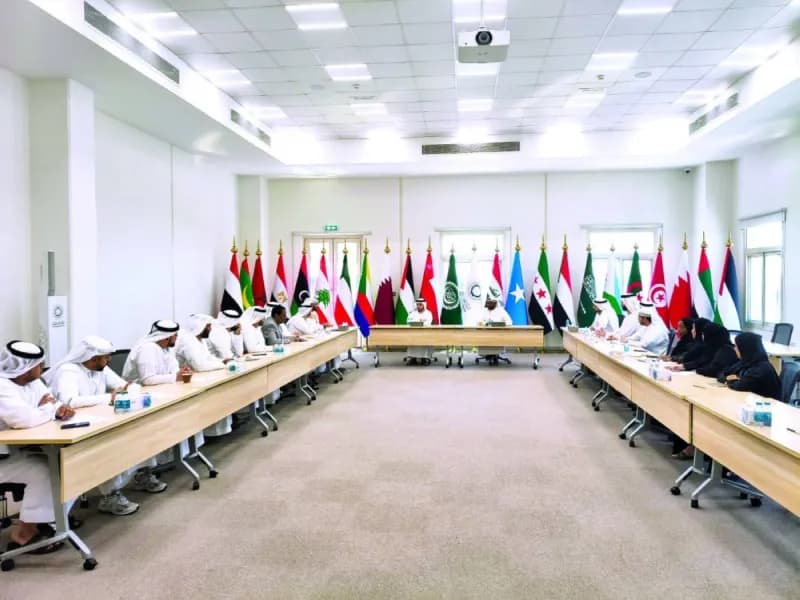
The meeting held at the headquarters of the Arab Parliament for the Child in Sharjah was not merely a review of a work programme; it was an announcement that the countdown had begun to receive 54 boys and girls from various Arab countries, carrying with them the visions of an entire generation, in preparation for participation in the fourth session of the fourth term of the Arab Parliament for the Child. The session runs from 13 to 19 July, under the generous patronage of Sheikh Dr Sultan bin Muhammad Al Qasimi, Member of the Supreme Council and Ruler of Sharjah, and under the auspices of the Arab League.
The meeting was chaired by Ayman Othman Al-Barout, Secretary-General of the Arab Parliament for the Child, in the presence of Sheikh Saif bin Mohammed Al Qasimi, Assistant Secretary-General, and the chairpersons and members of the organising committees. Various organisational and logistical aspects were reviewed, along with coordination mechanisms between committees and partners, to ensure the staging of a high-quality session that reflects the standing the Arab Parliament for the Child has attained in the realm of joint Arab action.
Over seven days, participants will follow a comprehensive programme combining parliamentary sessions, knowledge-building programmes, field visits, and cultural activities, in an experience designed to hone their leadership and parliamentary skills and deepen their awareness of issues related to childhood and sustainable development.
The organising committees confirmed that coordination with Arab states has been completed through the Arab League and its delegations in Cairo, with the participation of 54 boys and girls representing the various countries of the Arab world now confirmed, ahead of the main session to be held on 18 July under the theme "The Role of the Family in Building a Safe Environment for the Child".
Parliament members are expected to discuss the most pressing challenges facing the Arab family amid contemporary changes, as well as to put forward visions and recommendations that contribute to strengthening the partnership between the family and educational and community institutions, thereby consolidating a safe environment that supports children's rights and balanced development.