
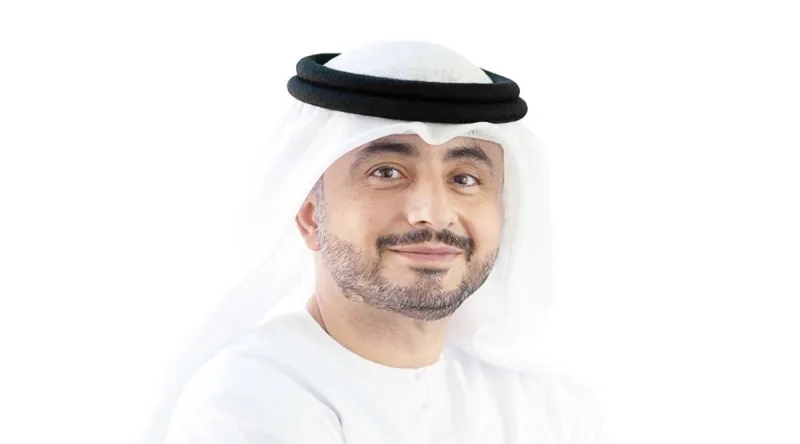
Ali Al Hashmi, the first Emirati to chair the board of the World Satellite Operators Association and Chief Executive of Space Services at Space42, has revealed that direct-to-device satellite connectivity is among the most promising applications in the rapidly growing space communications sector. The technology allows conventional smartphones to connect directly to satellites without specialised hardware or any modification to the handset. He forecast that the market for these services will grow from approximately $570 million in 2025 to $2.64 billion by 2030, with subscriber numbers rising from around 600,000 to 23.5 million over the same period — reflecting surging demand and the technology's role in expanding global connectivity.
He stressed that the true value of this technology lies not only in market size, but in the impact such growth can have on communities that remain unconnected. While approximately 84% of residents in high-income countries have access to 5G networks, that figure stands at just 4% in low-income countries, underscoring the urgent need for new solutions capable of accelerating connectivity, particularly in areas where terrestrial infrastructure alone is insufficient.
He added that this reality opens the door to new models based on shared space infrastructure, enabling satellite connectivity to be extended more efficiently and at greater scale. Among the initiatives reflecting this shift is the Equatis joint venture between Space42 and Viasat, which aims to enable direct-to-device satellite services on a wide scale.
Al Hashmi noted that the satellite sector stands today before a historic opportunity, with approximately 2.2 billion people worldwide still outside connectivity coverage, according to International Telecommunication Union estimates — down from around 2.6 billion just two years ago.
He explained that reaching the remaining unconnected population will be the hardest challenge, as they typically live in remote or low-income areas where building telecommunications towers or laying fibre-optic networks is not economically viable.
He said satellites should not be viewed as a replacement for terrestrial telecommunications networks, but as a natural extension of them, stressing that the future will not be built on separate, siloed networks but on a single integrated system combining terrestrial and space infrastructure to deliver broader and more resilient connectivity.
He noted that connecting smartphones directly to satellites is no longer merely a future concept, as the technologies required for this transition are taking shape rapidly — from chipsets supporting non-terrestrial networks, to satellite-ready smartphones, to the global standards that enable satellites to be integrated within mobile telecommunications networks.
Al Hashmi explained that this shift has been made possible by advances in 3GPP standards, particularly Releases 17, 18, and 19, which have established the technical foundations for integrating non-terrestrial networks within advanced 5G networks and, ultimately, future 6G networks.
He pointed out that satellites are no longer operating as systems separate from telecommunications networks, but have become part of the future architecture of mobile networks. He said the more important question is no longer whether this is technically achievable, but how it can be achieved in a fair, sustainable, and scalable manner.
He emphasised that success at this stage requires three key elements: accelerating the integration of non-terrestrial networks within the mobile communications ecosystem, updating regulatory frameworks to keep pace with technological evolution, and ensuring the sector grows in a responsible way that preserves the sustainability of the space environment.
Al Hashmi noted that satellites have long been an important part of the global communications ecosystem, but in the past served specific sectors or remote areas through specialised devices and standalone applications. Today, the real transformation lies in the ability to integrate them directly within mobile networks, making satellite connectivity a natural extension of terrestrial network coverage.
He explained that this phase is known as non-terrestrial networks, encompassing satellites, high-altitude platform stations, and other infrastructure operating outside traditional terrestrial networks.
He said the significance of these networks lies in their ability to extend coverage to areas that are difficult to reach through conventional means, while preserving a familiar connectivity experience for the end user.
He noted that non-terrestrial networks do not eliminate the need for towers, fibre optics, or mobile networks, but complement them — providing an additional coverage layer in remote areas, supporting connectivity continuity during emergencies and disasters, and helping telecommunications companies expand their services without the need to build costly terrestrial infrastructure at every location.
He added that initiatives such as Equatis help accelerate the integration of non-terrestrial networks within the mobile communications ecosystem by providing shared space infrastructure for direct connectivity services between mobile devices, the Internet of Things, and satellites.
Al Hashmi affirmed that achieving this impact requires a different model, warning that if the sector moves towards building closed, siloed systems it risks reproducing the same constraints that delayed the spread of connectivity in previous phases.
He said that adopting an open, shared model based on standards and interoperability would enable the sector to accelerate access, reduce costs, and open the door to more partners.
Al Hashmi added that technology alone cannot achieve universal connectivity — even the most advanced systems will be unable to deliver real impact if they face complex licensing frameworks, unclear spectrum rules, or regulatory processes that take years before services are permitted to operate. He stressed that regulation must be an enabler rather than a barrier, noting that investment in space infrastructure requires certainty, and that operators, telecommunications companies, and investors need predictable rules, transparent procedures, and flexible, technology-neutral licensing frameworks that permit cross-border service operation while respecting each country's sovereignty over its infrastructure, data, and regulatory decisions.
He noted that the World Satellite Operators Association has published a best-practice guide for satellite service licensing, aimed at helping governments and regulators accelerate the availability of such services in a practical and structured manner.
He explained that the guide does not seek to impose a single model on all countries, but rather to offer a reference grounded in real-world experience that countries can draw upon according to their own national priorities.
He affirmed that the shared objective is clear: governments seek to expand connectivity, enable the digital economy, and support social inclusion, while the sector wants to build infrastructure capable of operating at scale. When these interests converge within clear and balanced regulatory frameworks, universal connectivity becomes far more attainable.
He noted that the World Satellite Operators Association has adopted a code of conduct on space sustainability, encompassing a set of practical commitments to reduce collision risks, minimise space debris, preserve human safety in space, and limit satellite reflectivity in order to protect astronomical observation activities.