
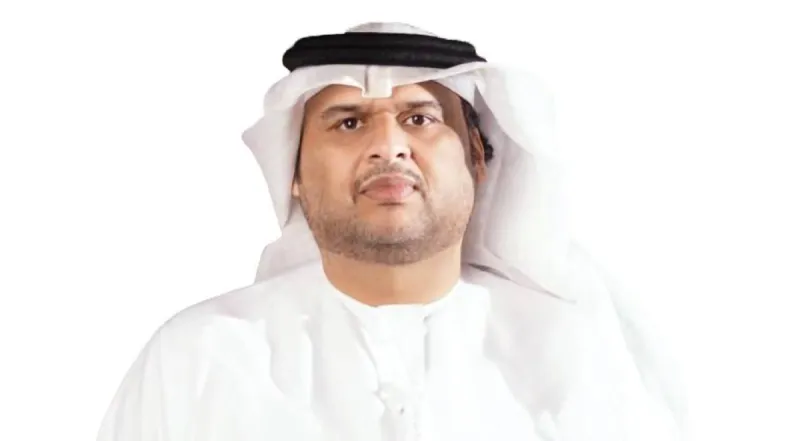
Judge Hussam Hassan Al Hamour, Chief Justice of the Federal Bankruptcy Court, has affirmed that the United Arab Emirates adopts a methodology grounded in integration among various governmental, economic, and judicial bodies to ensure business continuity and deal efficiently with all global variables. He noted that UAE legislation is distinguished by its flexibility and capacity to adapt to exceptional circumstances, reflecting the coherence of government policies with the judicial system in confronting economic crises.
Judge Al Hamour indicated that the UAE has demonstrated in practice that it possesses a comprehensive vision of the transformation that has taken place in procedures for handling bankruptcy cases. Thanks to its proactive and ready legislation and its specialised courts, the country has succeeded in consolidating its standing, enhancing its competitiveness, and deepening investors' confidence in its legal environment — something borne out by international statistics, figures, and reports. He affirmed that modern legislation has helped change the traditional concept of bankruptcy from being synonymous with failure and default into a sophisticated legal tool for business reorganisation, one that reinforces economic sustainability and preserves the rights of all parties.
He said that courts in general, and commercial courts and financial reorganisation and bankruptcy courts in particular, are no longer merely public bodies for settling disputes in the traditional sense; they have become part of the economic infrastructure. Judges in these courts are qualified, trained, and their experience is honed, and they are given grounding in economic aspects — a development that has made the courts, at both the federal and local levels, an important component of economic security. This security does not merely address crises, but helps anticipate and predict them through observations drawn from practical reality, which in turn assists legislators in addressing them through improvements and legislative amendments.
Judge Hussam Hassan Al Hamour explained that the prevailing view in the past linked bankruptcy with bad faith and failure to meet obligations. However, the advanced legislative environment, alongside the work of specialised courts, has helped entrench a new conviction within the business community: that the bankruptcy system represents one of the elements of legal security for investors — a conviction that is reflected in the competitive standing the UAE has achieved globally.
He noted that the UAE legislature took care to ensure that even the name of the law reflected its new philosophy. The law's title was amended from the "Bankruptcy Law" to the "Financial Reorganisation and Bankruptcy Law" in response to observations that the previous name carried negative connotations. He affirmed that this change reflects an orientation focused on the continuity of economic activity and giving distressed companies an opportunity to recover before reaching the liquidation stage.
Judge Hussam Hassan Al Hamour, Chief Justice of the Federal Bankruptcy Court, explained that the law provides 2 main pathways for dealing with cases of financial distress. The first is "financial reorganisation", which comprises 2 options: protective settlement and restructuring.
He explained that protective settlement allows a debtor, as soon as they sense the possibility of future default, to submit a plan prepared under court supervision and in coordination with creditors, ensuring clarity regarding their rights and the mechanisms for recovering their dues.
He added that the restructuring option grants companies the opportunity to reorganise their operations through merging activities, restructuring the workforce, or modifying the nature of the business, pursuant to a plan approved by creditors and ratified by the court, with the assistance of financial experts to support the plan's success and achieve the best outcomes for all parties. He stressed that this pathway aims to preserve economic activity whenever there is a genuine opportunity for it to continue.
Regarding the declaration of bankruptcy and liquidation, the Chief Justice of the Federal Bankruptcy Court affirmed that the prevailing notion that liquidation means the end of a company is not accurate. He explained that the law permits the sale of a company as a going concern, preserving its trade name, licence, assets, and activity, thereby contributing to the continuation of the project's economic value and limiting losses.
Al Hamour emphasised that trust represents the most important element for achieving economic growth in the coming period, noting that capital requires trust, and that economic sustainability cannot be achieved without an independent judicial system, proactive legislation, and specialised courts.
He added that the UAE possesses all the prerequisites for this trust, thanks to the firm national will to strengthen the rule of law, develop the judicial system, and keep pace with future government initiatives — including the digital transformation and leveraging artificial intelligence applications — in support of comprehensive development and the enhancement of the country's global competitiveness.
On the integration of government policies with the judicial system in confronting economic crises, Judge Hussam Hassan Al Hamour, Chief Justice of the Federal Bankruptcy Court, said that the UAE adopts a methodology grounded in integration among various governmental, economic, and judicial bodies.
He added: "What distinguishes UAE legislation is that it is flexible legislation containing special provisions that are only activated under certain circumstances. For example, in Chapter Five of the Financial Reorganisation and Bankruptcy Law, the legislature has granted additional facilitations that are activated in the event of emergency financial crises."
He continued: "In recognition by the Cabinet and their close monitoring of contemporary regional and global circumstances, Cabinet Resolution No. 94 of 2026 was recently issued, activating Chapter Five of the law, which addresses protective settlement, restructuring, and the declaration of bankruptcy with less costly, faster, and more flexible procedures, while granting judges greater latitude in timeframes — all with the aim of facilitating matters for both debtor and creditor and preserving the vitality of the economy."
Al Hamour affirmed that the establishment of a specialised federal bankruptcy court reflects the Ministry of Justice's vision of keeping pace with global best practices. He explained that the court comprises specialised judges alongside economic, financial, and legal experts, ensuring that economic cases are handled at the highest levels of efficiency.
He added that the existence of specialised courts gives investors a greater degree of certainty regarding the speed, cost, and outcomes of proceedings — something that enhances the attractiveness of the country's investment environment and confirms the UAE's commitment to providing a judicial system characterised by efficiency and transparency, and responsive to the aspirations of the business community.
He noted that achieving the targets of the UAE Vision 2031 depends on the existence of an advanced judicial system that constitutes one of the fundamental pillars of economic growth, pointing out that investors do not look only at economic incentives but also attach great importance to the stability of legislation and the effectiveness of the judiciary in managing risks and protecting rights.