
While US-Iran talks in Doha ended with an Iranian announcement of the establishment of a communications channel to report and monitor violations of the memorandum of understanding, Axios reported that Washington conveyed a message to Iran warning that its demand to impose fees in the Strait of Hormuz would undermine prospects for a deal.
This comes as the diplomatic track runs in parallel with a US-led regional security move involving 12 countries, focused on navigation security in the Strait of Hormuz and strengthening defence cooperation.
US Central Command (CENTCOM) announced that it led a regional security dialogue hosted by Bahrain, with the participation of military commanders from the United Arab Emirates, Bahrain, Egypt, Jordan, Kuwait, Lebanon, the Sultanate of Oman, Qatar, Saudi Arabia, Syria, and Yemen.
CENTCOM said in a statement that participants discussed developments in the regional security environment and opportunities to enhance defence cooperation, affirming their shared commitment to ensuring the free flow of commerce through the Strait of Hormuz.
The statement quoted CENTCOM Commander Brad Cooper as saying that the United States "continues to stand shoulder to shoulder with its regional partners," adding that the discussions reaffirmed a shared commitment to regional security and stability.
According to the statement: "US Central Command and countries in the region have established a new Middle East Air Defence coordination cell to share information and warnings about threats, as well as to respond to emergency situations."
The security dialogue marked the first time military commanders from Syria and Lebanon have participated in a US-led regional defence conference.
This meeting comes concurrent with the ongoing talks in Doha, signalling the continuation of both the diplomatic and security tracks in parallel as they address regional developments.
Iranian Deputy Foreign Minister Kazem Gharib Abadi announced yesterday the conclusion of the round of talks in Doha on implementing the memorandum of understanding between Tehran and Washington, according to official media, which reported that Gharib Abadi said participants agreed to "establish a communications channel" to report and monitor violations of the memorandum.
Axios also reported, citing an unnamed source, that US envoys Steve Witkoff and Jared Kushner conveyed a message to Iran that its demand to impose fees in the Strait of Hormuz could undermine prospects for a deal. The outlet also said that Washington and Tehran reached an understanding during the Doha talks on the first tranche of Iran's frozen funds, and that $3 billion of the frozen assets would not be transferred to Iran in cash but would instead be used to purchase essential goods, some of which would come from the United States.
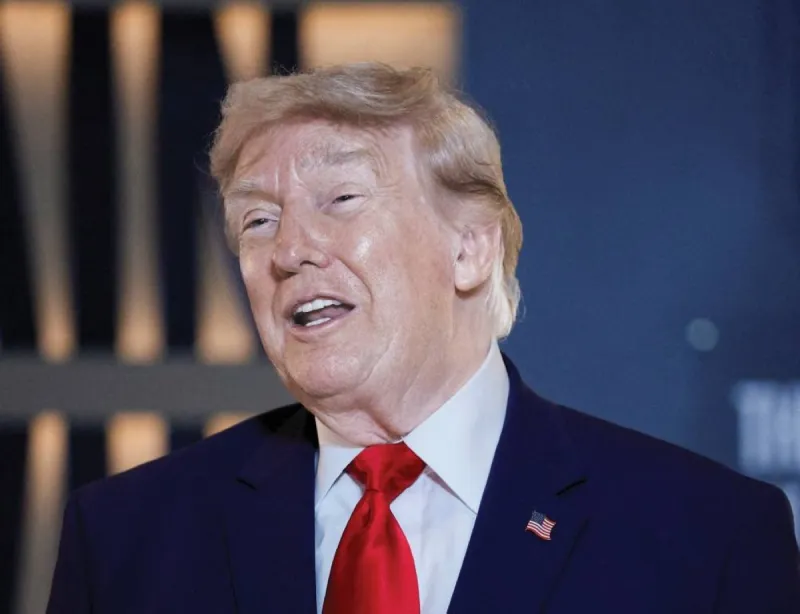
This was preceded by statements from US President Donald Trump, who said things between the United States and Iran were "going well," adding that the meetings held in Qatar were "very good" and that "the process of Iranian nuclear disarmament is going well."
Trump affirmed that the United States "hit Iran hard" and that it would not back down from its goal of dismantling Iran's nuclear programme, describing Iran as having "come a long way" and saying negotiations were making progress, without announcing any new agreements.
The Wall Street Journal reported, citing US officials familiar with the discussions, that Trump had held several conversations in recent days with Secretary of Defense Pete Hegseth and Chairman of the Joint Chiefs of Staff General Dan Caine about "launching new military strikes," but that he had decided for now to continue on the diplomatic track.
Bloomberg reported, citing sources, that Witkoff and Kushner held positive talks in Doha on implementing the memorandum of understanding, while a senior US administration official said the technical talks were "moving forward," while acknowledging that the path ahead remains complicated.
US Vice President JD Vance said the talks were "going well" but remain in their early stages, explaining that the current focus is on the items on the agenda before moving on to discuss the nuclear programme.
Vance told reporters yesterday: "We are concerned about the nuclear issue, and we will begin talking about it."
The Emir of Qatar, Sheikh Tamim bin Hamad Al Thani, received the two envoys, Witkoff and Kushner, at Lusail Palace, where Qatar News Agency reported that the meeting addressed the latest developments in the US-Iran negotiating track, as well as the situation in Lebanon, with emphasis on the importance of consolidating the ceasefire in a manner that preserves Lebanon's unity, sovereignty, and stability.
Witkoff and Kushner had met the day before yesterday with Qatar's Prime Minister and Foreign Minister, Sheikh Mohammed bin Abdulrahman Al Thani, to set the stage for the technical sessions, without participating in them directly, while Qatari officials clarified that the two US envoys would not hold direct meetings with the Iranian side.
On the matter of frozen assets, a US official told the New York Post that Washington had not released any portion of Iran's frozen funds and would not do so before Tehran committed to the terms of the memorandum of understanding, explaining that any release would be gradual and subject to specific criteria.
By contrast, Iranian Foreign Ministry spokesman Ismail Baghaei said that the process of releasing frozen Iranian assets was underway, while Qatari Foreign Ministry spokesman Majed Al Ansari confirmed that the $6 billion in funds had not yet been transferred to Tehran.
The Strait of Hormuz remained at the centre of developments after Iranian state television, according to the Associated Press, reported that a foreign container ship ran aground while navigating through a route Tehran said was unauthorised.
Meanwhile, Vandana Hari, founder of oil market analysis firm Vanda Insights, said that reopening of the strait was continuing but was intermittent and lacked full transparency.
Representatives of employers and trade unions in the global shipping sector maintained their classification of the Strait of Hormuz as a war zone until at least 9 July.
Rodolphe Saadé, Chairman and CEO of French shipping group CMA CGM, said the group expected navigation traffic to improve in the coming days, but believed a return to normal would take several months.
Italian Joint Operations Command chief Giovanni Iannucci said demining the Strait of Hormuz could take two months, noting that estimates point to dozens of sophisticated mines that require specialised capabilities and expertise.
The senior Italian military official stressed that these mines are "sophisticated and advanced, requiring capabilities and expertise not available to all countries."
Iannucci said that "the hypothesis of forming a multinational demining mission for the Strait of Hormuz aims to allow participation by non-European and regional parties as well," noting that Italian minesweepers are currently stationed in Djibouti.
In a related context, Indian Prime Minister Narendra Modi, during a phone call yesterday with Iranian President Masoud Pezeshkian, reiterated the importance of ensuring freedom of navigation in the Strait of Hormuz for India and the world, expressing hope that diplomatic efforts would lead to lasting peace and stability in the region.
While Washington affirms that the talks are making progress and Tehran insists on describing them as limited technical talks, the core files — chief among them the nuclear programme, freedom of navigation in the Strait of Hormuz, and the mechanism for releasing frozen assets — remain on the agenda for future rounds, alongside continuing diplomatic and security moves in the region.