
Post-war "day after" arrangements in the Gaza Strip have entered a new phase, following Hamas's announcement that it has dissolved the governmental emergency committee that had administered the territory — the first administrative transition of its kind since the movement seized control of Gaza in 2007.
However, positions expressed by the Peace Council and the National Committee for the Administration of Gaza indicate that the transfer of civilian administration represents only one part of the roadmap, while the future of weapons and Israeli withdrawal remain the most significant obstacles to full implementation of the agreement.
In a step taken in coordination with Egyptian, Qatari and Turkish mediators, and intended to facilitate the transfer of governmental responsibilities to the National Committee for the Administration of Gaza according to Hamas, the Government Media Office in Gaza announced that Mohammed Abdul Khaliq Al-Farra, head of the governmental emergency committee and acting head of governmental follow-up, had submitted his resignation alongside the dissolution of the emergency committee, following the completion of administrative and legal arrangements pertaining to the transfer of duties to the National Committee for the Administration of Gaza.
The Government Media Office confirmed that technical and professional staff would continue their work to ensure the continuity of services and prevent any administrative or technical vacuum, describing service workers as "state employees" who would be ready to work under the authority of the National Committee and in compliance with its directives and decisions.
For its part, the Peace Council — established by US President Donald Trump to oversee implementation of the roadmap — announced that it was aware of Hamas's move, but stressed that its final assessment "will be based on actions, not promises," emphasising that the guiding principle of the next phase rests on "one authority, one law, and one weapon," meaning the consolidation of all arms under the control of the National Committee for the Administration of Gaza.
The senior representative of the Peace Council, Nikolai Mladenov, welcomed the announcement of the committee's dissolution, writing in a post on X that Gaza's announcement "underscores the importance of bringing the roadmap discussions to a successful conclusion," describing the move as "the bridge between declarations and implementation."
He added that expediting agreement on the remaining provisions would enable the Gaza administration committee to assume its responsibilities as soon as possible, and would accelerate the dismantling of weapons, the withdrawal of Israeli forces, and the start of reconstruction in the territory.
The head of the National Committee for the Administration of Gaza, Ali Shaath, announced the committee's readiness to assume its responsibilities as soon as the necessary conditions are in place, stressing that the success of its work requires "one authority, one law, and one weapon" subject to that authority, thereby providing the political, administrative and security environment necessary to enable the committee to carry out its functions.
These positions reflect that the dissolution of the governmental committee does not by itself resolve the trajectory of the day after, as Hamas affirms its readiness to transfer civilian administration while the arms file remains outside the scope of any definitive resolution.
The movement says it refuses to relinquish its weapons prior to a halt in Israeli military operations and the full implementation of the remaining provisions of the ceasefire agreement, chief among them the withdrawal of Israeli forces from the territory.
The Peace Council and the National Committee, by contrast, link the success of the new administration to consolidating weapons under a single authority, while Israel conditions post-war arrangements on the disarmament of Hamas. Israel's public broadcaster and the Walla news site quoted Israeli sources as describing Hamas's move as "symbolic," arguing that the movement's continued possession of its weapons and security apparatus means the core of the agreement has yet to be implemented.
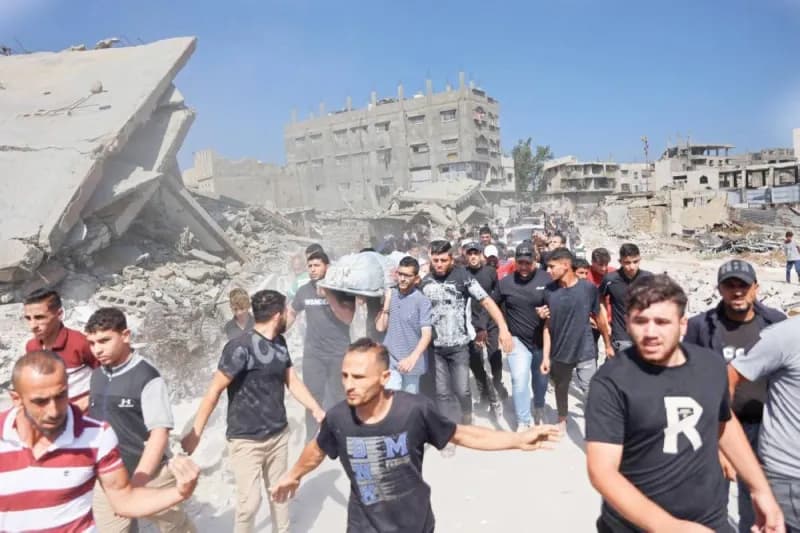
These developments come amid continuing military operations in the territory. Paramedics told Reuters that 5 Palestinians were killed in Israeli strikes targeting Gaza City and Khan Younis, while Hamas announced the killing of 6 Palestinians and the wounding of more than 20 others, accusing Israel of violating the ceasefire. Israel says its operations target armed threats.
Israeli forces continue to control more than 60 percent of the Gaza Strip's territory, according to Reuters, while Israeli Prime Minister Benjamin Netanyahu maintains his refusal to withdraw from areas Israel considers essential to its security.
The dissolution of the governmental emergency committee thus represents the first administrative transition since Hamas took control of the Gaza Strip in 2007, but according to the positions of the Peace Council, the National Committee, and statements by the parties concerned, it represents only the beginning of roadmap implementation. With the question having shifted from: who administers Gaza? — to: who holds the weapons and the security decision? — the next phase appears contingent on resolving the agreement's most sensitive files: weapons, Israeli withdrawal, and the mechanisms of transition to a unified civilian administration.