
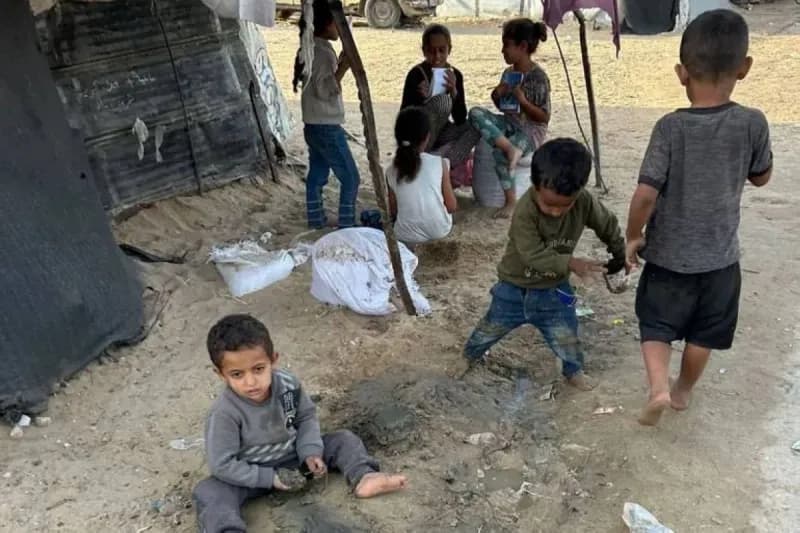
A medical official in the Gaza Strip announced on Saturday that thousands of cases of infectious skin diseases had been recorded over the past two weeks, warning of a widening spread of infection amid a severe shortage of medicines and medical supplies and a continuing deterioration in humanitarian conditions.
Mohammed Abu Afash, director of medical relief in northern Gaza, told reporters that approximately 9,300 cases of infectious skin diseases — including chickenpox, scabies and lice infestations — had been recorded in just two weeks across 130 health centres throughout the strip.
Abu Afash added that the continuing shortage of treatments threatens to push the health situation out of control, particularly inside shelters and displacement camps that are severely overcrowded, noting that the spread of intestinal diseases linked to water and food contamination is further complicating the health crisis.
He explained that the health sector is facing, in his words, a severe shortage of essential medicines and medical consumables as a result of the ongoing blockade, pointing out that the crisis has affected medicines for chronic diseases — including diabetes, heart conditions and high blood pressure — which he said have become almost non-existent even in the private sector.
He also noted that kidney failure patients are facing increasing difficulties due to shortages of the solutions and materials needed to conduct dialysis sessions.
The medical official also warned of rising malnutrition rates as volumes of humanitarian aid decline, arguing that this weakens immunity and increases susceptibility to disease, particularly among children and pregnant women.
In the same context, Adnan Hamouda, coordinator at the Ministry of State for Relief Affairs in the Gaza Strip, said the strip is facing a worsening humanitarian crisis due to restrictions on the entry of aid, pointing to a large gap between the population's actual needs and the volume of supplies arriving daily.
Hamouda said in radio statements that the number of trucks entering the strip currently ranges between 150 and 200 per day, while Gaza needs, by his estimate, between 600 and 1,000 trucks per day to meet the minimum basic needs.
He added that a large portion of the trucks arriving belong to the private sector and not to humanitarian aid, noting that the assistance entering through international partners covers only a limited proportion of the population's needs.
He pointed out that more than 750 shelters are housing displaced persons suffering from deteriorating tent conditions and the spread of insects and rodents, alongside increasing skin diseases as temperatures rise during the summer season.
Hamouda also accused Israeli authorities of preventing a number of international and local organisations from bringing in aid in recent weeks, stressing that this has led, in his words, to the suspension of a number of relief kitchens that had been providing food to thousands of families.
This comes at a time when humanitarian and health conditions in the Gaza Strip are continuing to deteriorate, while issues of aid entry, reconstruction and the implementation of remaining understandings remain in dispute between Israel and Hamas.
The ceasefire agreement between the two sides had entered into force on 10 October, and included in its first phase an exchange of prisoners and detainees, permission for humanitarian aid to enter, and the withdrawal of Israeli forces from some areas of the strip. The United States subsequently announced the start of work on a second phase covering reconstruction and security and administrative arrangements in Gaza.