
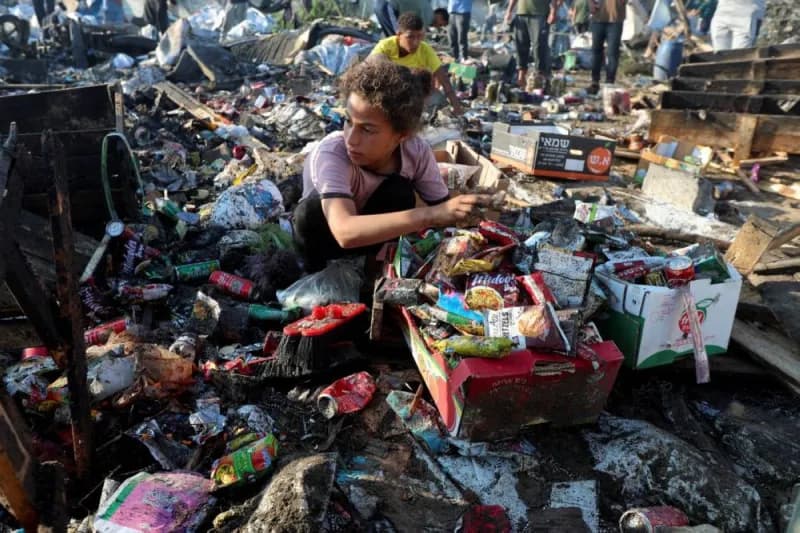
The Israeli war on the Gaza Strip has reached its 1,000th day, leaving behind sweeping changes to the geographic, demographic, political and military reality of the territory. Despite a ceasefire agreement entering into force and direct military operations coming to a halt, the consequences of those 1,000 days continue to bear down on the details of daily life for residents, amid widespread rubble and severe damage to infrastructure.
1,000 days have passed since Israel launched its war of genocide against the Gaza Strip — yet these were no ordinary days in the lives of Palestinians. They were 1,000 days of bombardment, killing, displacement and hunger, during which the details of ordinary life were transformed into a daily battle for survival. The war continues to cast its full weight on daily existence, as residents face acute shortages of food, water and medicine, while the suffering of the sick and wounded deepens and fears mount of a worsening humanitarian catastrophe as military operations continue.
The Palestinian people of Gaza continue to pay the heaviest humanitarian price for this ongoing aggression. The fate of more than 2 million Palestinians remains uncertain and tragic: the vast majority have been turned into displaced persons, stripped of even the most basic necessities of life.
They are living amid enormous destruction that has affected every vital and residential facility. Although Israeli army forces had been controlling more than half of the territory under the ceasefire agreement that entered into force on 10 October of last year, the Israeli government continued to expand its colonial plans and the scope of its encroachment and control over the land, announcing its ambitions to extend its military dominance over 70% of the stricken territory's area.
At the level of infrastructure, military operations left destruction encompassing cities and refugee camps. Official statistics from Gaza indicate that more than 80% of buildings in the Gaza Strip have been destroyed or damaged, while the areas are blanketed by between 60 and 70 million tonnes of rubble. These quantities of debris have rendered water, electricity and sewage networks inoperable. Since the ceasefire was declared on 10 October 2025,
the bleeding has not stopped. As of the beginning of this July, the Ministry of Health reported that 1,064 Palestinians — many of them civilians — had been killed in Gaza since the ceasefire entered into force. Hamas's arsenal has also become the central obstacle blocking plans for the "day after" and for reconstruction, as Israel continues to reject any settlement that does not include the disarmament of the factions.