
At a time when attention was turning to post-war arrangements in the Middle East, the Palestinian cause has returned to the forefront of international concern, as UN warnings over the humanitarian situation in the Gaza Strip intensified and international criticism of Israeli settlement activity in Palestinian territories mounted. This comes alongside new European measures targeting settlement activity, reflecting the widening political and humanitarian pressure on Israel despite the continuing ceasefire in Gaza.
In this context, UN Under-Secretary-General for Humanitarian Affairs Tom Fletcher called on the international community to refocus attention on the Gaza Strip, stressing before the Security Council that the US-Iran agreement and hopes of consolidating the ceasefire in Lebanon must not overshadow the ongoing humanitarian crisis in the territory.
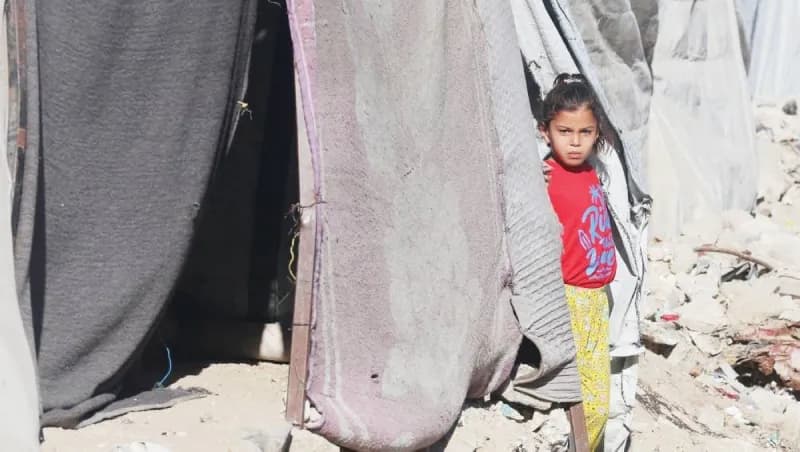
Fletcher said Gaza is no longer officially classified as experiencing famine, but it continues to face a severe humanitarian crisis months after the ceasefire, noting that Palestinians remain deprived of security, shelter, clean water, healthcare and education.
He added that approximately 70 per cent of the Strip's population is in need of adequate shelter, while not a single hospital is operating at full capacity, amid a continuing deterioration in health conditions, the spread of disease and shortages of essential supplies.
The UN official stressed that Gaza remains the most dangerous place in the world for humanitarian workers, noting that approximately 60 aid workers had been killed over the years of the war.
He called for all border crossings to be opened and for restrictions on the entry of essential goods to be lifted, including fuel, medical equipment and spare parts, and for medical evacuations to be facilitated.
At the same Security Council session, Fletcher emphasised that the people of Gaza deserve to have their "dignity" restored, not merely to survive, saying that providing the minimum amount of food cannot be the ceiling of international ambition while children face bombardment, displacement and deprivation of education.
For its part, UNICEF described the ceasefire in Gaza as having turned into a "deadly illusion" for Palestinian children.
UNICEF spokesperson James Elder, speaking from the Jordanian capital Amman in remarks aired during a press conference in Geneva, said 265 Palestinian children had been killed since the ceasefire was announced last October, while more than 400 other children had been wounded.
He added that most of these children were killed in Israeli air strikes or military operations, arguing that the continuing toll of casualties undermines the credibility of the ceasefire and exposes the ongoing dangers faced by civilians in the Strip.
He also warned that hundreds of children are in urgent need of evacuation to receive medical treatment, adding: "The continued killing of children is not the result of a lack of options, but of an absence of political will."
Alongside the humanitarian warnings, international pressure linked to Israeli settlement activity in Palestinian territories is mounting.
The Norwegian government announced that it intends to impose a ban on its citizens and companies dealing in goods produced in Israeli settlements established on occupied Palestinian territory.
Norwegian Foreign Minister Espen Barth Eide said the proposed bill aims to prevent companies and individuals from benefiting from activities that support the continuation of settlement-building, which Oslo considers a violation of international law.
In the West Bank, Palestinian sources reported that settlers attacked a house in the town of Kifl Haris, north of Salfit, and smashed 4 vehicles, two days after incidents targeting 2 mosques in the Ramallah area.
The United States, the European Union and the United Kingdom had, over recent months, imposed sanctions on extremist Israeli groups for acts of violence against Palestinians in the West Bank.
In another development reflecting the growing controversy over Israeli policies, a report by The Associated Press showed that since the outbreak of the Gaza war, Israel has imposed military control over vast areas of Gaza, southern Lebanon and the buffer zone in Syria, in the largest expansion of territory under its military control in decades.
According to the report, Israel currently controls more than 60 per cent of the Gaza Strip, in addition to areas inside southern Lebanon and the buffer zone in the Syrian Golan, and says these measures are necessary to prevent future attacks and enhance its security.
However, these developments are raising growing concern among the United Nations, human rights organisations and Western countries that temporary military arrangements could become a long-term reality, further complicating the conflict and narrowing prospects for reaching a lasting political settlement.