
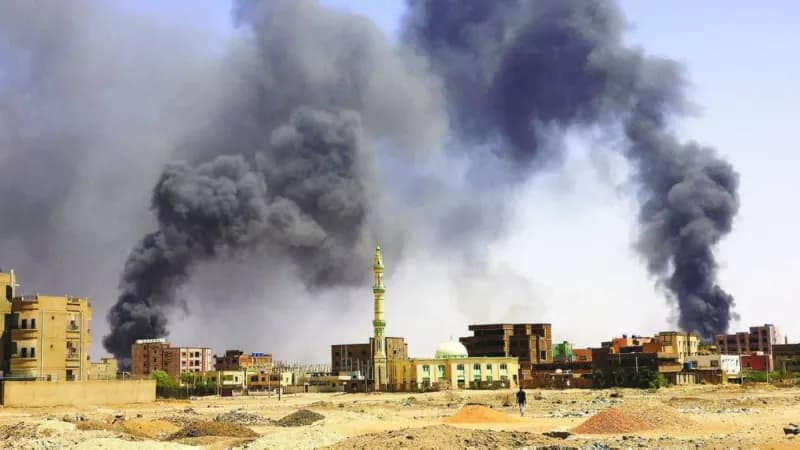
The United States, in its first official statement at this level, has accused the Sudanese army of using chemical weapons, demanding that the Port Sudan authorities submit a comprehensive declaration of their chemical programme and allow international verification and field inspection teams to operate without restrictions. Washington also warned that Sudan could lose its eligibility to remain a member of the Executive Council of the Organisation for the Prohibition of Chemical Weapons (OPCW).
The American position was set out in a speech delivered before the 112th session of the OPCW Executive Council in The Hague, under the agenda item devoted to discussing the threat posed by the use of chemical weapons in Sudan.
Washington said its independent technical assessments concluded that the Sudanese army used chemical weapons during 2024 and remained in non-compliance with the Chemical Weapons Convention throughout 2025, stressing that the prohibition on the use of such weapons is "absolute and non-negotiable."
In a significant development, US Ambassador to the OPCW Nicole Shampain announced that the Sudanese army had used "chlorine as a chemical weapon" — the first official American identification of the specific chemical substance Washington accuses the Sudanese army of deploying.
The United States demanded that the Port Sudan authorities return to compliance by submitting a full declaration of their chemical facilities and programme, and by permitting OPCW teams to conduct comprehensive and transparent field verification operations.
Washington rejected the national technical committee formed by the Port Sudan authorities as a substitute for international verification mechanisms, stressing that it had not participated in any investigations inside Sudan but had merely informed the authorities of its assessment findings and urged them to fulfil their international obligations.
Washington also noted that it had already imposed a second round of sanctions under US law in response to continued non-compliance, while reaffirming its readiness to work with Port Sudan authorities to resolve the matter and underscoring that adherence to the Chemical Weapons Convention is an international legal obligation.
The United States argued that a state accused of using chemical weapons continuing to sit on the OPCW Executive Council undermines the organisation's credibility, calling on member states to restrict Council membership to countries in full and verifiable compliance with the Convention's provisions.
This statement is among the most strongly worded American positions towards the Port Sudan authorities, as it included for the first time an official identification of the type of chemical agent used, and linked continued non-compliance to Sudan's eligibility to participate in the governance of the OPCW — all within Washington's broader demand for an independent international investigation and full verification of Sudan's compliance with the Convention.
The statement follows Washington's announcement on 22 May 2025 of sanctions against the Sudanese government after accusing it of using chemical weapons during the conflict, which included restrictions on US exports and access to lines of credit.
On 28 June 2026, the United States announced a second package of sanctions against Sudan under the Chemical and Biological Weapons Control and Warfare Elimination Act, comprising additional export restrictions, opposition to international institutions providing financial or technical assistance to Sudan, and a ban on state-owned airlines from operating within the United States.
Meanwhile, Sudanese sources revealed a new American proposal aimed at ending the fighting in Sudan, which includes declaring an immediate 90-day ceasefire as part of international efforts to contain the crisis and create conditions for a comprehensive political process.
According to the proposal, a coordination committee will be established to oversee the implementation of the ceasefire and monitor compliance with its terms, in order to consolidate the truce and limit any potential violations during the period it is in force.
The American proposal stipulates using the ceasefire period to launch a political transition process leading to the formation of a civilian authority, thereby contributing to the restoration of stability and laying the foundations for civilian governance in the country.
The proposal also includes ending all forms of external military support, as well as ending the presence of foreign fighters inside Sudan, in a step aimed at reducing the factors driving the continuation of the conflict.