
The repercussions of the Strait of Hormuz crisis were not confined to the Middle East; they extended to economies around the world. Yet the crisis revealed decisive lessons that helped contain the shock to energy markets, among them the abundance of global reserves and the artificial intelligence boom.
The DW news website, citing the Kpler platform, reported that on Monday the strait saw the largest number of ships pass through it since the Iran war began, representing roughly a third of pre-war transit traffic. The reopening of the strait is expected to ease an energy crisis that had weakened economic growth and fuelled inflation worldwide.
Experts believe the energy crisis caused by the closure of the strait held many surprises, most notably that the global economy was not hit by a shock more severe than the current crisis.
The Wall Street Journal said the global economy must learn five lessons from the Hormuz crisis — the strategic waterway for global trade through which one-fifth of the world's fuel exports normally pass, in addition to other key raw materials.
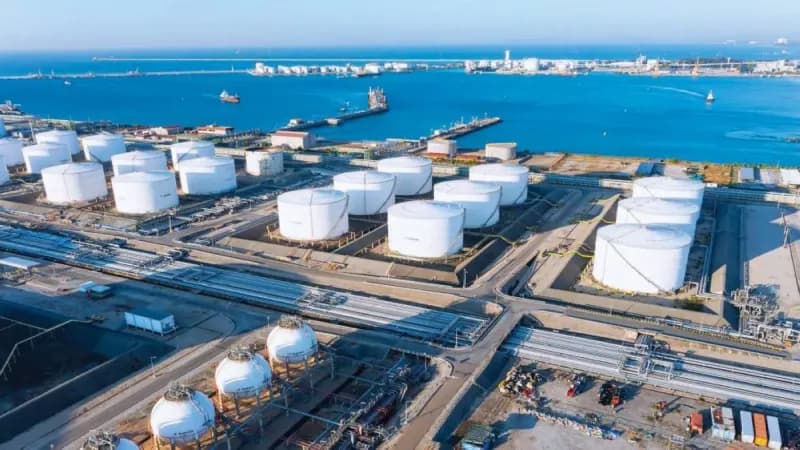
It added that when the Hormuz crisis erupted, the world had an abundance of oil: major importing nations in Europe and Asia held large strategic stockpiles, and commercial inventories were in good shape after rising in 2025. The newspaper added that this gave many major economies a buffer to absorb the shock with only limited disruption.
By contrast, the burden of the supply shortage fell more heavily on poorer countries that cannot afford to build up reserves. Some nations, such as Bangladesh and Sri Lanka, took measures to curb oil demand through fuel rationing. The American newspaper added that other countries shut schools and offices and imposed restrictions on air-conditioning use.
The report said the global oil market proved capable of adapting, as energy producers in the Middle East managed to find alternative routes to bypass the strait's closure.
The newspaper said the second lesson from the Hormuz crisis is that the global oil market is capable of adapting, adding that Middle East energy producers found alternative routes to bypass the closure of the strait more quickly than many energy experts had anticipated.
This coincided with other producers, including the United States, increasing production and exports to fill part of the gap.
It noted that the third lesson was China's ability to curb its oil imports, adding that China's oil imports fell by approximately 3 million barrels per day, yet no clear signs of major disruption emerged in the world's second-largest economy and largest industrial power.
It added that Beijing drew on its massive strategic reserves and turned to alternative suppliers to offset losses resulting from the strait's closure.
Kristalina Georgieva, Managing Director of the International Monetary Fund, said last April that improvements in energy efficiency had helped mitigate the impact of the shock caused by the war.
The newspaper said this constitutes the fourth lesson, as advanced economies shifted away from energy-intensive industries toward less energy-intensive services such as finance and healthcare.
The Wall Street Journal noted that the fifth lesson was that the artificial intelligence boom offset the impact of the energy crisis, with this boom serving as an important counterbalancing factor in the face of the energy crisis.
It said the rapid expansion of data centre construction in the United States boosted trade and investment and drove stock markets to record levels. The benefits were most visible in Asian economies that supply memory chips, with the value of Taiwan's exports more than doubling since the start of 2025.