
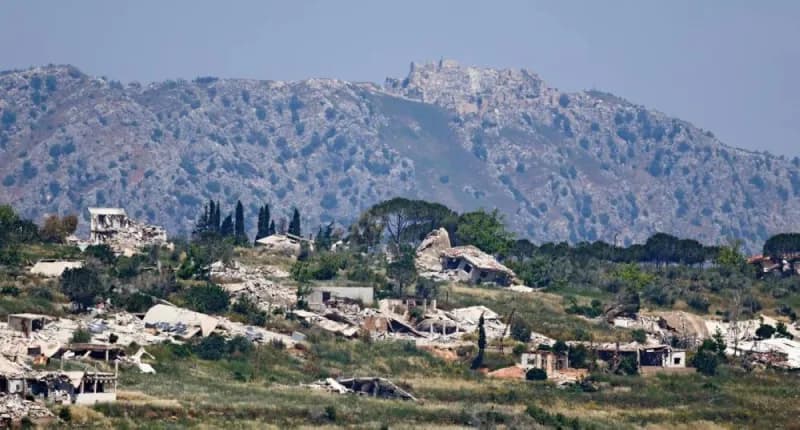
The negotiating track between Lebanon and Israel entered a new phase following the conclusion of a fresh round of direct talks in Rome held under US sponsorship, after the two sides agreed on the executive framework for pilot zones and committed to finalising their terms and implementing them within the coming days. The move paves the way for technical talks covering the mechanisms of Israeli withdrawal and the deployment of the Lebanese army. Lebanese President Joseph Aoun said the framework formula had begun to bear fruit, even as Israeli military operations continued in southern Lebanon.
The US State Department announced on Tuesday that, following two days of US-mediated talks in Rome, Lebanon and Israel had taken steps toward establishing "pilot zones" in southern Lebanon, from which Israeli forces would withdraw and hand control to the Lebanese army.
A US official, in a statement distributed by the American Embassy in Beirut, described the two-day talks as "fruitful and positive", confirming that both sides had agreed on the structure and guiding principles of the "pilot zone" process, with final touches to be completed and implementation to begin within days.
The official added that negotiations would move into an expanded technical phase focused on implementing the provisions of the trilateral framework agreement, with the aim of reaching a comprehensive agreement between Israel and Lebanon.
Meanwhile, a source at the Lebanese presidency told the German news agency dpa that "tangible progress was achieved" during the Rome discussions, with participants agreeing to identify the areas that would be subject to Israeli withdrawal and Lebanese army deployment.
The source added: "On Friday, a Lebanese-American-Israeli military meeting will be held, during which tasks and the practical framework for this process will be defined for the first two areas designated as 'pilot zones'."
The source clarified: "If this step succeeds, the same mechanism will be applied to the remaining areas."
The new round was a continuation of the framework agreement concluded on 26 June under US sponsorship, which provides for the establishment of pilot zones in which the Lebanese army would deploy in parallel with a gradual withdrawal of Israeli forces, alongside the disarmament of armed groups within those zones.
Israeli Foreign Minister Gideon Sa'ar said Israel was ready to proceed with implementing the two pilot phases. Israeli media quoted an Israeli official as saying that any future expansion of these zones would depend on the success of the first phase, describing it as the first test of the Lebanese army's ability to impose state authority, and that implementing the agreement also targets the disarmament of Hezbollah.
In contrast, the timing of the Israeli withdrawal remains the most prominent point of contention, with Lebanon demanding an immediate withdrawal from territories still under Israeli control, while Israel insists it will not withdraw before Hezbollah's disarmament procedures within the security zone it has established in southern Lebanon are completed.
Media reports indicated that the next round could bring together military delegations from Lebanon and Israel under US sponsorship to discuss the mechanisms for implementing the pilot zones, including arrangements for Israeli withdrawal, Lebanese army deployment, and verification mechanisms for compliance with commitments. The date and venue of the meeting are to be set once arrangements are finalised by the American side.
While US President Donald Trump confirmed in remarks to Fox News that Syrian President Ahmad Al-Sharaa would handle Hezbollah, suggesting he would be more precise than the Israelis, Lebanese President Joseph Aoun affirmed that "the framework formula has begun to produce its effects", noting that Washington was now listening to Lebanon and that the Lebanese file had been placed on the US president's table.
Aoun said the option of negotiation "may not be the safest, but it is currently the only one for reaching results and objectives", affirming that work was continuing toward halting the war, achieving an Israeli withdrawal, and deploying the Lebanese army along the southern border in a manner that would allow displaced persons to return to their towns.