
The meeting held in the Italian capital concluded with the announcement that two pilot zones in southern Lebanon would be launched within the coming days, as part of the ongoing negotiating process. A follow-up meeting to the Rome negotiations, bringing together Lebanese and Israeli military delegations under American sponsorship, is expected soon to establish implementation mechanisms. The question remains: can the Lebanese army assert its sovereignty with an American guarantee? According to available information, no changes will be made to the two pilot zones already agreed upon — the partially occupied Zotar area and the unoccupied Farun area.
In this context, the United States Embassy in Lebanon announced the conclusion of the two-day talks, describing them as "fruitful and positive." It noted that agreement had been reached on a structure and guiding principles for the pilot zone process, with final touches to be completed and implementation to begin within the coming days. The embassy added that the next phase would see a transition to broader technical talks focused on implementing the various aspects of the "tripartite framework," with the aim of reaching a comprehensive agreement between Lebanon and Israel.
Amid the positive elements, questions are being raised about the genuine capacity and willingness of the parties concerned to implement the difficult field conditions — chief among them Israel's withdrawal from the "pilot zones" and the deployment of the Lebanese army — or whether the agreement will remain mired in the complexities of reality and collapse at its first practical test.
In this regard, military and strategic analysts argue that the transition of negotiations in the anticipated Rome round to a phase of "actual implementation" faces a thick wall of field obstacles. Despite the negotiating agenda addressing a gradual Israeli withdrawal beginning from two specific pilot zones in the south, Tel Aviv continues to link progress on this track to the dismantling of Hezbollah's military infrastructure.
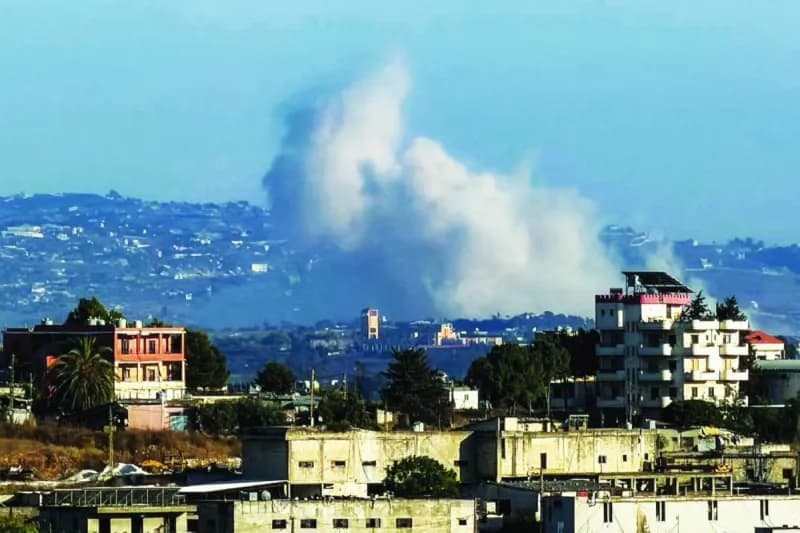
Security experts note that the continued Israeli bombardment and field demolitions in border-edge villages reflect an Israeli desire to impose a buffer security reality by force of arms — draining the diplomatic pledges of their substance and tying any actual withdrawal to security gains that exceed what Lebanon is prepared to accept. Conversely, political analyses suggest that the primary implementation challenge lies within Lebanon itself; the core guarantee Beirut offers for implementing the agreement rests on "Lebanese legitimacy" and the official institutions of the state, represented by the Lebanese army, which has demonstrated technical readiness to deploy in those areas.
This division raises genuine concerns that non-state actors could blow up the situation militarily to abort the agreement, potentially pushing Israel to resume comprehensive military operations and destroy the entire negotiating track. In this context, the Lebanese president's anticipated visit to Washington on the 21st of this month takes on exceptional importance, aimed at extracting decisive American commitments to enforce the withdrawal plan from the pilot zones and secure logistical and financial support for army deployment.
Writer and political researcher Dr. Michel Al-Shammaa believes that the "framework agreement" represents the only refuge and a historic opportunity to end the perpetual and ongoing state of war between Lebanon and Israel. He explains that despite the immense difficulties facing this track — particularly regarding the mechanisms of Israeli withdrawal and the Lebanese army's readiness to deploy in the "pilot zones" — the army fully possesses the capacity to carry out these field tasks.
Dr. Al-Shammaa stated in exclusive comments to Al Bayan that the core guarantee for implementing the agreement's provisions on the Lebanese side lies in the fact that "Lebanese legitimacy," embodied in the state and its institutions, is what concluded this agreement and is committed to implementing it — not any local faction backed by regional powers — in a clear reference to Hezbollah.
He further noted that the United States plays the role of primary guarantor for the Israeli side, and that the Lebanese president's anticipated visit to Washington on the 21st of this month carries strategic importance, as it aims to extract decisive American guarantees that would bind Israel to withdraw from the agreed pilot zones. Nevertheless, Al-Shammaa concludes with a cautious analytical approach, warning that this agreement does not serve the Iranian agenda in Lebanon as represented by Hezbollah — which raises the level of concern that the group could blow up the field situation, whether through moves inside Lebanon or in the border area in the south.
He stresses that any military adventure of this kind would be sufficient to bring Israel back to the arena of all-out war and bring down the diplomatic agreement in its entirety. Meanwhile, political researcher Ahmed Al-Masri offers a contrasting analytical reading of the optimistic atmosphere surrounding the Rome negotiating round, arguing that betting on the "framework agreement" as a magic solution to ending the conflict is a form of excessive political idealism that does not align with field realities.
Al-Masri asserts that the absence of genuine guarantees to compel simultaneous Israeli withdrawal, combined with the escalating US-Iranian confrontation at the regional level, transforms the Rome round into a platform for managing the conflict rather than resolving it — and turns the notion of "temporary peace" into an ambition that is difficult to translate into practice unless the major strategic calculations beyond Lebanon's borders undergo fundamental change.