
Beirut, Tel Aviv, Rome — Agencies
With a new round of Lebanese-Israeli talks scheduled in the Italian capital Rome on 15 and 16 July, political and field preparations are continuing for the implementation of the framework agreement brokered by the United States in late June. Lebanon is firmly insisting that consolidating the ceasefire and achieving a full Israeli withdrawal are its top priorities, while Israel has announced the date of the next round even as military operations continue in southern Lebanon.
Israeli Foreign Minister Gideon Sa'ar announced during a joint press conference with his German counterpart Johann Wadephul in Jerusalem that the next round of talks between Israel and Lebanon would be held in Rome the following week, less than two weeks after the framework agreement was reached between Israel, Lebanon, and the United States.
The Italian Ministry of Foreign Affairs also announced that Rome would host direct talks on 15 and 16 July between the Lebanese and Israeli ambassadors, with American mediation at ambassadorial level, noting that the round follows a series of discussions hosted by Washington as part of de-escalation efforts.
In Beirut, Prime Minister Nawaf Salam met with Army Commander General Rudolf Haikal to discuss, according to the Prime Minister's Office, field preparations for implementing the framework agreement, including the withdrawal of Israeli forces from the areas covered by the agreement in preparation for completing the deployment of the Lebanese Army.
Lebanese President Joseph Aoun, receiving delegations at Baabda Palace, affirmed that Lebanon is seeking to begin implementing some provisions of the framework agreement in the near term, while noting that the negotiating process will be long and fraught with difficulties.
Aoun stressed that he «will not under any circumstances accept that anyone negotiates on Lebanon's behalf», arguing that state sovereignty requires that the decision to negotiate remain in the hands of the Lebanese political authority. He also affirmed that «the exclusive-arms decision will be implemented, and there is no alternative to the establishment of the state in order to serve the interests of all Lebanese».
He added that the continued Israeli presence is preventing the deployment of the Lebanese Army and obstructing the implementation of the agreement, stating that Lebanon had «wrested from Israel an acknowledgement that it has no ambitions over Lebanese territory». He called on the United States and friendly nations to pressure Israel to respect the ceasefire.
Condemnation
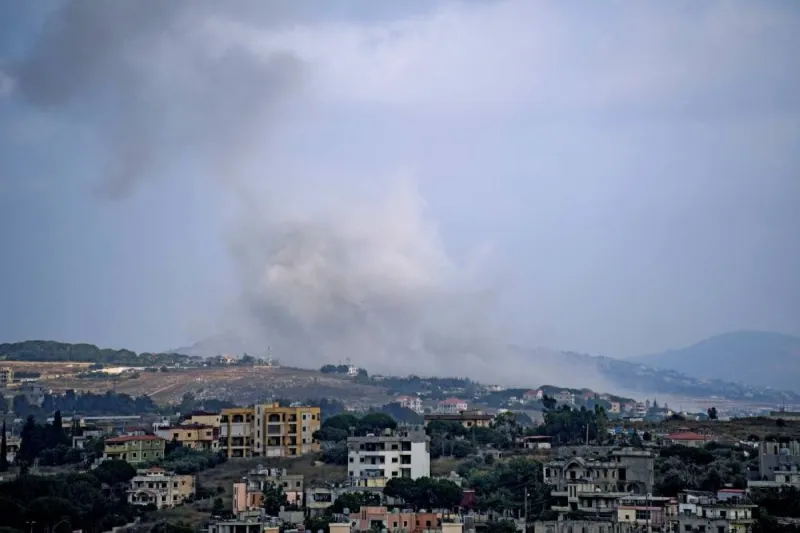
The Lebanese president also condemned the continued Israeli attacks on civilians, following an airstrike that, according to the Lebanese presidency, killed 4 people in Nabatieh.
Lebanese Foreign Minister Youssef Raji said for his part that the framework agreement «is not a final agreement» but rather a basis for continuing negotiations on outstanding issues, clarifying that Lebanon's priorities are consolidating the ceasefire, achieving a full Israeli withdrawal, releasing prisoners, and completing border demarcation negotiations.
Raji added that the government remains committed to the negotiating track, stressing that the decision to confine weapons to state hands stems from the requirements of building the Lebanese state and is not a response to Israeli demands.
In Israel, German Foreign Minister Johann Wadephul said that «Hezbollah is the cause of all problems in Lebanon», calling for the Lebanese situation to be addressed in a way that achieves stability.