
Lebanese President Joseph Aoun said that the framework text signed by Lebanon in Washington is the best possible outcome, stressing that it does not legitimise the continuation of the Israeli occupation of Lebanon.
Speaking while receiving a number of delegations at Baabda Palace, Aoun affirmed that the framework text does not legitimise the Israeli occupation's continued presence in Lebanon, as is being claimed, adding that the relevant clause refers to enabling the Lebanese army to extend its control over all Lebanese territory. "Does it make sense," he asked, "for the army to extend its authority over the entire country while the Israeli occupation is still there?"
He added: "The formula that was reached is not perfect, but it is the best possible. Our collective goal is one: achieving an Israeli withdrawal. Some have tried to achieve that by military means and failed — let them give the diplomatic option a chance."
Aoun noted that the absence of a timetable for implementing the provisions of the text is because what was signed is not an agreement but a framework, and a framework in general addresses broad principles without setting out operational details.
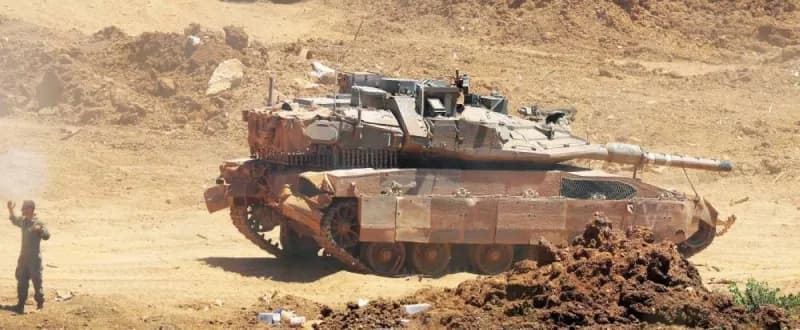
On the ground, the Israeli army announced it had carried out military operations in southern Lebanon, including the destruction of an underground passage in the town of Majdal Zoun, as well as airstrikes targeting Hezbollah personnel and positions.
The army said in a statement that its forces operating within the security zone in southern Lebanon are continuing operations to remove what it described as threats directed at Israel, noting that troops destroyed a tunnel in the town of Majdal Zoun during the operation.
It added that the air force, acting on direction from ground forces, carried out 4 strikes targeting individuals it said posed a direct threat, and also struck 3 Hezbollah facilities.
The Israeli army indicated that the strikes came in response to what it described as Hezbollah violations of the ceasefire agreement.
Israeli drones also carried out 2 strikes targeting the town of Siddiqin in southern Lebanon.
An Israeli drone struck a vehicle in the town of Siddiqin in the Tyre district of southern Lebanon at night, followed by a second strike, resulting in 2 wounded, according to Lebanon's official National News Agency.
Separately, an Israeli drone dropped a sonic bomb yesterday on the town of Safad Al Battikh in the Bint Jbeil district of southern Lebanon without causing casualties, while a similar drone dropped a sonic bomb on the town of Al Mansouri in the Tyre district, the official National News Agency reported. Israeli drones were also observed flying over the capital Beirut and its southern suburb.
Meanwhile, more than 640,000 displaced people — out of more than 1 million counted by Lebanese authorities — have returned to their homes, according to figures published by the International Organization for Migration, amid a decline in the pace of hostilities between Hezbollah and Israel.
The International Organization for Migration reported 646,107 returning displaced persons, while approximately 500,000 people remain displaced, based on data collected in coordination with local authorities since 22 June.
Returns to dozens of towns and villages — particularly those close to the border that suffered massive destruction — remain suspended, as Israel has stated through its officials that it will keep its forces in a security zone extending up to 10 kilometres from its border, and continues to carry out strikes from time to time despite the ceasefire being in effect.