
The framework agreement between Israel and Lebanon was met with widespread international relief, being regarded as a victory for diplomacy and the logic of state authority, and a decisive step toward de-escalation, accompanied by calls to act constructively in pursuit of the desired security and stability.
Israeli Prime Minister Benjamin Netanyahu praised the agreement with Lebanon, describing it as a historic achievement that dealt a blow to Iran and Hezbollah. Netanyahu said in a televised briefing: "We have reached a historic agreement for Israel following direct negotiations between Israel and Lebanon — this is a blow to Iran and Hezbollah."
Lebanese Foreign Minister Youssef Raji affirmed that the framework agreement with Israel embodies a victory for the diplomatic solution and the primacy of the state and its institutions over all else.
Raji expressed his deep gratitude for Jordan's steadfast supportive stance toward Lebanon during a phone call he received from Jordanian Deputy Prime Minister and Foreign Minister Ayman Safadi.
Safadi congratulated Minister Raji on Lebanon's signing of the framework agreement with Israel, expressing hope that the agreement would serve the interests of Lebanon and its people, contribute to restoring stability, consolidate state sovereignty over all its territory, and allow Lebanon to live in safety and peace.
Egyptian Foreign Minister Badr Abdelatty reaffirmed his country's full support for the Lebanese government and its policies aimed at extending state sovereignty over all Lebanese territory, including deploying the Lebanese army throughout the country and placing all weapons under state authority, thereby enhancing Lebanon's security and stability.
This came during a phone call between Abdelatty and Lebanese Prime Minister Nawaf Salam, which addressed the latest developments in Lebanon and recent events related to the agreement, according to a statement from the Egyptian Foreign Ministry.
Salam briefed Abdelatty on the details of the agreement. Abdelatty welcomed the step, stressing that the agreement represents an important beginning and emphasising the necessity of Israel's gradual withdrawal from the two areas still under its control, to allow the Lebanese army to deploy and the state to extend its authority over all Lebanese territory. He also stressed the importance of building on this development to achieve full Israeli withdrawal from southern Lebanon and the full, non-selective implementation of UN Security Council Resolution 1701.
France announced its readiness to contribute to the implementation of the agreement, calling for it to pave the way for the restoration of full Lebanese sovereignty. A French Foreign Ministry spokesperson said in a statement: "Based on its commitment to the security of both Israel and Lebanon, and its engagement in preserving peace in southern Lebanon, France is fully prepared to contribute to the implementation of this framework agreement and the achievement of all its objectives."
German Foreign Minister Johann Wadephul expressed optimism about the agreement, calling on all parties to act constructively.
The minister wrote in a post on X that this applies particularly to Hezbollah, adding: "Only if all parties take on their responsibilities can this process lead to lasting stability, security, and peace."
Wadephul said the agreement enhances the security of Lebanon and Israel, relies on direct understanding, and opens the door to ending a conflict that has lasted for decades, affirming that Germany wishes to support the implementation of the agreement.
Arab League Secretary-General Ahmed Aboul Gheit also welcomed the agreement, considering it an important step toward restoring the state's ability to exercise its sovereignty and achieving a full and final Israeli withdrawal from southern Lebanon, thereby opening the way for the return of displaced persons, the recovery of prisoners, and the mobilisation of international efforts to rebuild the south.
European Commission President Ursula von der Leyen on Saturday welcomed the agreement, describing it as a decisive step toward de-escalation in the region.
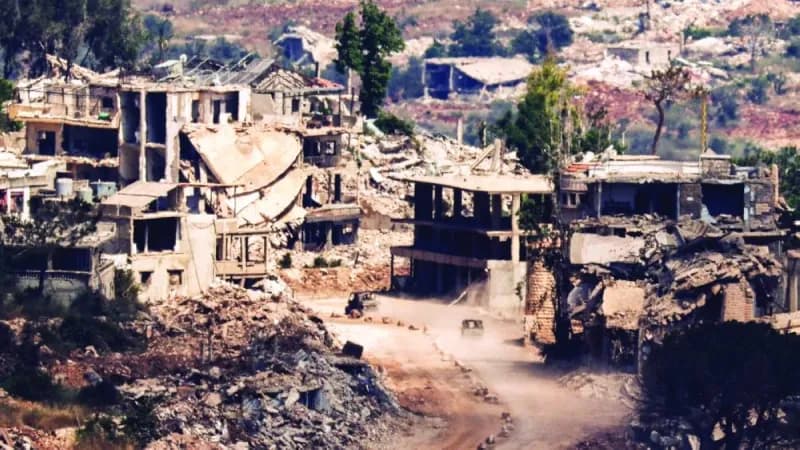
On the ground, Israel launched a strike on southern Lebanon on Friday. The National News Agency reported that an Israeli drone targeted Nbatyeh al-Fawqa, which lies outside a security zone as shown on a map Israel published of the expanded area under its forces' control in southern Lebanon.
The Ministry of Health said in a statement that a strike on Nbatyeh al-Fawqa resulted in 1 fatality and 2 wounded. Israeli Defence Minister Israel Katz announced that the army had been ordered to prepare for a prolonged stay in the areas it occupies in southern Lebanon.
Katz said in a video statement: "The Prime Minister and I have instructed the Israeli army to prepare for a prolonged stay in the security zone" — referring to an area extending up to 10 kilometres into Lebanese territory.
He added that the important principle enshrined in the agreement is that there will be no Israeli redeployment in southern Lebanon and no withdrawal as long as the terrorist organisation Hezbollah has not been disarmed throughout all of Lebanon.