
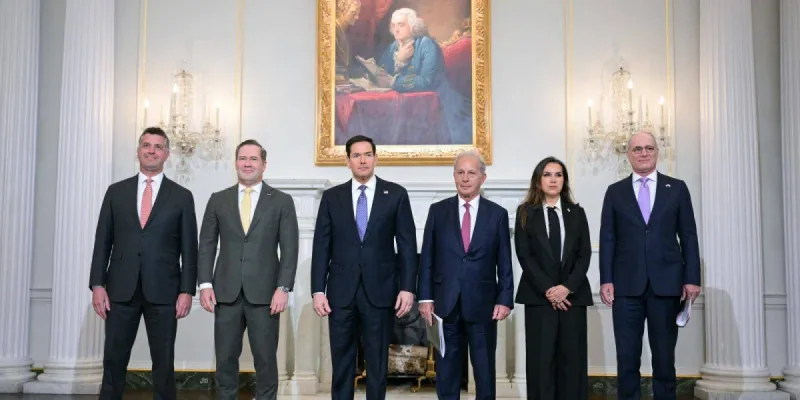
Lebanon and Israel signed a framework agreement in Washington under United States auspices, paving the way for a partial Israeli withdrawal from southern Lebanon, in a move described as the most significant milestone in a negotiated settlement process led by US Secretary of State Marco Rubio since the start of the year.
The signing ceremony was held in the presence of Rubio, who described the agreement as "the beginning of the beginning," stressing that the road ahead remains long for both countries and that the Lebanese people "deserve to live in security and peace." The agreement is the fruit of the fifth round of direct talks hosted by the US capital, which lasted four days.
Under the framework agreement, Israeli forces will withdraw from two zones within the security belt they established in the south, to be replaced by the Lebanese army after Israel cleared the two zones of Hezbollah's infrastructure. This is expected to open the way for displaced residents to return to their villages and to consolidate the Lebanese state's control over its territory.
On the Lebanese side, Lebanon's ambassador in Washington described the agreement as "a first step on the road to restoring Lebanon's sovereignty." The Israeli ambassador, meanwhile, said that Iran and its proxies had sought to derail the negotiation process, asserting that Tehran and Hezbollah are now "out of the game."
In Tel Aviv, Israeli Prime Minister Benjamin Netanyahu said his country had "achieved a major accomplishment," emphasising that Israel would remain in the security belt until Hezbollah is disarmed. He described the agreement as "a powerful blow to Iran," which had attempted to impose an Israeli withdrawal from the south, and said it cements the absence of any role for Tehran or Hezbollah in Lebanon.
The signing crowns a negotiating process that began in Washington in mid-April, and included successive rounds of talks and a trilateral military meeting at the Pentagon, amid a US bet that direct negotiations between the two governments represent the only path to ending the cycle of violence and opening prospects for reconstruction.