
Dubai, Beirut – Al Bayan, agencies
Lebanon's ceasefire held for a third consecutive day, marking the longest period of calm since the war broke out in March. Yet the truce continues to face a double test: maintaining security stability and defending Lebanese sovereignty in any future political settlement.
Despite some limited violations — including artillery fire near Tyre and Israeli drone flights over Beirut — a Lebanese security official confirmed that compliance with the ceasefire had been "almost complete" since Saturday evening. Nevertheless, many displaced people remain reluctant to return to the south, fearing a collapse of the truce.
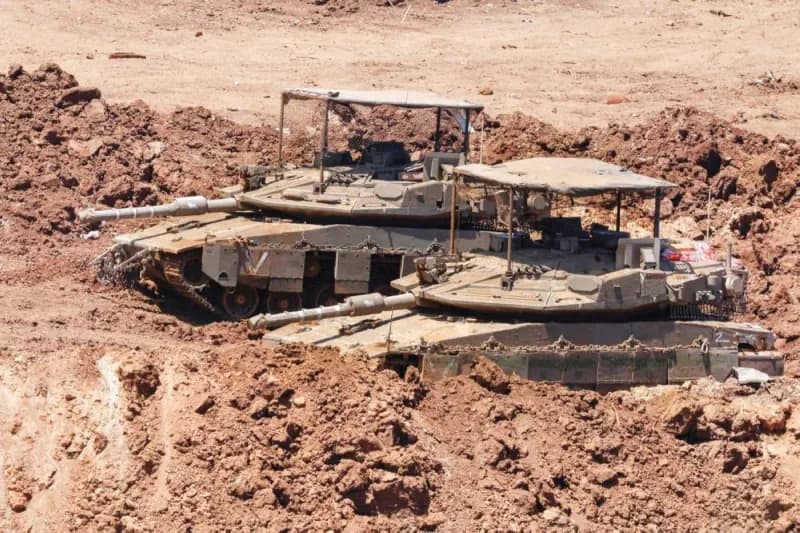
Uncertainty over the future of Israeli military presence in southern Lebanon remains a central concern. Israeli Prime Minister Benjamin Netanyahu declared that Israeli forces would remain in the area "as long as necessary, retaining freedom of action against any threat." Israeli President Isaac Herzog also stressed that any settlement must address the issue of Hezbollah's weapons.
Even so, signs emerged of efforts to give the diplomatic track room to advance. CNN cited an Israeli source saying that Tel Aviv is considering symbolic withdrawals from some positions it controls in southern Lebanon ahead of anticipated Lebanese-Israeli talks in Washington.
The source explained that the idea had been discussed three days before the meetings, and involves pulling forces from limited areas behind what is known as the "yellow line" — which demarcates the boundaries of territory occupied by the Israeli army following the previous ceasefire in April.
In the same context, The New York Times reported that Israeli field commanders had received new instructions restricting operations inside Lebanon to defensive missions and prohibiting fire except in response to a direct threat, with additional constraints imposed on the demolition of homes and infrastructure within the security zone.
Meanwhile, President Joseph Aoun affirmed that Lebanon welcomes international assistance, but stressed that "no one negotiates on our behalf," reiterating rejection of interference in Lebanon's internal affairs.
"It is the state, not the sects, that protects everyone," he said, calling for the full authority of the state to be extended across Lebanese territory and for weapons to be confined exclusively to official institutions. He added that "there is no option but a single, strong state that represents all Lebanese, and work continues to achieve this goal."
Aoun held discussions with US Vice President JD Vance, Trump's son-in-law Jared Kushner, and Qatari Prime Minister Sheikh Mohammed bin Abdulrahman Al Thani on efforts to consolidate the ceasefire, prevent escalation, and form a conflict-resolution mechanism.
Separately, the United Nations Development Programme and the National Council for Scientific Research revealed that direct damage to buildings in southern Lebanon had reached approximately $1.38 billion, encompassing the total destruction of more than 11,000 buildings.
Civil Defence announced the recovery of 13 additional bodies, while the overall death toll has surpassed 4,100, with approximately 1.2 million people displaced since the war began.