
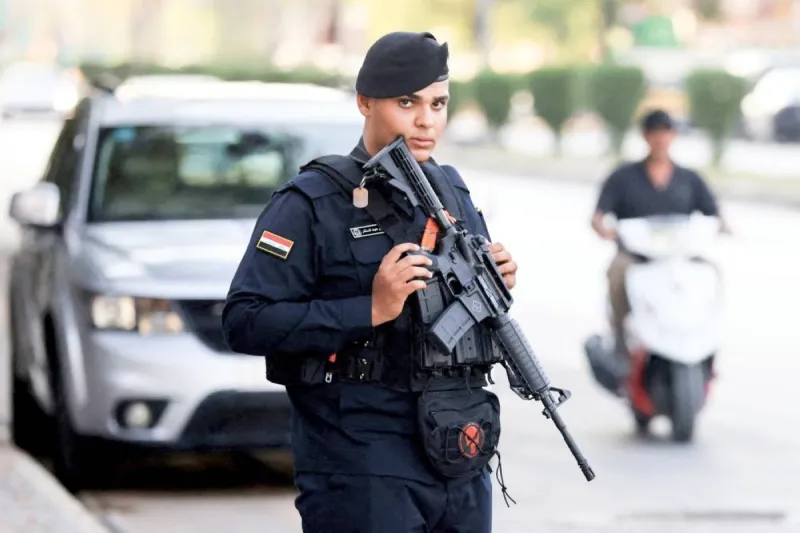
Having drawn a clear line on corruption, the question of confining weapons to state control has returned to the forefront of Iraq's political and security landscape, as Tehran-aligned armed militias have come to represent the problem of "loose weapons" — the single greatest obstacle to Iraqi sovereignty and to the country's security and economic stability. The Iraqi government has announced that 30 September will be the final deadline for handing over weapons, a notable development that reflects Baghdad's intent to reassert state control.
The Iraqi government announced yesterday that it will give Tehran-aligned groups until 30 September to surrender their arms to the state — a date that coincides with the expiry of the international coalition's mission to combat the terrorist organisation ISIS, the continued existence of which some factions cite as justification for retaining their weapons.
Calls within Iraq for confining weapons to state authority have long grown louder, and the security services have repeatedly sought to collect loose weapons, only to see their efforts fail.
This time, however, through a fixed deadline and within the framework of an effort to restore security and state prestige, the government has drawn a red line for the militias — particularly after Washington linked its projects in Iraq to fighting corruption, disarming militias, and distancing Iran's proxies from the country.
The announcement comes ahead of an anticipated mid-July visit by Prime Minister Ali Al Zaidi to Washington — his first trip abroad since assuming office last month — during which he is expected to pledge to disarm factions designated as terrorist organisations by Washington, amid growing American pressure to dismantle the Popular Mobilisation Forces (PMF).
Reports indicate that a plan is already in place to dissolve the PMF in phases, beginning with the confiscation of its heavy and medium weapons, the removal of commanders implicated in attacks against the United States and a number of regional countries, and the appointment of professional officers to oversee the PMF's infrastructure — as a prelude to integrating the organisation, which represents a major obstacle to the resumption of normal relations with Baghdad.
Retired US General David Petraeus has held talks with a number of Iraqi officials and presented actionable recommendations on dismantling the militias.
It goes without saying that imposing a specific deadline for weapons collection represents a significant political shift that may open the door to restructuring Iraq's security landscape, driven by international pressure — but the real challenge lies in the state's ability to implement this course of action.
There is no doubt that disarming the militias, or compelling them to hand over their vast military arsenals to the state, is an essential means of ensuring Iraq's stability and security. These militias have previously targeted US forces and have also carried out drone attacks in the Kurdistan Region as well as attacks against a number of Arab Gulf states.
For this initiative to prove its seriousness, there must be a verification process overseen by both the government and non-governmental stakeholders.
The United States has thrown its full weight behind Al Zaidi's government and will not allow Iran to undermine it, nor will it permit armed factions to impose their will as they have done with previous governments. Washington has signalled on more than one occasion that it may resort to measures more stringent than conventional sanctions if it senses any attempts to sabotage its project in Iraq.
Washington views this file as an early test for the new Iraqi prime minister's government, insisting that the weapons-consolidation project must be grounded in clear executive measures — such as dismantling armed structures that operate outside official institutions, cataloguing weapons stockpiles, and bringing all armed parties under state authority.
The weapons-consolidation file represents the new Iraqi government's first test on an issue that has defeated previous governments. Experts, however, believe this endeavour faces significant obstacles, foremost among them Iran's efforts to keep the factions' weapons beyond Baghdad's control.
What is certain is that Iraq's way out of its current crisis begins with establishing a new administration capable of building a genuine state — one that fights corruption and dismantles Tehran-aligned militias.
Iraq today stands at a critical crossroads: it must either press forward on the path of rule of law, or remain trapped in the vortex of Iran's grip. But will the new plan succeed in freeing Iraqis from the terror of loose weapons?