
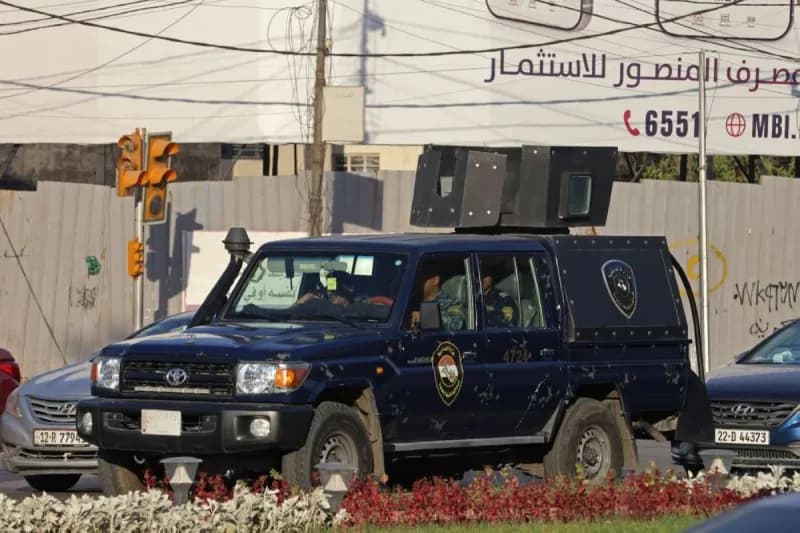
Indicators surrounding Iraq's sudden anti-corruption campaign suggest a connection to the Iranian corruption file inside Iraq, and that the campaign's primary objective is to dismantle a complex political and security network tied to Iran that facilitates its access to international markets through Iraq — whether via oil or the dollar.
Although Iraqi authorities have yet to release the full account or detailed charges, what has emerged so far suggests the investigations go beyond bribery and contracts, extending into influence networks linked to the oil sector and public finances.
The arrests come ahead of an expected visit by Prime Minister Ali Al-Zaidi to Washington in mid-July — his first foreign trip since taking office last month — during which he pledged to combat corruption and rein in the weapons of Iran-aligned groups, a file on which Washington has been pressing Baghdad.
Despite official Iraqi statements avoiding any explicit link to Iran, an Iraqi security official told Agence France-Presse that the raids covered cases "related to the file of financing the factions" aligned with Tehran, which Washington designates as "terrorist" organisations, as well as "Iranian oil smuggling, dollar smuggling, and corruption." The official noted that "matters are still in their early stages" amid mounting American pressure on Baghdad.
Earlier on Sunday, the Iraqi News Agency quoted a high-level source saying the arrests took place "based on confessions made by Oil Ministry Undersecretary Adnan Al-Jumaili," who was detained last month when authorities seized more than 85 million dollars in a corruption case linked to him.
The evidence indicates that Iraqi authorities deliberately broadened the anti-corruption campaign to include officials from a variety of political blocs — both Sunni and Shia — to avoid portraying it as exclusively tied to Iran's network. Instead, the campaign was framed within a national context that drew popular approval from across Iraq's political spectrum and was backed by the main political blocs.
The most prominent name in this context is MP Ali Maarij Al-Bahadli, who faces accusations of overseeing or facilitating operations linked to the smuggling of Iranian oil through Iraq. His case carries particular significance because it relates to a broader track suspected of being used to circumvent sanctions imposed on Iran, by blending Iranian oil with Iraqi crude or passing it through with falsified documents of origin.
Previous American data indicate that Al-Bahadli was part of a network that facilitated the transfer and sale of Iranian petroleum products through Iraqi territory or institutions, thereby providing a financial resource for Iran and some of its allies inside Iraq. His case and inclusion in the campaign thus stand as one of the clearest points of intersection between the anti-corruption drive and Iranian influence networks.
The Iranian thread does not end with oil alone. Some leaks and reports indicate that the investigations also cover channels connected to faction financing, dollar smuggling, and the use of commercial and banking fronts to move funds whose source or destination is difficult to trace. These files have previously been a recurring focus of American concern, particularly as Washington has accused some Iraqi banks and companies of operating as financial conduits serving the Iranian Revolutionary Guard or Iraqi factions linked to it.
If the investigations expand along this track, as expected, the anti-corruption campaign could become one of the most sensitive operations in Iraq's recent history, as it edges toward Iranian spheres of influence that have for years remained beyond accountability — until Trump demanded that the Iraqis settle accounts.
The campaign has not come as a surprise to the Americans. Since last May, the United States announced its plan to dismantle Iran's network in Iraq.
On 7 May, the US Treasury Department imposed sanctions on Iraqi Deputy Oil Minister Ali Maarij Al-Bahadli for his involvement in a scheme to help Iran sell its oil in violation of international embargoes by blending it with Iraqi crude — a case that has been known for a long time but which relevant international parties had remained silent about.
This step appears not to have been isolated, but rather part of an American programme to dismantle Iranian Popular Mobilisation Forces militias in Iraq. Adding to these speculations were reports published today about an existing plan to dissolve the Popular Mobilisation Forces in Iraq in phases, beginning with the removal of heavy weapons, the isolation of faction leadership, and the appointment of professional officers to oversee the body's infrastructure.
The outlines of the plan, disclosed by officials who participated in technical and policy discussions about the future of the Popular Mobilisation Forces, coincided with a visit to Baghdad last week by retired US General David Petraeus, in his capacity as an "independent expert" working on an "executive paper" on disarming militias in Iraq.
According to reports, Petraeus is working on drafting an executive paper on the Popular Mobilisation Forces to be submitted to the White House through the US envoy managing the Iraq and Syria file, Tom Barrack.
This pressure on Iran-aligned Iraqi militias comes in the context of attacks they have carried out against Arab Gulf states using drones targeting Gulf security and vital civilian infrastructure, on behalf of Iran, which uses these militias to execute attacks that fall under the category of international crimes — such as the wanton aggression in the vicinity of the Barakah peaceful nuclear power station.
American officials have informed Baghdad of the necessity of asserting full sovereignty over security decision-making and ending sources of regional threat.