
Abu Dhabi — WAM; World Capitals — Agencies
US President Donald Trump continues his manoeuvring with Iran, reflecting his 'manoeuvre and maximum pressure' strategy, which he pursues to force Tehran into making full concessions on its nuclear programme and maritime navigation.
Hours after announcing the end of the memorandum of understanding between the United States and Iran, and after the US military launched sweeping strikes on Iran targeting more than 80 sites with precision munitions in response to Iranian attacks on commercial vessels in the Strait of Hormuz, Trump said he does not believe war with Iran will break out again.
At the same time, Kuwait and Bahrain announced that their air defences had intercepted Iranian attacks involving ballistic missiles and drones, as Emirati, Gulf, Arab and international condemnations of the Iranian attacks continued to pour in.
The United Arab Emirates condemned in the strongest terms the renewed Iranian aggressive attacks that targeted Bahrain and Kuwait with missiles and drones.
The Ministry of Foreign Affairs stated in a communiqué that these aggressive attacks constitute a flagrant violation of the sovereignty of the sisterly Kingdom of Bahrain and the sisterly State of Kuwait, and a threat to their security and stability. The Ministry reaffirmed the UAE's full solidarity with Bahrain and Kuwait, and its support for all measures that serve to preserve their security and stability.
The UAE also condemned in the strongest terms the Iranian aggressive attack targeting the Saudi tanker 'Wadyan' while it was transiting the Strait of Hormuz. The Ministry of Foreign Affairs stated in a communiqué that this attack represents a grave threat to the safety and security of international navigation.
It constitutes a dangerous escalation aimed at undermining the security and stability of one of the world's most vital waterways. The UAE expressed its full solidarity with the sisterly Kingdom of Saudi Arabia, affirming its support for all measures that serve to protect the security and safety of its vessels and national interests, and to guarantee freedom of navigation in regional and international waters.
The Ministry also stressed that this attack constitutes a flagrant violation of UN Security Council Resolution 2817, which affirmed the importance of protecting freedom of navigation and rejected the targeting of commercial vessels or the disruption of international maritime passages.
It affirmed that targeting commercial navigation or using the Strait of Hormuz as a tool of pressure or economic blackmail is unacceptable and constitutes a direct threat to regional stability, global energy security, and the safety of international trade flows.
Speaking from Ankara, US President Donald Trump said he does not believe war with Iran will break out again, noting that his name tops Iran's 'assassination list', and adding: 'You cannot allow maniacs to have nuclear weapons.' He also indicated he was not sure he wanted to reach a deal with them.
Earlier, Trump announced that the memorandum of understanding with Iran 'appears to be over', reiterating that the United States will not allow Tehran to possess a nuclear weapon. Trump subsequently said in new remarks that dealing with Iran is 'a waste of time', stating that the United States is 'wasting our time negotiating with Iran', and expressing his desire to 'get our work done' instead of continuing the diplomatic path. He added: 'We have to get rid of their cancer, their cancer. And you know what you do? You get rid of the cancer early. That's the way I look at it.'
He also said he feels deeply frustrated with Iran's leaders, describing them as 'crazy', and hinted at launching a new round of military strikes following the wave of strikes from the night before last, expressing doubt about the possibility of reaching an agreement. Trump also hinted at reimposing a naval blockade on Iran and threatened to launch a 'major attack'.
He noted that Tehran had been attempting to rebuild its radar systems, adding: 'They had gotten about 60% of it done. Now they have to start all over again.'
Trump hinted at targeting bridges, water stations and electricity generation facilities, adding: 'If we have to, we'll take them out. I don't want to do that, but if we have to, we will.' He added: 'We might take Kharg Island.'
Just hours after Iranian attacks targeted 3 commercial vessels transiting the Strait of Hormuz, in addition to targeting a Saudi and a Qatari tanker, the United States responded immediately to the attacks with sweeping strikes against Iran.
US Central Command (CENTCOM) announced that its forces conducted, in the early hours of yesterday, a new round of strikes targeting more than 80 military sites using precision munitions.
CENTCOM said the strikes targeted air defence systems, command and control networks, coastal radar sites, anti-ship missile capabilities, and more than 60 vessels belonging to the Islamic Revolutionary Guard Corps, affirming that the aim was to degrade Iran's ability to continue attacking international commercial traffic through the vital maritime corridor.
Reuters quoted a US official as saying the strikes also included coastal surveillance systems, surface-to-air missiles, anti-ship cruise missiles, and drone launch sites.
Iranian media reported hearing explosions in Bushehr, Bandar Abbas and Sirik, while a local official confirmed that 2 military bases in Bushehr province had been targeted, without announcing any casualties.
Earlier yesterday, the official spokesman for Kuwait's Ministry of Defence, Colonel Saud Al-Atwan, announced that the armed forces had detected, in the early hours of yesterday, 2 hostile ballistic missiles and 13 hostile drones that had breached Kuwaiti airspace, confirming they were successfully intercepted and neutralised without recording any material damage or human casualties.
In Bahrain, the Bahrain Defence Force General Command announced that Iran is continuing its 'systematic hostile approach' through its criminal attacks with missiles and drones targeting civilians in the Kingdom, affirming that air defence systems intercepted and destroyed a number of Iranian aerial attacks.
The General Command stressed that the deliberate use of missiles and drones to target civilians and private property constitutes a flagrant violation of international humanitarian law.
The State of Kuwait condemned in the strongest terms the repeated Iranian attacks on its territory, describing them as a flagrant violation of its sovereignty, a direct threat to its security and stability and the safety of citizens and residents, and a grave breach of international law, the UN Charter, and UN Security Council Resolution 2817.
Kuwait's Ministry of Foreign Affairs affirmed that the continuation of these attacks, at a time when regional and international efforts aimed at achieving de-escalation are ongoing, constitutes a systematic undermining of those efforts, reiterating that Kuwait's security, sovereignty, and the safety of its citizens and residents constitute a 'red line' that cannot be touched.
It stated that the country reserves its inherent right to take all necessary measures to preserve its sovereignty and protect its security and stability. Kuwait also condemned the Iranian attacks targeting Bahrain, reaffirming its categorical rejection of this dangerous escalation.
The Secretary-General of the Gulf Cooperation Council, Jasem Mohamed Al-Budaiwi, condemned the Iranian attacks on Bahrain and Kuwait, describing them as confirmation of Iran's continued pursuit of its approach aimed at undermining international and regional efforts to consolidate security and peace and to resolve the crisis.
He stressed that the attacks constitute a blatant aggression and a flagrant violation of the sovereignty of both countries and a direct threat to their security and stability. Qatar also condemned the repeated Iranian attacks on Bahrain and Kuwait, describing them as a blatant violation of both countries' sovereignty and a flagrant breach of international law, calling for the continuation of dialogue and diplomacy, de-escalation, and building on the gains achieved within the framework of the memorandum of understanding.
The Sultanate of Oman condemned the military strikes that targeted Bahrain and Kuwait, as well as the targeting of a Saudi and a Qatari commercial tanker in the Strait of Hormuz, affirming that the escalation of military tension threatens regional security, maritime safety, and the flow of international trade and energy supplies, and renewing its call for restraint and full compliance with the signed understandings.
Egypt likewise condemned the repeated Iranian attacks on Kuwait and Bahrain, affirming that Gulf security is an integral part of Egypt's and the region's security, while Jordan condemned the Iranian attacks on Bahrain, affirming its full solidarity with the Kingdom.
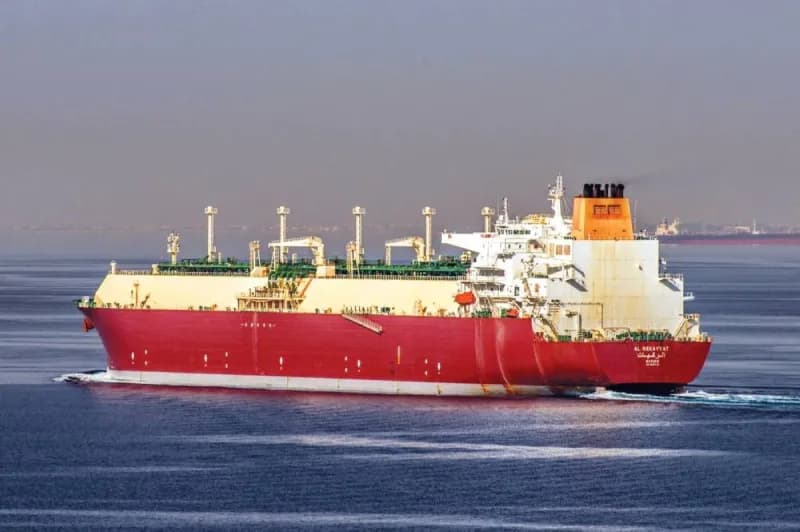
Nabil Fahmy, Secretary-General of the Arab League, reiterated his categorical rejection of the Iranian aggressive attacks targeting the interests and territories of Gulf Arab and neighbouring countries, most recently the attacks on the Saudi supertanker crude carrier 'Wadyan' and the Qatari liquefied natural gas tanker 'Al-Rukayyat', in addition to the repeated Iranian attacks targeting Kuwait and Bahrain with missiles and drones.
Fahmy warned in a statement issued yesterday of the extreme danger of this escalatory trajectory and its sensitive timing, as it comes amid regional and international efforts aimed at consolidating de-escalation and restoring the regularity of navigation, threatening to torpedo these efforts and drag the region once again into a cycle of open-ended confrontation with incalculable consequences.
His Excellency Mohamed bin Ahmed Al-Yamahi, President of the Arab Parliament, also condemned in the strongest terms the Iranian aggressive attacks, affirming that they constitute a flagrant violation of the sovereignty of states, a grave contravention of international law and principles of good-neighbourliness, and a dangerous escalation that threatens to undermine the security and stability of the Arabian Gulf region and heighten tensions within it.
The President of the Arab Parliament affirmed in a statement issued yesterday that any attack targeting the sovereignty or security of any Arab state represents an assault on Arab national security and a direct threat to regional security and stability.
French President Emmanuel Macron said the Iranian attacks constitute a violation of the memorandum of understanding, and that the Iranians are wrong to act in this way. NATO Secretary-General Mark Rutte described the US strikes as 'very necessary', expecting that Alliance leaders would affirm the need to fully reopen the Strait of Hormuz to navigation.
EU foreign policy chief Kaja Kallas said Iranian attacks on Bahrain and Kuwait were 'unacceptable', but warned that the exchange of strikes between Washington and Tehran is further complicating ongoing negotiations.
In parallel, CNN quoted a regional source as saying that a number of allies are continuing to send messages to Washington and Tehran to prevent further escalation and preserve the ceasefire, while the International Maritime Organization announced that around 6,000 sailors remain stranded in Gulf waters, warning that the continuation of the attacks threatens maritime security and global trade, and heightens concern about one of the world's most important energy shipping lanes.
We destroyed Tehran's attempts to rebuild its radar systems and we can target bridges, energy and water
I do not believe war will break out again and we can reimpose a naval blockade on Iran and seize Kharg Island
The latest American strikes on Iran are very necessary
Iran has violated the memorandum of understanding and its leaders are wrong to do so
Iran's attacks on Bahrain and Kuwait are unacceptable and the strikes further complicate negotiations