
Dubai — Al Bayan and agencies
US President Donald Trump has returned the Iran file to a stark equation, saying Washington will either reach a deal with Tehran or will "finish the mission" militarily, while adding that he personally prefers to reach a deal. Trump's remarks came as talks between the United States and Iran remain suspended.
Meanwhile, files linked to the post-war phase are moving along multiple tracks, from the nuclear programme to the Strait of Hormuz and the Bushehr nuclear plant, against a backdrop of escalating rhetoric between Israel and Iran. Trump told reporters at the Oval Office on Monday:
"Either we make a deal or we finish the mission. OK. And it won't be hard to finish the mission. I prefer to make a deal, because I don't want it to affect 91 million people."
He added: "We can knock down their bridges in one hour, and we can cut off their power supplies... They have no money now. We haven't given them any money."
Trump also confirmed, in remarks carried by US media, that Iran "will not get a nuclear weapon," saying the United States would not allow it. He said his country had "crushed Iran militarily" and that the US military was "the strongest in the world" — statements reflecting Washington's continued reliance on military pressure alongside the option of a deal.
In Israel, Prime Minister Benjamin Netanyahu told Fox News that Iran would not possess a nuclear weapon "with or without a deal" as long as he remained prime minister. Bloomberg also quoted Israeli Defence Minister Israel Katz as saying that any Iranian leader who seeks to destroy Israel would meet the fate of the late Supreme Leader Ali Khamenei.
Katz said, according to Bloomberg, that Khamenei was killed because he planned and led Iranian efforts to destroy Israel, adding that Israeli and American strikes had, in his words, removed a direct existential threat to Israel and inflicted damage on Iran's strategic capabilities, and that Israel was prepared to defend itself independently against any future threat.
For his part, Iranian parliament speaker and chief negotiator Mohammad Baqer Qalibaf said in remarks carried by Iranian state television that implementing the ceasefire agreement with the United States was "difficult but achievable." He added that Tehran "is not at peace with the United States and will not recognise Israel."
Simultaneously, the Interfax news agency quoted the head of Russia's state nuclear energy company Rosatom as saying the company intends to return its staff to Iran's Bushehr nuclear plant starting from mid-July.
Reuters reported that the company, which is constructing two new units at Bushehr, had evacuated hundreds of employees after the outbreak of the American-Israeli war on Iran on 28 February.
The Strait of Hormuz remained at the top of the files linked to any forthcoming de-escalation. German Foreign Minister Johann Wadephul told the newspaper Handelsblatt, in remarks carried by the German news agency, that holding Iran responsible for the cost of demining the strait would be justified, though he clarified that his country does not currently intend to impose charges for this task.
Wadephul added that German military participation in demining operations is contingent on a safe environment and the consent of Oman and Iran, noting that success depends on the course of negotiations between the United States and Iran. The German agency reported that the German government has dispatched the minesweeper Fulda and the support vessel Mosel to the region to be on standby.
A White House official also said, according to media reports, that the issue of the Strait of Hormuz and the protection of maritime navigation would be on the agenda at the upcoming NATO summit in Ankara, noting that a number of allies had expressed willingness to participate in protecting navigation, but pointing out that many of them lack the ships or assets needed to contribute effectively to a tangible naval effort.
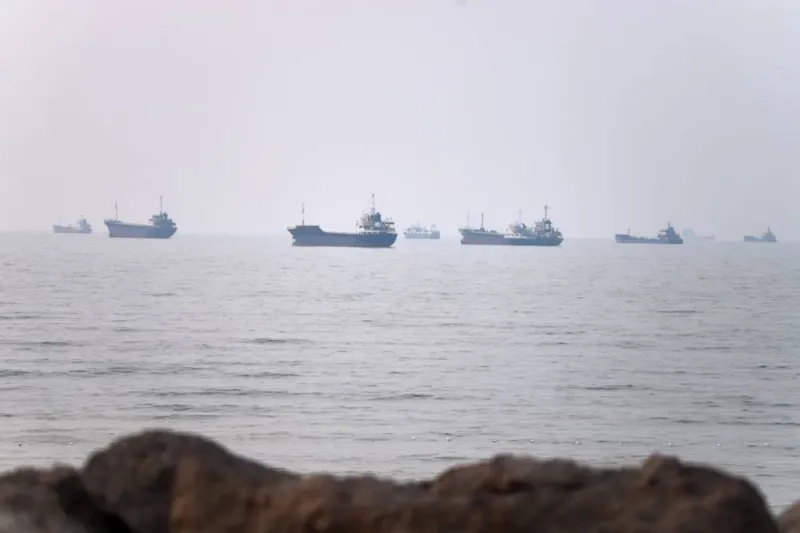
The Associated Press reported on Monday that Washington is seeking to fully reopen the Strait of Hormuz to vessel traffic, particularly as this issue is considered one of the most prominent sticking points in the negotiations so far, with Tehran seeking control over the strait.
On the maritime front, shipping data on the London Stock Exchange Group platform, according to Reuters, showed a fleet of 10 Japan-linked vessels exiting the Strait of Hormuz, including 6 giant crude oil tankers carrying approximately 12 million barrels of crude oil from the Middle East. South Korean refiner S-Oil also said a supertanker carrying oil for its refinery had left the strait, after ships had remained stranded in the Gulf for months due to the war.