
The United States launched strikes on 10 Iranian sites, including military surveillance infrastructure, communications systems, air defence positions, drone storage facilities, and sea-mine-laying capabilities.
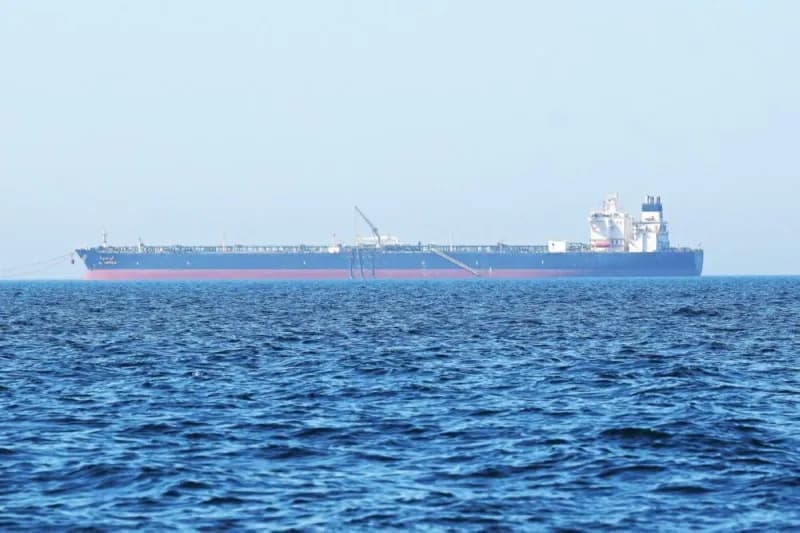
US Central Command (CENTCOM) confirmed that the strikes were carried out in response to an Iranian drone attack on the oil tanker Keiko, sailing under a Panamanian flag, as it passed near the Strait of Hormuz.
CENTCOM said in a statement: "Iran was given the opportunity to comply with the ceasefire agreement but chose not to do so. The strikes were a direct response to Iran's continued aggression against commercial shipping."
US President Donald Trump said American fighter jets had struck Iranian sites. In a post on his Truth Social account, Trump wrote: "United States aircraft have conducted airstrikes on Iranian missile and drone storage sites, and coastal radar positions, for violating the ceasefire agreement, again! It is very possible they will never learn."
Trump warned that Iran would cease to exist should the United States decide to escalate, adding: "There may come a time when we are unable to be reasonable and are forced to complete the mission we began so successfully militarily. If that happens, Iran will no longer exist."
In a fresh act of aggression, Iran launched drone and ballistic missile attacks against Kuwait and Bahrain. Bahraini forces announced that the kingdom had come under Iranian attack. The Bahrain Defence Force General Command said in a statement that air defences had intercepted and destroyed a number of treacherous Iranian aerial attacks, stressing that maximum readiness remained in force.
Kuwait's Armed Forces General Staff also announced that Kuwaiti air defences had intercepted hostile missile and drone attacks. The General Staff said in a statement carried by the Kuwait News Agency (KUNA) that the sounds of explosions were the result of air defence systems intercepting the hostile attacks. The statement called on everyone to comply with the security and safety instructions issued by the competent authorities.
Bahrain's Ministry of Foreign Affairs expressed the kingdom's condemnation in the strongest terms of the renewed Iranian aggression against its territory, describing it as a dangerous escalation that reveals that what Tehran is doing is neither a passing act nor an isolated incident, but a deliberate policy and a systematic pattern of repeated aggression against Bahrain's sovereignty and the security of its citizens and residents.
The ministry affirmed that the repetition of this aggression will neither impose a fait accompli nor undermine Bahrain's resolve or the steadfastness of its people. It called on the UN Security Council to hold an emergency session and fulfil its responsibilities in ensuring the implementation of Resolution 2817 (2026), putting an end to this ongoing aggression and holding its perpetrators accountable.
Bahrain also affirmed that this repeated aggression targets not only the kingdom itself, but constitutes a threat to the security of the entire Gulf Cooperation Council system, based on the established principle underpinning the GCC's Joint Defence Agreement, which holds that any aggression against any member state is aggression against all, and that a threat to one is a threat to all.
The ministry expressed the kingdom's pride in Gulf solidarity and unity of security destiny, affirming that it retains its full legitimate right to defend its sovereignty, security, and territorial integrity by all means guaranteed under international law, and that it holds the Iranian regime fully responsible for any escalation resulting from the continuation of its attacks.
Kuwait likewise condemned the flagrant violation of its sovereignty following the Iranian strikes, affirming that they constitute an undermining of the efforts being made to bring the war in the region to a definitive end. Kuwait's Ministry of Foreign Affairs condemned the repeated Iranian attacks on the country.
The United Arab Emirates condemned in the strongest terms the renewed Iranian aggressive attacks. The Ministry of Foreign Affairs said in a statement that these aggressive attacks represent a flagrant violation of the sovereignty of sisterly Bahrain and sisterly Kuwait, and a threat to their security and stability.
The ministry renewed the UAE's full solidarity with sisterly Bahrain and sisterly Kuwait, and its support for everything that would preserve their security and stability. Qatar also strongly condemned the repeated Iranian attacks, considering them a blatant violation of the two countries' sovereignty and a flagrant breach of international law.
Qatar's Ministry of Foreign Affairs stressed in a statement the need to spare the region the consequences of these unjustified attacks, and to continue on the path of dialogue and diplomacy, de-escalation, and building on the gains achieved within the framework of the memorandum of understanding, in a manner that contributes to consolidating security and stability at both the regional and international levels.
The ministry renewed Qatar's full solidarity with Bahrain and Kuwait, and its support for all measures they take to preserve their sovereignty and security.
Saudi Arabia also renewed its full solidarity with Kuwait and Bahrain, and its complete support for all measures they take to safeguard their sovereignty in the face of the sinful Iranian attacks.
Saudi Arabia's Ministry of Foreign Affairs expressed in a statement the kingdom's condemnation and denunciation in the strongest terms of the sinful Iranian attacks on Kuwait and Bahrain, as well as on the security and freedom of navigation in the Strait of Hormuz.
The ministry said that the kingdom reaffirms its categorical rejection of these attacks as a violation of international law and the UN Charter. Saudi Arabia also reaffirmed that these violations undermine international efforts aimed at restoring security and stability in the region.
Jordan also condemned the Iranian attacks on Bahrain and Kuwait as a flagrant violation of their sovereignty, a threat to their security, stability, and territorial integrity, a dangerous escalation, and a blatant breach of international law and the UN Charter.
Jordan's Ministry of Foreign Affairs affirmed in a statement Jordan's absolute solidarity with Bahrain and Kuwait, and its full support for all steps they take to protect their sovereignty, security, and the safety of their citizens and residents.
Egypt condemned in the strongest terms the Iranian attacks on Kuwait and Bahrain, describing them as a flagrant violation of their sovereignty, a threat to their security and stability, and an unacceptable escalation that undermines efforts aimed at consolidating calm and reducing tension in the region.
Egypt's foreign ministry renewed in a statement its full solidarity with Kuwait and Bahrain, and its complete support for all measures they take to preserve their security and stability.
Egypt also stressed the necessity of adhering to the ongoing negotiating track, supporting serious efforts to reduce the level of escalation in the region, and resorting to dialogue and peaceful means for settling disputes, in a manner that contributes to enhancing regional security and stability.
Arab Parliament President His Excellency Mohammed bin Ahmed Al Yamahi strongly condemned the Iranian aggressive attacks targeting Bahrain and Kuwait, affirming that they constitute a flagrant violation of state sovereignty and a clear breach of the principles of international law and the UN Charter, as well as a direct threat to the security and stability of the region.
Al Yamahi affirmed in a statement that these rejected practices represent an unacceptable escalation and an infringement on the security and stability of Arab states, stressing the necessity of adhering to the rules of international law, respecting state sovereignty, and sparing the region further tension and escalation.
He stressed that the Arab Parliament categorically rejects any aggression or threat targeting Arab states or affecting their sovereignty and territorial integrity, affirming that the security of the Arab Gulf states represents a fundamental pillar of Arab national security and that preserving it is a collective responsibility requiring a unified Arab stance against any threats.
Arab League Secretary-General Ahmed Aboul Gheit renewed, in the strongest terms, his condemnation of the continuing Iranian aggressive attacks against both Bahrain and Kuwait, calling them a flagrant violation of sovereignty and of the provisions of international law and the UN Charter.
Aboul Gheit stressed in a statement the necessity of an immediate halt to all Iranian aggressive actions targeting Arab Gulf states and threatening regional security and stability, holding Iran fully responsible for its unlawful actions, which undermine regional and international diplomatic efforts to achieve peace in the region.
He affirmed his support for Bahrain and Kuwait — their leadership and peoples — and full solidarity with them in all measures and steps they take to stop the brutal Iranian attacks against them, calling on all relevant parties to commit to de-escalation and support efforts aimed at achieving calm, leading to a sustainable ceasefire.
The European Union also strongly condemned the recent attacks on Bahrain, expressing its full solidarity with Manama. EU spokesman Anwar Al Announi said in a statement that these deliberate attacks are unacceptable and unjustified and constitute an explicit violation of international law.
The European Union called on Iran to immediately halt its attacks against neighbouring states, to fully comply with the recently signed memorandum of understanding, and to fully implement UN Security Council Resolution 2817.
There may come a time when we are unable to be reasonable and are forced to complete the mission militarily.
An unacceptable escalation and an infringement on the security and stability of Arab states.
The attacks are unacceptable and unjustified and constitute an explicit violation of international law.
We stand alongside Bahrain and Kuwait in all measures they take to stop the attacks.