
US Secretary of State Marco Rubio began a Gulf tour from Abu Dhabi yesterday, which includes Kuwait and Bahrain, to participate in a Gulf Cooperation Council meeting.
Rubio told reporters, in response to a question about whether he would seek to reassure countries harmed by Iranian attacks, "This will certainly be addressed during these talks."
He added: "There are other matters not included in the memorandum of understanding that will inevitably be discussed, but this particular issue must be discussed," noting that "a careful reading of the memorandum of understanding will show that when we speak, for example, of a complete and final cessation of military operations throughout the region, that is not possible... as long as Iran's proxies are firing missiles and drones from Iraq and engaging in terrorist acts such as Hamas and Hezbollah."
Rubio reiterated his country's rejection of the imposition of any fees or transit tolls in the Strait of Hormuz, following Iran's hints about this issue as part of post-war arrangements in the Middle East.
He said that Hormuz is "an international waterway. No country is permitted to impose fees or transit tolls on an international waterway. That is existing international law... This applies to all maritime passages in the world, and this is what we expect to be the case here." He added: "So I don't think we need to convince anyone of that here. I believe all countries in the region will agree with us on that."
Meanwhile, US President Donald Trump said yesterday that Iran had agreed to nuclear inspections "indefinitely," but Tehran denied this, also noting that released Iranian assets would be used to purchase humanitarian supplies from the United States.
Trump responded to what he described as "protests and false statements" from Iran. He wrote in a post on his Truth Social platform: "Iran has agreed, completely and finally, to the highest levels of nuclear inspection for a long period into the future (indefinitely)."
He also stated that any Iranian assets released under the agreement would be placed in an escrow account and used to purchase food and medical supplies from the United States, "including corn, wheat, and soybeans from our great American farmers." Iran denied reaching any such agreement.
Trump had said on Monday that "the danger of Iran obtaining a nuclear weapon outweighs concerns about the potential economic repercussions of military action, including the occurrence of a global recession."
When asked whether he was prepared to risk a global recession by striking Iran if it failed to honour its agreement, Trump told reporters at the White House: "Well, not the way I'm planning it. That won't cause a recession."
He added that the threat posed by a nuclear weapon is "a bigger concern," continuing: "If they don't comply — well, the risk of a nuclear weapon outweighs a recession." He said: "A recession is a very bad thing," adding that "a nuclear weapon will cause a recession much faster."
Trump again affirmed that military action remains on the table if Iran fails to honour the agreement, saying: "If Iran doesn't comply with its agreement, or if it doesn't act properly, I will do what I have to do."
In the first of several expected steps under the agreement to provide Iran with economic support, the US Treasury Department announced a sanctions waiver until 21 August, allowing Tehran to sell oil and related products and receive payments in return.
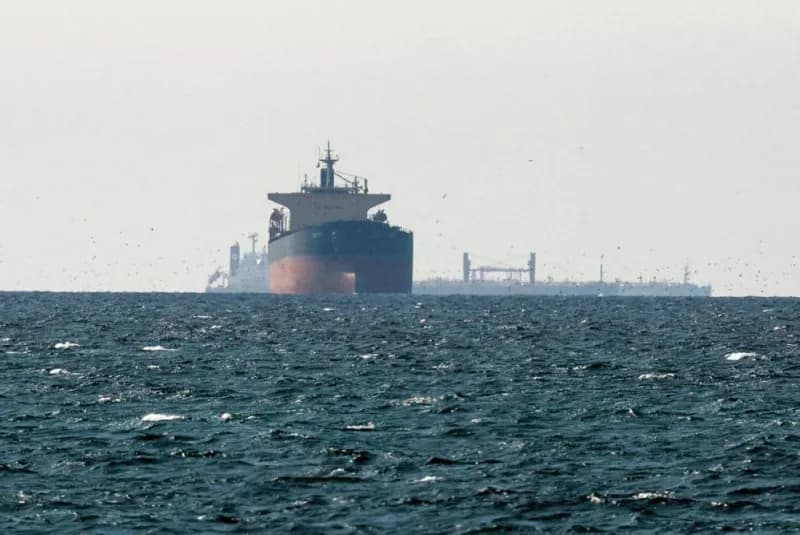
The United Nations' International Maritime Organization said it had begun implementing an evacuation plan for hundreds of ships carrying 11,000 sailors stranded in the Arabian Gulf to transit the Strait of Hormuz, in the context of the Iran–United States ceasefire agreement. A spokesperson for the organisation said: "We have now begun communicating with the ships to initiate the evacuation process," without specifying a timeframe.
The organisation stated that it had obtained "the necessary security assurances and carefully verified that safe navigation conditions are in place to support these operations." The organisation's Secretary-General, Arsenio Dominguez, said in a statement: "This large-scale operation will be carried out in close cooperation with Iran, Oman, and all other coastal states in the region, the United States, and the maritime transport sector."