The United States and Iran are set to sign a memorandum of understanding aimed at ending the war in the Middle East during an official ceremony on Friday in Switzerland, as US President Donald Trump announced that the agreement explicitly states that Iran will not possess a nuclear weapon.
Trump confirmed his intention to submit the agreement to Congress and publish its full text, as Washington and Tehran prepare to launch a second phase of negotiations aimed at reaching a final agreement in the coming weeks.
The Swiss Ministry of Foreign Affairs announced that the signing ceremony will be held at the Bürgenstock resort overlooking Lake Lucerne in central Switzerland on Friday. The ministry said the venue is "difficult to access and therefore easier to secure."
It noted that the location had been proposed by Pakistani and Qatari mediators alongside the United States and Iran. The ministry added: "At this stage, the signing is scheduled for Friday, 19 June, at Bürgenstock," stressing that "it is not yet possible to provide information on the details and proceedings of the planned signing."
Speaking on the sidelines of the G7 summit in the French city of Évian, Trump said the memorandum of understanding stipulates that Iran will not possess a nuclear weapon.
He added that he would release the text of the agreement formally after the signing ceremony. Trump said: "I won't just publish it. I will definitely hold a press conference and read it to you word for word to make sure the press covers it correctly."
He also announced his intention to submit the agreement to Congress for review, saying: "I never thought about sending it — it never crossed my mind — but I will. I'll send it to Congress. I like the idea."
Trump indicated that the agreement would enter a second phase of negotiations after signing, saying: "We've made our deal with Iran, it's bound to succeed, and it will move into a second phase, which I think will be easier."
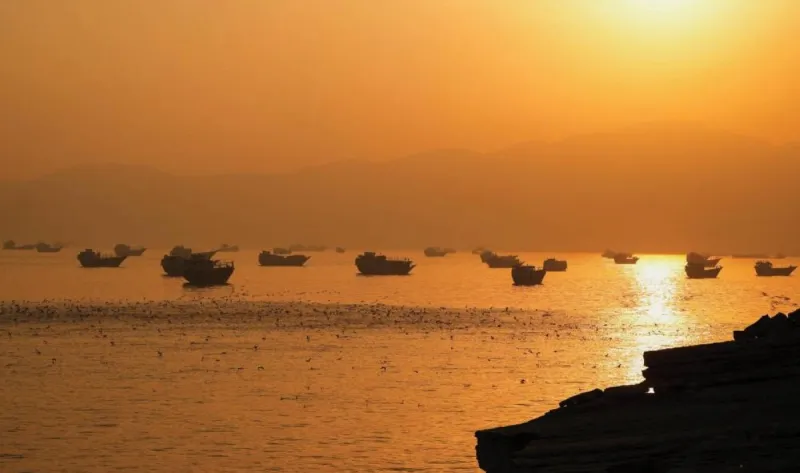
Trump stressed that the United States is not obligated to invest in Iran following the agreement, saying: "We will not invest any money," emphasising that the primary objective is to prevent Tehran from acquiring a nuclear weapon. He also announced that the Strait of Hormuz would be "fully open" by Friday, noting that ships had already begun passing through it.
For his part, US Vice President JD Vance said the electronically signed document amounts to "a page and a half" and is general in nature, explaining that technical details would be discussed during the next phase of negotiations.
He confirmed that Iran will allow International Atomic Energy Agency inspectors to return, and said one of the key elements of the agreement is cooperation between the agency, the United States, and Iran to dismantle Tehran's stockpile of highly enriched uranium.
He added that this matter is "very clearly stated" in the memorandum of understanding, noting that the agreement provides for the return of international inspectors to Iran, and that a date for the start of inspection operations may be set during the signing ceremony.
Vance explained that sanctions relief and Iran's reintegration into the global economy would depend on Tehran's compliance with the terms of the agreement and the associated verification mechanisms, stressing that the United States "will not give the Iranians a single dollar of American taxpayers' money."
On the international front, Chinese Foreign Minister Wang Yi welcomed the first phase of the understanding between Washington and Tehran, while describing the second phase of negotiations as likely to be "more difficult."
Wang said during a phone call with his Pakistani counterpart Ishaq Dar that "the current consensus is not an end in itself, but a new starting point," adding that the UN Security Council "should play a greater role" in reaching a final agreement.
Qatar expressed "cautious optimism" about the agreement. Foreign Ministry spokesman Majed Al-Ansari said his country hopes that the signing of the memorandum of understanding will lead to "the next phase of regional security" through upcoming talks on Iran's nuclear programme and other issues.
Al-Ansari confirmed that officials from Qatar and Pakistan will attend the signing ceremony in Switzerland, calling for regional dialogue to build confidence and entrench stability in the region.
Egyptian President Abdel Fattah El-Sisi affirmed his country's support for the efforts that contributed to reaching the agreement between the United States and Iran, which would prevent a return to military escalation in the region and guarantee the security and sovereignty of Gulf Cooperation Council states and freedom of international navigation.