
After weeks of war between the United States and Iran, Pakistan and both parties to the conflict announced they had reached a framework agreement, a step US President Donald Trump described as a "great deal" that would bring "peace and security to the region."
Yet behind this announcement, fundamental details remain unresolved — from the mechanisms for reopening the Strait of Hormuz, to the future of the American naval blockade, to Iran's nuclear file.
While the announcement of the agreement has spread a sense of relief across the region, it defers talks on Iran's nuclear programme to a later stage, and its durability may hinge on developments in Lebanon.
A memorandum of understanding is scheduled to be formally signed on Friday in Geneva. While the agreement appears capable of reducing tension in the region and on global markets, the Lebanese front — and Israel's position on continuing its operations against Hezbollah — may represent the most dangerous test of its staying power.
Pakistani Prime Minister Shahbaz Sharif announced that Pakistan would host the signing ceremony in Geneva. He said both sides had declared an immediate and permanent halt to military operations on all fronts, including Lebanon.
He added that the world had today achieved a historic milestone on the road to peace. He affirmed that a new dawn had broken: after 3 months and 16 days of relentless efforts, the United States and Iran had declared an immediate and permanent cessation of military operations, including in Lebanon.
According to US Vice President JD Vance, the text of the agreement will be announced this week, and negotiations on its details are expected to continue over 60 days. He told CNBC: "We expect the strait to be open without fees over the long term. That is what we will determine in these technical negotiations."
He stated that Washington is in direct contact with Tehran, saying: "We are engaging with everyone in the Iranian system," pointing specifically to "the political leadership" and "the military side."
Among the announced elements of the agreement is the reopening of the Strait of Hormuz to commercial shipping and the lifting of the US naval blockade on Iranian ports. Trump said the strait would be opened on Friday, the day of signing, and that he had ordered the end of the American blockade on Iranian ports.
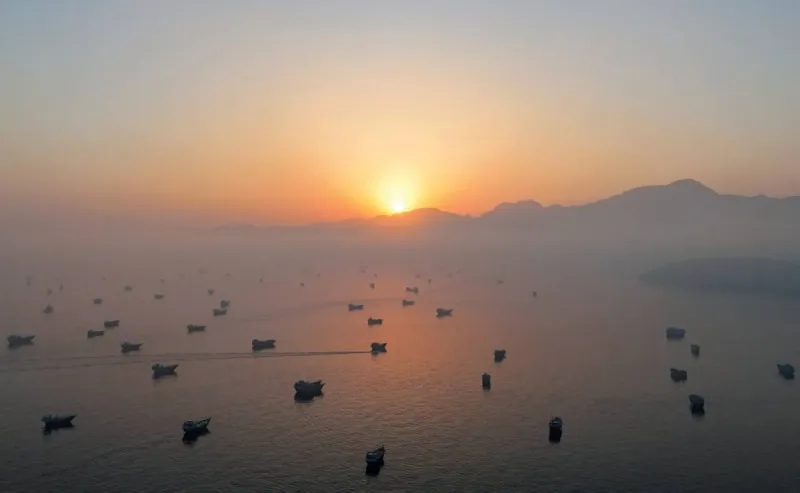
Trump wrote on his Truth Social platform on Sunday: "Ships of the world, start your engines. Let the oil flow!" He added the following day that navigation had resumed, saying: "Ships have started moving, many of them laden with oil, to exit the Strait of Hormuz."
He added that the vessels were taking a southern route, describing it as "completely safe, guaranteed, and in good condition," while referencing other available routes without providing further details.
However, implementation of this provision may not be immediate. The strait had effectively been closed shortly after the war began on 28 February. As a result, lifting the closure politically may prove faster than the practical resumption of navigation.
Energy market experts have warned that oil flows through the strait will not immediately return to pre-war levels, owing to the need to clear mines, address a backlog of oil tankers, and resume production and shipping in an orderly manner.
The US military announced that the blockade imposed on Iranian ports would remain in effect until the agreement scheduled for 19 June is finalised. It said in a guidance note:
"The military blockade imposed on Iranian ports remains in force, restricting traffic to and from these ports. Do not attempt to transit until explicit guidance is issued."
From the American perspective, the most important element of any agreement with Iran is preventing it from acquiring a nuclear weapon. US Vice President JD Vance said in an interview with Fox News that Iran not possessing a nuclear weapon is "built into this agreement," and that the United States would be able to verify Tehran's compliance.
Yet fundamental questions remain: What restrictions will be placed on uranium enrichment? What will become of Iran's stockpile of highly enriched uranium? And what verification mechanisms will Washington rely upon?
These matters have not yet been publicly resolved, and are expected to be addressed in subsequent negotiations and "technical talks" during a 60-day extension of the current ceasefire.
Tehran's position adds further complexity to the process. Iran says "final negotiations will be deferred until after the other party fulfils its obligations under the memorandum of understanding." This means Tehran may link any nuclear concessions or arrangements to Washington first fulfilling its own commitments, particularly regarding the naval blockade or the easing of economic pressure.
The Lebanese front appears to be one of the weakest links in the agreement, with the risk of escalation between Israel and Hezbollah persisting despite talk of halting military operations on all fronts.
Although the agreement is presented as a broad regional step, its implications for Lebanon remain unclear. Pakistani Prime Minister Shahbaz Sharif said the agreement calls for "an immediate and permanent end to military operations on all fronts, including Lebanon."
But implementing this provision may prove difficult. Israeli Prime Minister Benjamin Netanyahu has so far shown no readiness to halt the current Israeli offensive on Lebanon.