
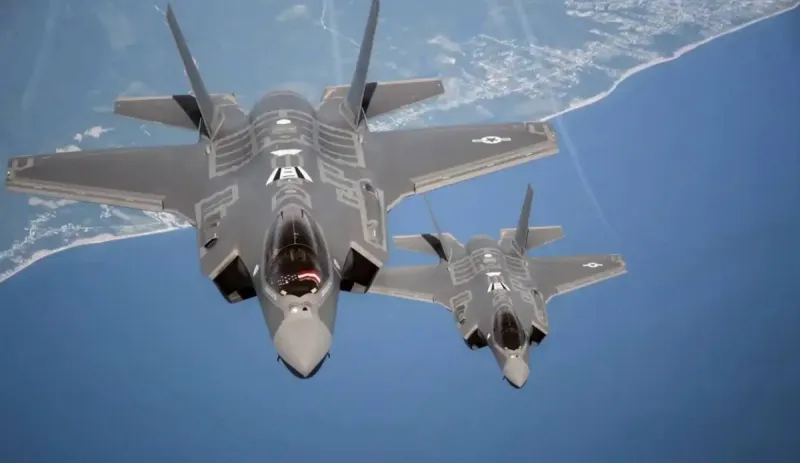
The United States launched strikes against Iran on Tuesday following attacks on three commercial vessels in the Strait of Hormuz, marking a sharp escalation in a confrontation that is undermining efforts to end the war in the Middle East.
The US Central Command (CENTCOM) said in a post on X that "the American strikes come in response to Iranian attacks on three commercial ships that were transiting the Strait of Hormuz," warning Iran it would "pay a heavy price for targeting and attacking commercial vessels."
Iranian state television reported that six explosions were heard on the Iranian island of Qeshm and seven in the city of Sirik, with further explosions heard in the coastal city of Bandar Abbas.
Iran's Ministry of Foreign Affairs said on Tuesday that Tehran would respond "decisively" to the strikes carried out by the United States, accusing Washington of repeatedly violating the memorandum of understanding between the two countries.
In a statement published by Iranian state television on its Telegram channel, the ministry said "Iran issues a serious warning regarding the consequences of the United States' breach of the agreement," affirming that it "will take decisive measures to protect its interests and national security."
This came after the US Treasury Department on Tuesday revoked a licence under which oil sanctions on Iran had been temporarily lifted, describing Tehran's conduct in the Strait of Hormuz as "completely unacceptable."
The exemption, announced in June, had allowed the Islamic Republic to produce, sell, and supply crude oil and its derivatives until 21 August.
"Iran's actions in the strait are completely unacceptable to the United States and will have serious consequences," a US official told AFP.
The official, speaking on condition of anonymity, said the memorandum of understanding concluded between the United States and Iran "depends entirely on performance," warning that Tehran would reap no benefits unless it demonstrated "good behaviour."
However, the official stressed that "our negotiators continue to work in good faith to reach a final agreement."
Three ships came under attack in the Strait of Hormuz in the past 24 hours, among them a Qatari liquefied natural gas tanker that Doha accused Tehran of targeting, despite a ceasefire agreement between the United States and Iran being in force.
The United Kingdom Maritime Trade Operations (UKMTO) said three tankers had been attacked between Monday and Tuesday.
The first vessel was struck by an unidentified projectile while sailing off the coast of Oman, causing fires to break out on board, according to UKMTO, before two other ships were attacked, at least one of them by a drone.
All three ships were attacked near Oman, which had proposed a temporary navigation corridor along its coastline — an initiative opposed by Iran, which seeks to impose fees on vessels using the narrow waterway.
Qatar said the vessel was one of its gas tankers and held Iran responsible for the attack. Foreign Ministry spokesman Majed Al-Ansari said: "We call on the Islamic Republic of Iran to immediately cease all practices that affect the security of the region or threaten the safety of international navigation," holding it "fully legally responsible for this attack and whatever damage and repercussions may result."
Doha summoned the Iranian envoy on Tuesday, the day after the tanker was attacked, while Saudi Arabia also condemned the attack and held Iran responsible.
Iran, however, rejected those accusations on Tuesday. IRNA news agency quoted Iranian Foreign Ministry spokesman Ismail Baghaei as "questioning" the "Qatari accusations against Iran regarding the alleged attack on a vessel linked to the country in the Strait of Hormuz on Tuesday," describing the accusations as contrary to "the principle of good neighbourliness" and "unacceptable."
The Strait of Hormuz is one of the key points of contention in US-Iranian talks aimed at reaching a permanent end to the war in the Middle East, with Qatar having emerged as a key mediator in those efforts.
Gulf states had previously come under unprecedented Iranian attacks during the war, which broke out on 28 February following US-Israeli strikes on Iran.
Commercial shipping has been severely disrupted by the conflict after Iran took control of the Strait of Hormuz in retaliation for the US-Israeli strikes, while the United States imposed a blockade on Iranian ports.
Navigation resumed following the signing of a memorandum of understanding between Washington on 17 June, pending a permanent settlement.
Iran insists, however, despite US objections, that there will be no return to the pre-war situation in the Strait of Hormuz, when passage through it was toll-free. Iran has threatened ships that attempt to sail along alternative routes to the sole corridor it has permitted, which runs along its own coastline.
These disruptions to navigation through the strait come as Iran has been holding six days of funeral ceremonies since Saturday for Supreme Leader Ali Khamenei, who was killed on the first day of the war in US-Israeli strikes.
In late June, the United States struck Iran after accusing it of targeting two vessels, and Iran retaliated by striking targets in Kuwait and Bahrain. Washington and Tehran subsequently agreed to halt those hostilities.
The US Energy Information Administration says approximately 20 million barrels of crude oil passed through the Strait of Hormuz daily in 2024, equivalent to one-fifth of global liquid fuel production.