
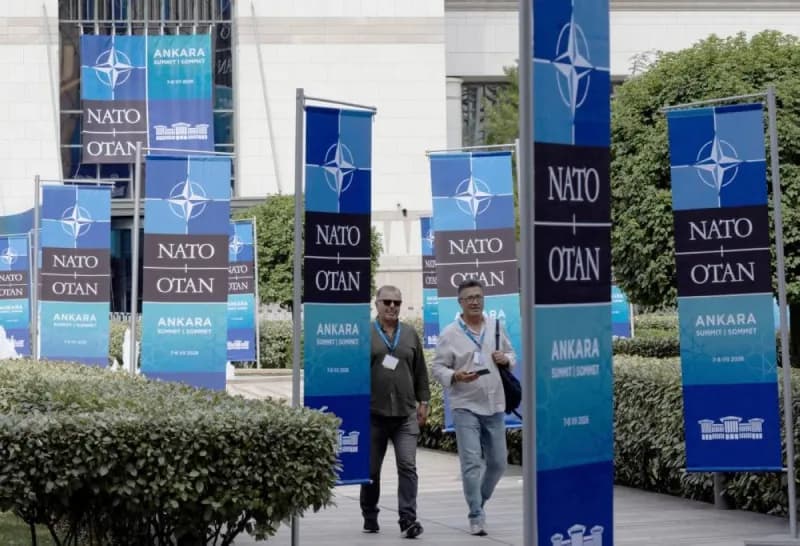
At what international observers describe as the most sensitive moment in the alliance's history since 1949, the Turkish capital Ankara is preparing to host the 36th NATO leaders' summit today and tomorrow, amid rapidly shifting geopolitical variables — not least the escalating tensions across both sides of the Atlantic over burden-sharing and US demands for increased military spending, alongside the repercussions of regional conflicts stretching from Ukraine to the Iran war crisis and its effects on the security of maritime corridors.
The summit is not merely a periodic meeting of a military alliance accustomed to reviewing its defence plans and distributing its financial burdens; it is the first political and strategic test for the alliance in the wake of the American–Iranian war.
The current summit is being held amid a climate of uncertainty within NATO, driven by US President Donald Trump's repeated criticism of the alliance, as well as his announcement of troop withdrawals from Europe and a six-month review of the American military presence on the continent. Nevertheless, there is an effort to close ranks and appease Trump, particularly following statements by NATO leaders that his participation in the summit is vital to the stability of the alliance.
Trump will attend the summit with a prominent presence, meeting his Ukrainian counterpart as part of efforts to advance a settlement on the Ukrainian file. He has asserted that the end of the war in Ukraine is closer than people think. He is also set to meet a number of leaders to advance his agenda within the alliance.
German Chancellor Friedrich Merz held a telephone call with President Trump ahead of the NATO summit, in which he outlined the increase in German defence spending over recent months. Germany intends to reach the target of spending 5% of GDP by 2029.
According to German government sources, European allies alone increased their defence spending by more than 100 billion euros over the past twelve months, while Germany raised its defence spending by approximately 25 billion euros to reach 124 billion euros.
The summit is a significant milestone in NATO's trajectory, as leaders are expected to discuss a number of strategic files, including strengthening the collective defence framework, raising the readiness of alliance forces, sharing defence burdens among member states, developing defence industries, continuing support for Ukraine, enhancing cooperation to counter cyber and hybrid threats, and working toward a resolution of the Hormuz issue.
Trump has repeatedly criticised European allies over their position on the war in Iran, after several countries imposed restrictions on US use of their military bases during operations.
On the political front, this trajectory places the alliance before a dual test. On one hand, NATO Secretary General Mark Rutte is seeking to maintain cohesion and unify visions amid sharp criticism from President Trump over disparities in defence spending.
On the other hand, experts believe that adopting an attrition strategy could reduce the chances of a political settlement to the Ukrainian crisis, as the alliance has come to link European continental security with transforming Kyiv into an advanced line of defence against Russian dominance.
The outcomes of the Ankara summit, which will bring together leaders from 32 countries, will not be confined to the Ukrainian file alone, but will seek to consolidate a security and defence network stretching from US territory to Turkey, as part of a re-engineering of regional balances.
As results are awaited, Europe appears to be entering a phase of