
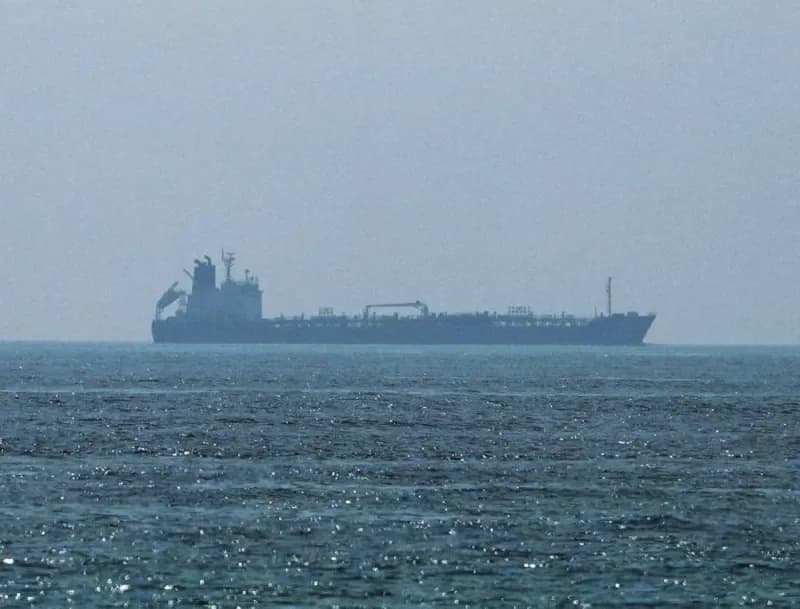
US President Donald Trump described, on Thursday, the Iranian attack on a vessel in the Strait of Hormuz as a "foolish violation" of the ceasefire agreement with Tehran, though he gave no significant indication that the incident would lead to a resumption of hostilities, nor did he clarify whether the United States would respond to the attack.
Iran had targeted a vessel in the Strait of Hormuz on Thursday.
The United Kingdom Maritime Trade Operations, which monitors shipping traffic in the region, reported that the cargo vessel was struck on its starboard side by a projectile, causing damage to the bridge. Despite Iran's brazen attempts to assert dominance and its acts of piracy in the strait — in violation of international laws governing vital waterways — international vessel traffic through the strait continued on Thursday, in a notable show of defiance against Iranian arrogance.
South Korean President Lee Jae-myung said 3 South Korean ships would leave the strait at the start of the week, after the Ministry of Oceans reported that 8 other vessels had already departed. Data also showed that fertiliser shipments passing through Hormuz had begun to increase.
The latest analysis of flows indicates that since the agreement was announced on 15 June, approximately 640,000 tonnes of sulphur and 427,000 tonnes of urea have passed out through the strait.
Shipments of other key fertilisers, such as phosphate and ammonia, also rose. Data from the maritime tracking platform Kpler showed that around 71 cargo vessels crossed Hormuz over two days, via two routes previously announced by Oman.