
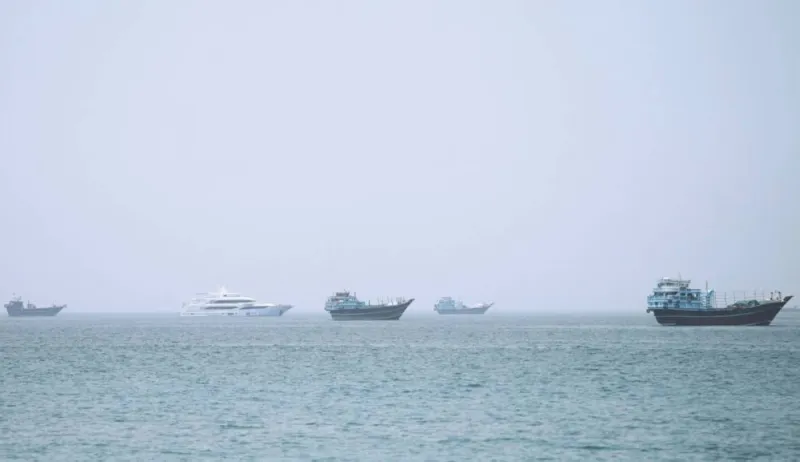
As international pressure on Iran mounts over its successive threats and manoeuvres regarding the closure of the Strait of Hormuz — or the imposition of transit fees on it — the scene yesterday reflected a state of confusion and loss of control on the Iranian side, as though these manoeuvres were drowning in the waters of the vital international waterway.
This was evident in statements by US President Donald Trump on Truth Social, saying that Iran had acknowledged to him that it would not impose any transit fees, and in his threats that "if anything different happens, negotiations with Iran will end immediately." It was also reflected in remarks by US Energy Secretary Chris Wright, who confirmed that around 72 vessels had transited Hormuz within 24 hours, that Iran would no longer be able to close the strait, and that the United States would guarantee the continued flow of oil through the strait even in the absence of any agreement with Tehran.
For its part, the International Maritime Organization, a United Nations body, confirmed that ships had begun transiting the strait under a plan allowing hundreds of vessels to sail through Hormuz.
Oman also announced two temporary routes — north and south of the current navigational lane in the strait — to facilitate the safe passage of vessels leaving the region, in coordination with the International Maritime Organization. Meanwhile, US Secretary of State Marco Rubio pledged that his country would not take any action that would undermine the security of its allies in the Gulf region with regard to its dealings with Iran.
Speaking in Kuwait during a Gulf tour, Rubio said all countries in the world oppose Iran's imposition of fees on transit through the vital strait, and that technical negotiating teams would resume talks at the end of this month, most likely returning once again to Switzerland.