
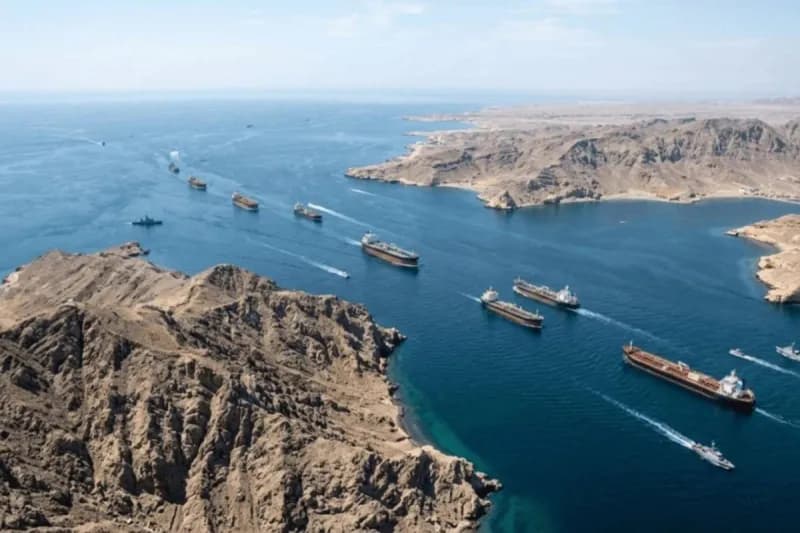
International Maritime Organization (IMO) Secretary-General Arsenio Dominguez said on Wednesday that the evacuation of 11,000 seafarers stranded in the Gulf region since Iran's decision to close the Strait of Hormuz could take "a few weeks."
The operation, prepared by the UN agency responsible for maritime navigation safety, will allow 600 vessels trapped in the strait since the outbreak of the war in the Middle East to leave the area. The IMO announced the launch of the evacuation operation on Tuesday.
Dominguez said that "a number of ships passed through the Strait of Hormuz yesterday afternoon," noting that it is "a gradual process."
He added that "the next step will be to reach around 50 ships per day, but we will need a few additional weeks before we can actually complete the evacuation of all the seafarers."
The IMO plan involves contacting each ship individually to provide departure instructions, in coordination with the authorities of the states bordering the strait.
Dominguez explained: "What we want to avoid is causing collisions or incidents" that could occur if all ships attempted to leave the area at the same time.
More than 80 mines
The crew evacuation will proceed via 2 separate lanes — one along the Omani coast and the other along the Iranian coast — separate from the traffic separation scheme established by the IMO in 1968, which aims to reduce the risk of collisions in the Strait of Hormuz.
Dominguez said: "We have received information indicating the presence of mines" along the traditional navigation route, pointing to "information indicating more than 80 mines."
Under the memorandum of understanding signed between Tehran and Washington, Iran pledged to clear the mines from the area within 30 days.
In recent weeks, both Paris and London proposed participating in securing the Strait of Hormuz within the framework of a coalition of approximately 40 countries, by contributing to mine-clearing efforts.
However, Dominguez noted that this matter is proceeding on a parallel track. The IMO's evacuation plan is being implemented in cooperation with Iran, the Sultanate of Oman, other bordering states, the United States, and the maritime shipping sector.
Dominguez stressed that the ongoing operation does not include any escort arrangements or military support.
He also noted the limited number of new vessels that might enter the Gulf, pointing out that some had already used the lane close to the Iranian coast.
Dominguez said that "this route is safe so far," while the lanes parallel to the Omani coast "are designated for the evacuation of ships" only.