
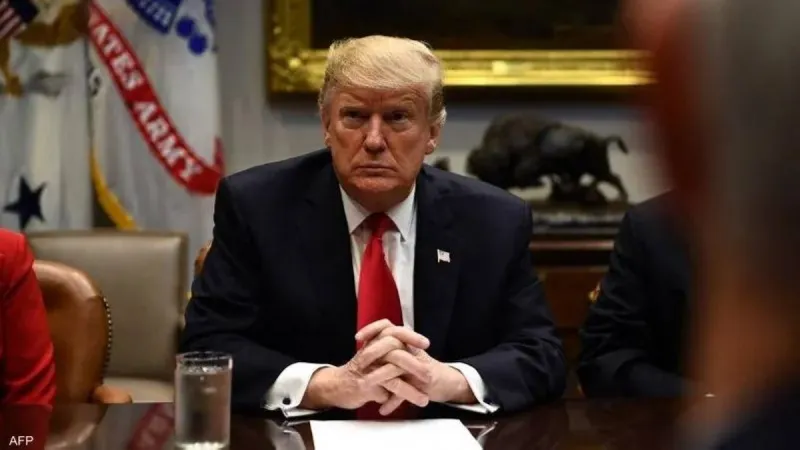
The rapid succession of statements by US President Donald Trump in recent days reveals a deep dilemma in the implementation of the American–Iranian understanding — one that concerns not the nuclear file or sanctions, but the Lebanese front specifically, where the conflict between Israel and Hezbollah intersects with the very core of the agreement's first clause: a halt to escalation on all fronts.
Since the beginning of the month, Trump has appeared visibly irritated by Israeli Prime Minister Benjamin Netanyahu's conduct in Lebanon. American and Western reports have conveyed that the US president directed sharp criticism at Netanyahu following Israeli threats to expand strikes on Beirut, concluding that such operations could derail the negotiating track with Iran. On more than one occasion, Trump asked Israel to de-escalate and refrain from responding to attacks or provocations linked to the Lebanese front, stressing that Washington is close to concluding an important understanding with Tehran.
This tension reached its peak when Trump publicly criticised Israel's approach to dealing with Hezbollah, saying that pursuing a single member or target from the group does not justify destroying an entire residential building — signalling that Israeli operations in Lebanon have begun to embarrass Washington and threaten the agreement. He also called on Netanyahu to be "more responsible" in handling Lebanon, an unusual tone from a US president directed at an Israeli government at the height of a regional confrontation.
Yet this position did not hold to a single line. Days after pressing Netanyahu, and one day after an equally unusual speech by Vice President JD Vance directed at Netanyahu and Israel, Trump reverted to holding Iran responsible, threatening Tehran if it failed to restrain its "proxies" in Lebanon — a direct reference to Hezbollah. Here Trump's dilemma resurfaced: he wants Israel to halt escalation so the agreement does not collapse, yet he simultaneously wants Iran to prevent Hezbollah from exploiting the calm or testing its limits.
The Lebanese front thus appears to be the first real test of the American–Iranian agreement. If Israel continues its operations, Tehran will accuse Washington of being unable to restrain its ally. If Hezbollah retaliates or escalates, Washington will accuse Iran of being unable to restrain its proxies. Caught between the two, Trump finds himself compelled to address both parties in different languages: rebuking Netanyahu when he threatens the deal, and threatening Iran when Hezbollah exploits Trump's pressure on Netanyahu.