
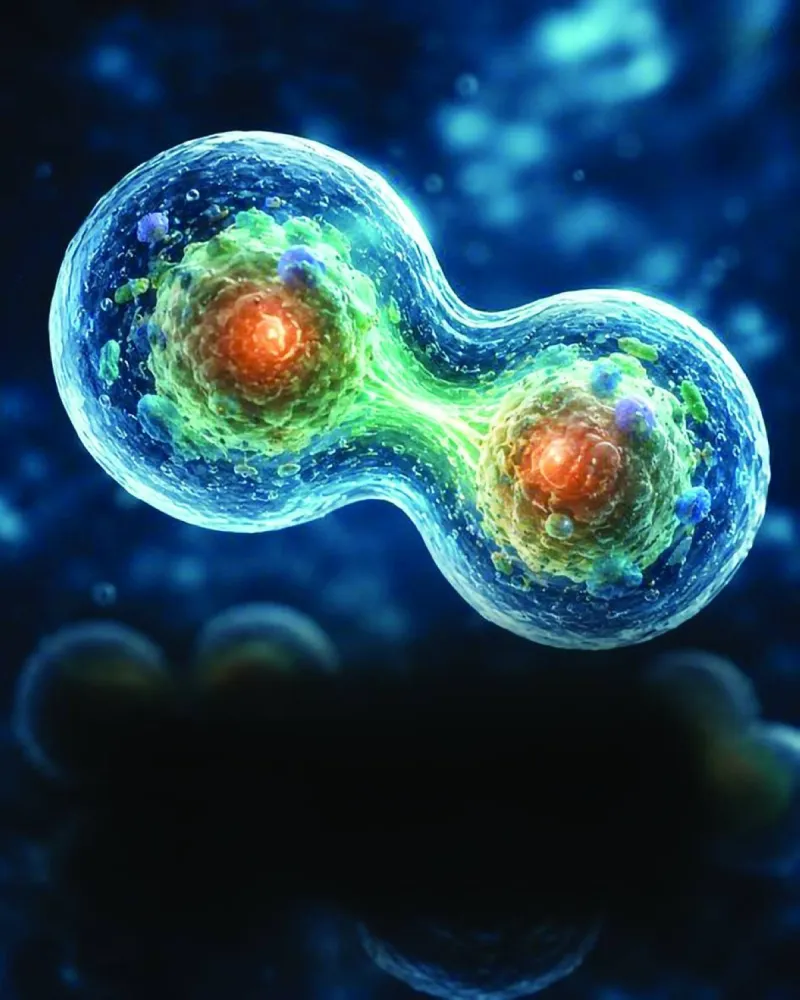
A report published in The Guardian confirmed that biologists and researchers from the University of Minnesota have succeeded in building the world's first artificial cell capable of completing a full life cycle, encompassing growth, replication of genetic material, and division to produce a new generation.
This development represents a qualitative leap in scientists' efforts to create living systems from non-living chemical components. The team, led by Dr. Kate Adamala, used microscopic water-filled spheres known as liposomes — no wider than a few thousandths of a millimetre — and added to them a limited quantity of laboratory-synthesised DNA to provide basic functions.
Adamala named these cells "SpudCells", in reference to the Russian satellite Sputnik, which was launched in the 1950s heralding the dawn of the space exploration age.
With this name, she intended to suggest that SpudCells represent the beginning of a new era in biology, just as Sputnik marked the start of the space age.
Dr. Adamala also alludes through the name "SpudCells" to her Polish heritage and its humorous association with potatoes, as the word "spud" is an informal English term for "potato".
Scientists believe this achievement brings them a major step closer to the ability to design artificial organisms tailored to produce medicines, food, fuel, and various materials.