
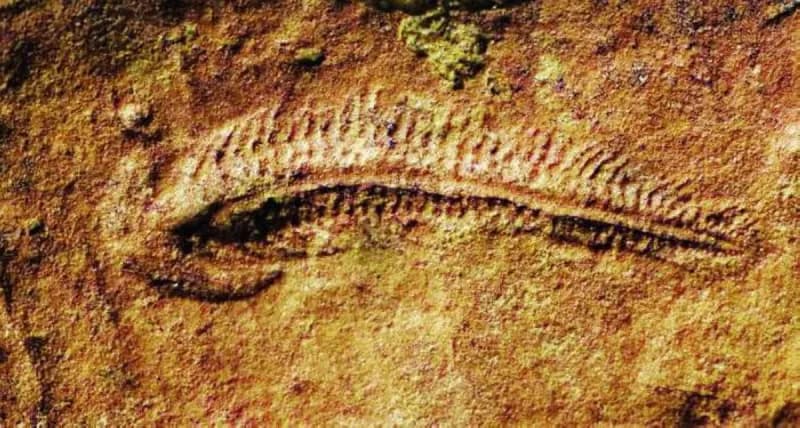
Scientists have uncovered the oldest known evidence of "handedness" in the animal kingdom, dating back more than half a billion years.
According to a recent study published in a specialised scientific journal, a creature known as Spriggina floundensi, which lived during the Ediacaran period approximately 550 million years ago, displayed a consistent preference for bending to the right, despite having neither hands nor feet.
A research team that included scientists from the American Museum of Natural History and several universities examined more than 100 well-preserved fossils from South Australia and found that reversed fossil impressions confirmed the creature bent to the right during its lifetime. The organism is considered one of the earliest animals to possess a symmetrical body with a distinct right and left side.
Scott Evans, the study's lead author, said: "When we talk about right- or left-handedness, most people think of how someone holds a pen or kicks a football.
But our research shows that an animal with no hands or feet, which lived more than 500 million years ago, may have had its own form of handedness."
The Ediacaran period represents one of the most transformative chapters in the history of life on Earth.
During this era, microscopic living organisms evolved to become multicellular, large enough to be seen with the naked eye, and capable of highly complex behaviours, including movement.