
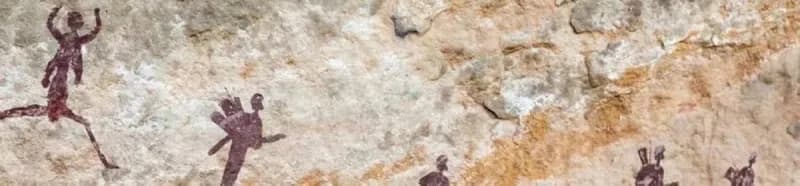
Scientists have extracted ancient human DNA from cave walls, demonstrating for the first time that traces of human DNA can survive on cave walls for thousands of years.
The research was published in the journal Nature Communications and carried out within the framework of the "First Art" project in collaboration with researchers from the Max Planck Institute for Evolutionary Anthropology. The discovery opens a new avenue for studying prehistoric human life in cases where skeletal remains or other physical artefacts have not been preserved.
According to RT, an international team of researchers reached these findings after studying ancient rock art in caves in Spain and Portugal. The scientists examined 24 artworks containing drawings dating to the Palaeolithic era across 11 caves.
The samples included handprints, simple symbols, and fragments of the flaking pigment layer from the drawings, as well as samples from unpainted sections of the walls. Specialists also analysed bones, cave sediments, and a rare Palaeolithic tool resembling a spray device, made from a bird bone, which was used to scatter ochre (red iron oxide).