
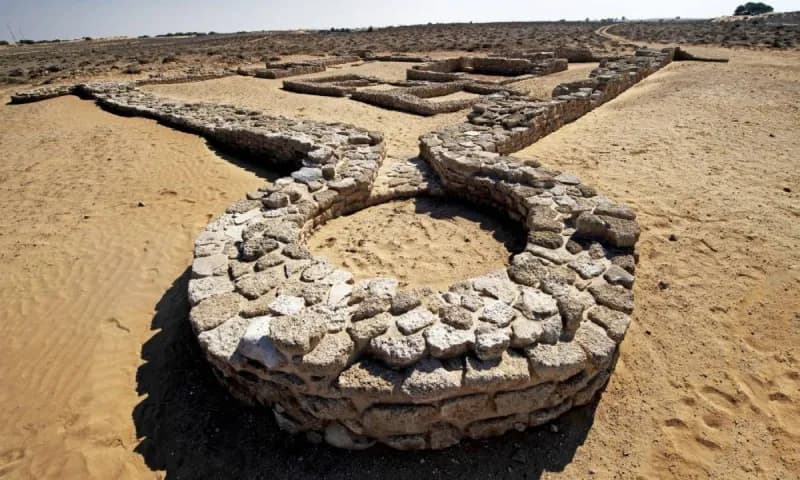
The Department of Tourism and Archaeology in Umm Al Quwain recently hosted a dialogue session at the Al Nayfa Majlis as part of the "From the Museum to the Community" programme, organised by Zayed National Museum — the national museum of the United Arab Emirates — to discuss the historical and civilisational significance of the Al Dur archaeological site.
The site stands out as one of the most important archaeological sites in the United Arab Emirates and one of the most prominent commercial and civilisational centres in the region during the pre-Islamic period.
The session was attended by Haytham Sultan Al Ali, Director General of the Department of Tourism and Archaeology in Umm Al Quwain, Ahmed Jamal Al Sufi, Executive Dean of the British Applied College, and a number of individuals interested in history, archaeology, and heritage, as well as members of the community.
The session was moderated by Rashed Obaid Al Suwaidi, Community Relations Specialist at Zayed National Museum, with the participation of Rania Qannouma, Acting Director of the Archaeology and Heritage Department at the Department of Tourism and Archaeology in Umm Al Quwain, and Ammar Al Banna, Assistant Curator at Zayed National Museum. The rich historical legacy of the site and its role in documenting vital aspects of the region's history and civilisation were reviewed.
Participants at the session affirmed that the Al Dur site, which extends over an area of approximately 2 square kilometres, is considered one of the largest coastal settlements in southern Arabia during the period spanning from the 1st century BC to the 3rd century AD. They noted that the site formed a key stop within the maritime trade networks that linked the civilisations of the ancient world, highlighting the important civilisational role it played.