
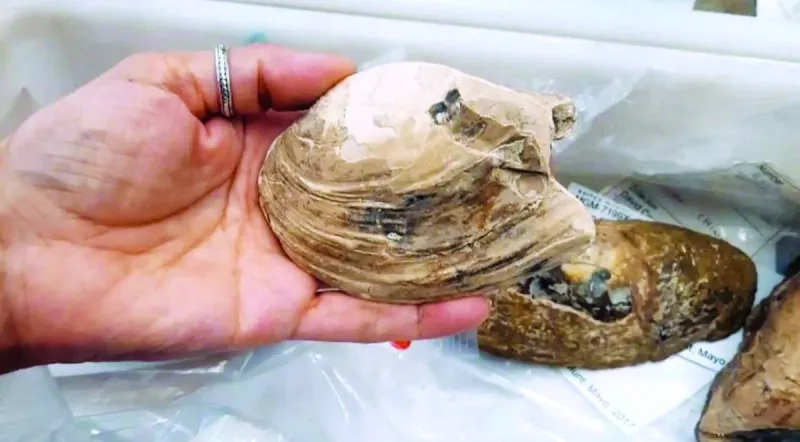
An international scientific team has discovered a fossilised freshwater oyster approximately 125 million years old, containing embryos and larvae at various stages of development inside it — providing the oldest known evidence of oyster brood care during the Early Cretaceous period.
According to the study published in the journal Scientific Reports, led by researchers from the Spanish Geological and Mining Institute (CSIC), the fossil is not limited to the hard shell of the oyster but also includes, as an Eram News report noted, exceptionally preserved soft tissues — among them parts of the gills, reproductive organs, and juveniles developing inside the animal's body. The researchers explained that this type of preservation is extremely rare, as soft tissues normally decompose shortly after death, making the discovery exceptional in the field of palaeontology.
Dr Martin C. Munt, a specialist in mollusc fossils, said the findings offer the first direct fossil evidence that these creatures brooded and protected their young inside their bodies — behaviour previously known only in modern species.
The fossil belongs to an ancient mollusc species known as Margaritifera valdensis, believed to be a distant ancestor of the modern freshwater mussel, and was found on the Isle of Wight in Britain.