
"Defying expectation" is one of the techniques of rhyme anticipation that enables the poet to deploy it as an effective aesthetic tool, one that transcends the acoustic structure of the poem to become a semantic strategy aimed at reshaping the relationship between the text and its reader. At its core, it works by opening a horizon of expectation before the reader — an anticipation of a specific rhyme word that would complete the meaning — only to then ambush that reader by subverting and frustrating this expectation.
From this artistic tension between anticipation and surprise, the original significance of this technique emerges: it is a means of catching the addressee off guard and prompting self-revision, awakening an awareness that the meanings latent in a poetic text are far deeper and more far-reaching than what might first come to mind or be presumed. This grants the creative poet wide flexibility in employing the technique to generate diverse connotations that serve the emotional experience the poem pursues.
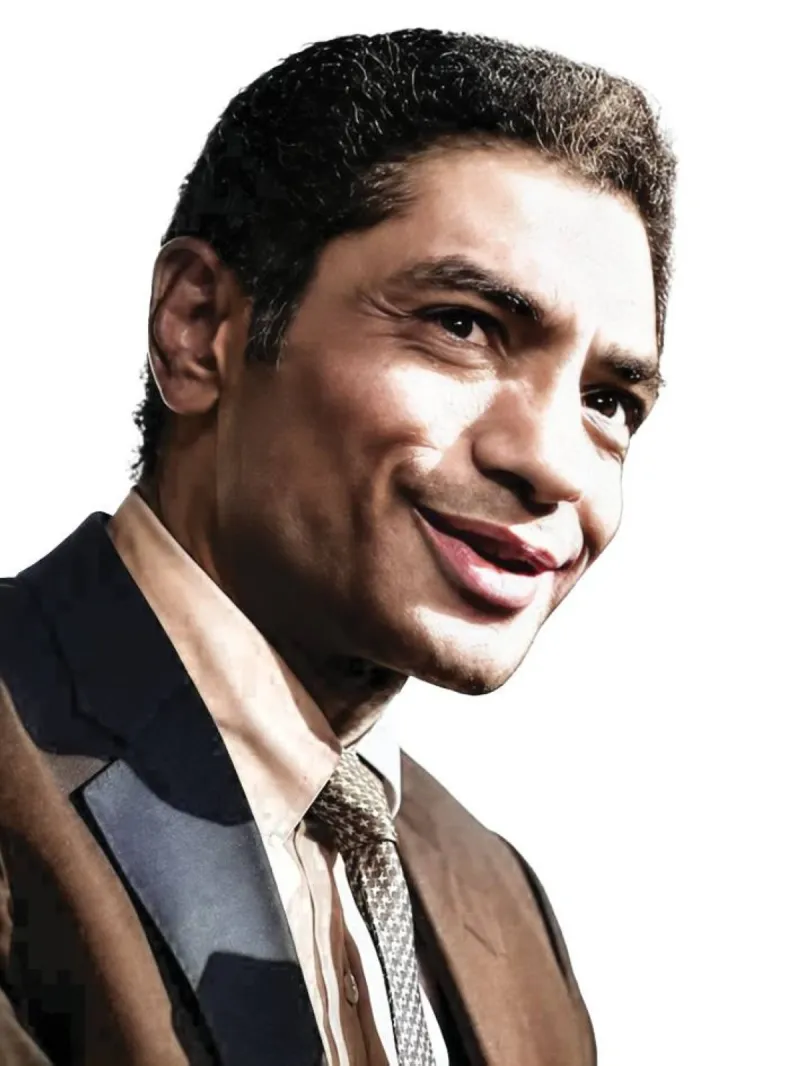
In the poem "From Antara to His Father," Egyptian poet Ahmed Bakhit revisits history, inhabiting the spirit of the tormented knight Antara ibn Shaddad, directing his critical arrows at the class injustice that pre-Islamic poet suffered at the hands of his father. He employs the figures of Antara and his father as two symbols that condense a wealth of meaning.
In this text, Bakhit presents an elegy for freedom, leaning on artistic techniques that suggest the meaning behind the lines is deeper than the reader might suppose. The emotional journey begins when the son confronts his father:
To the last moment of my life, alone am I, And you, with your tribal face, against me stand. You gamble me away to buy a necklace For Fatima, and earrings for Hind. In your name I faced death's many faces, And did not falter when I saw my grave. I was the hand of sonhood when it gives life, And you were the hand of fatherhood when it destroys. I am of your Arab loins — tell me: Shall bondage become a tattoo upon my skin? You bound thorns as a crown above my head — Glory be to Him who gave you my rose.
In these verses, the poet uses rhyme anticipation as a tool to draw in the addressee — the father — and compel him to acknowledge his transgressions: sometimes through consonance, as in "the faces of death / my grave" and "a tattoo / my skin," and sometimes through paradox, as in "thorns / my rose." It is a final attempt by "Antara" to stir his father's compassion through question and command, in a language that blends tender supplication with revolutionary content.
Yet the climax lies in the final verse, when Bakhit announces the despair of the oppressed and his exhausted patience. Here, the poet resorts to a shrewd artistic mechanism by embedding a hemistich from a verse by Qays ibn al-Mulawwah:
Breathe in the fragrance of arara blossoms in Najd —
This embedded allusion — itself a form of rhyme anticipation — places us before an inevitable expectation: that the poet will complete the meaning in the manner of Majnun Layla, echoing the second hemistich back to the first and repeating the word "Najd" or its equivalent to resolve the rhyme. But the poet ambushes the mind by breaking this expectation entirely, derailing its conventional course, to unleash his resounding cry:
For after this evening, nothing avails!
The choice of this rhyme is not arbitrary; it is a deliberate act of "defying expectation," designed to disrupt the reader's prior assumptions through a mechanism of "constraining choices" that renders the poem's own context the final arbiter: time has run out, the injustice is unbearable, and what the father had supposed — the son's submission and continued enslavement — is nothing but a delusion, now shattered.
In this way, Bakhit transforms the technique of expectation from a mere aesthetic device into a literary hammer, one that signals the dashing of the oppressor's assumptions and announces the end of the age of submission — affirming that poetic meaning is always that which lies hidden in the spaces that surpass our presumptions.