
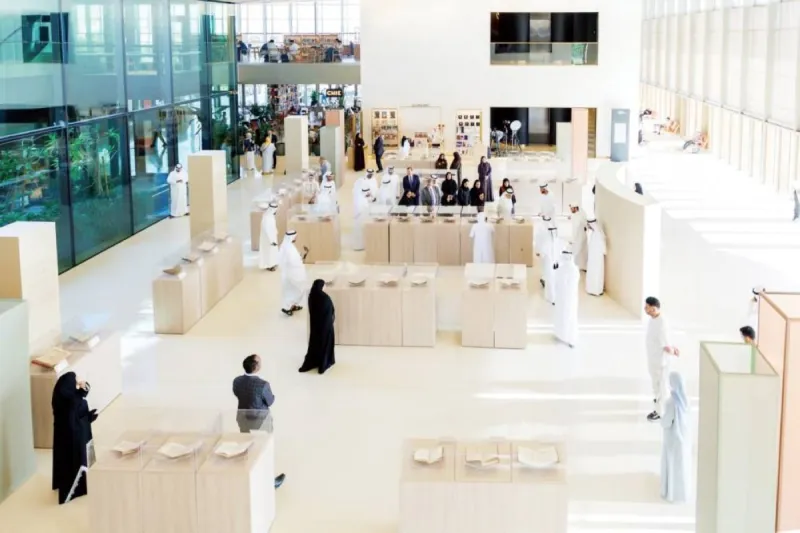
United Arab Emirates University has concluded its 'Manuscripts: Identity and Sustainable Development' exhibition, which was hosted by Bait Al Hikma in Sharjah over ten days, attracting approximately 6,000 visitors including researchers, enthusiasts, university students, and the general public — reflecting growing interest in knowledge-based and heritage content and its role in promoting cultural awareness.
The exhibition marked a culminating milestone in cooperation between academic and cultural institutions, bringing together one of the most distinguished rare collections held by UAE University and one of the country's foremost cultural landmarks, providing an opportunity to present the manuscripts in a contemporary context that highlights their scholarly and intellectual value.
The exhibition shed light on manuscripts as authentic sources that document the history of sciences and knowledge, and reflect deep-rooted traditions of research, authorship, and learning — contributing to the reintroduction of this heritage to new generations from a perspective that keeps pace with contemporary cultural and intellectual movements.
The exhibition also underscored the importance of integration between cultural and academic institutions in the United Arab Emirates, and their role in preserving intellectual heritage and making it accessible to researchers and the public, thereby enhancing its utility and supporting the continuity of its presence in the cultural landscape.
The event enriched cultural and scholarly activity by spotlighting manuscripts as a source of inspiration and a means of re-reading the evolution of human knowledge, while also providing a space for engagement with new generations by linking scientific heritage to contemporary challenges and opportunities — in keeping with the country's directions on sustainable cultural development.
The exhibition was organised as part of UAE University's efforts to preserve the knowledge heritage, showcase its rare collections, and expand partnerships with cultural institutions, thereby helping to broaden access to knowledge and entrench the status of manuscripts as part of the scientific and civilisational memory.