
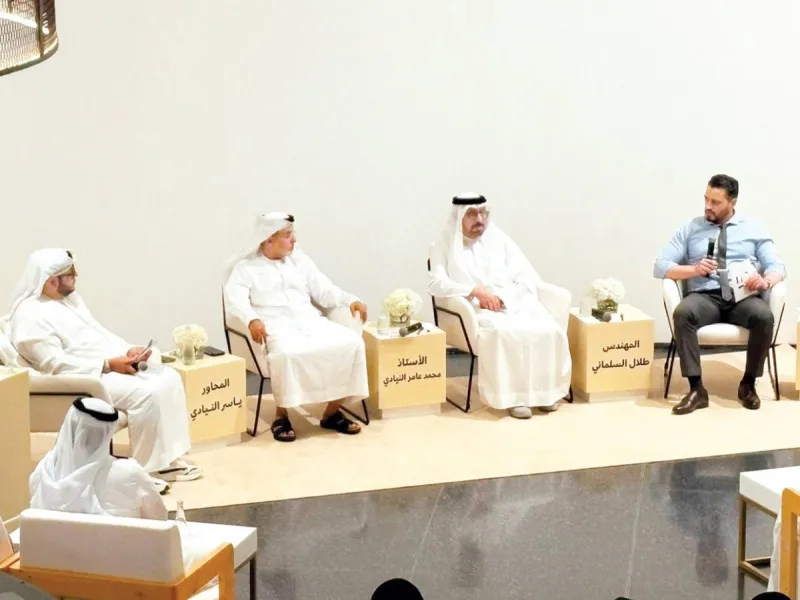
Al Ain Museum organised a special cultural programme as part of its 'Museum Dialogues' series, celebrating the 15th anniversary of the inscription of the Al Ain sites on the UNESCO World Heritage List. The programme shed light on the registration journey, which was launched under the vision of the late Sheikh Zayed bin Sultan Al Nahyan, may his soul rest in peace, and continued with the support and follow-up of Sheikh Mohamed bin Zayed Al Nahyan, President of the State, may God protect him — an effort that formed the cornerstone for preserving this heritage from urban expansion and culminated in its international inscription.
The programme reviewed efforts to conserve the cultural heritage of the region through a special session titled '15 Years of World Heritage', moderated by Yasser Saeed Al Neyadi, with the participation of a group of experts who contributed to preparing the inscription file: Mohammed Amer Al Neyadi, archaeologist and former Director of the Historic Environment Department; Talal Al Salmani, architect and urban planner; and Engineer Belhassan Al Qanbi, Senior Heritage Planning Specialist.
The programme also featured interactive family workshops and guided tours inside the museum, supervised by specialists in archaeology and restoration to enrich the visitors' educational experience.
Omar Al Kaabi, Director of Al Ain Museum and Al Ain Cultural Sites, affirmed that this celebration reflects the exceptional importance and civilisational value of the sites.
Abdulrahman Al Nuaimi, Head of the World Heritage Sites Section at the Department of Culture and Tourism – Abu Dhabi, noted that marking this occasion represents an opportunity to recall decades of protection and restoration efforts for 17 inscribed sites distributed across four main groups under the name 'Al Ain Cultural Sites'.
He explained that the first group comprises the Jebel Hafeet sites, which date back to the early Bronze Age and include tombs that have yielded significant artefacts, while the second group contains 15 archaeological aflaj dating to the Iron Age, representing irrigation techniques that remain in use to this day.