
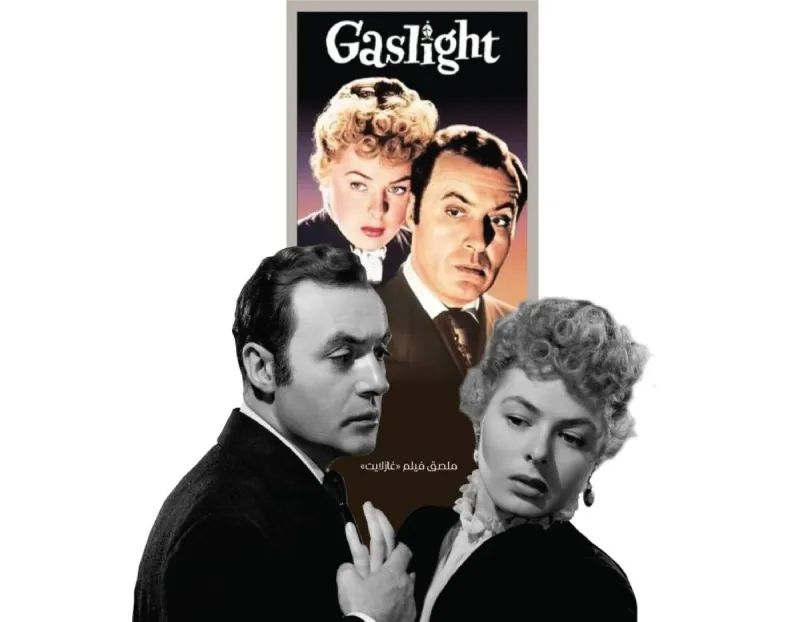
The term has become so deeply rooted in our contemporary lexicon that we have forgotten it was once merely the title of a work of art. Long before the expression "gaslighting" became a leading buzzword in popular culture and a cornerstone of psychological clinics, it represented a physical tool and a tangible mechanism for instilling dread in director George Cukor's celebrated psychological thriller Gaslight (1944).
The film — adapted from playwright Patrick Hamilton's 1938 stage play — radically rewrote the DNA of Hollywood thriller cinema. By shifting the source of fear and terror from external monsters to the architecture of the human mind, Gaslight laid the foundational themes and rules upon which the modern psychological thriller is built.
Before the 1940s, cinematic horror rested almost entirely on a duality of shadows and monsters — the gloomy castles of Universal Studios' Dracula, or the expressionist creatures of the silent film era.
Yet Gaslight was a pioneer in turning terror inward. The story follows Paula Alquist — played by Ingrid Bergman in her Academy Award-winning role — as she is systematically driven to doubt her own sanity by her charming husband Gregory Anton (Charles Boyer).
Gregory's weapon was not a knife, but a slow and precisely calculated manipulation of Paula's reality — rendered in its most brilliant cinematic form through the dimming of the gas lamps in their London home, which her husband insists are mere figments of her imagination.
This framework introduced a new type of villain to American cinema: the tame monster. The threat was no longer a stranger lurking in a dark alley, but the very person who shares your bed.
Decades later, films such as Rosemary's Baby (1968), The Shining (1980), and The Invisible Man (2020) followed the same blueprint exactly — trapping their characters in spaces where their domestic refuge becomes a suffocating prison.
The genius of Gaslight's impact lies in its manipulation of the audience's relationship with the protagonist. In traditional mystery stories, viewers attempt to solve the crime alongside the detective; in Gaslight, the audience is pushed into a state of anxiety because they can see the plain truth at the very moment the heroine has been stripped of it and psychologically directed to deny it.
From this tension emerged the theme of "unreliable perception" that now defines contemporary psychological thrillers. The film imposes a profound sense of empathy on the viewer — we experience Paula's mental disorientation alongside her, and share her bitter frustration at not being believed.
Every time a modern thriller features a protagonist whose sanity is called into question by their surroundings — whether Jodie Foster searching for her missing daughter in Flightplan (2005), or Leonardo DiCaprio unravelling an enigma in Shutter Island (2010) — the filmmakers are at play in the same creative space that Gaslight constructed. The central engine of all these films is the same question: is this really happening, or is it all in my head?
Gaslight also set the aesthetic and visual language specific to psychological horror. The cinematography, led by Joseph Ruttenberg, deployed deep shadows and high-contrast sharp lighting to embody Paula's world as it contracted and her doubts as they visually expanded. The dimming of the gas lamps served as a visual metaphor for the erosion and recession of truth — a visual technique whose echoes can still be heard in the narrative style of directors such as David Fincher and Darren Aronofsky.
Ultimately, Gaslight's greatest contribution to thriller cinema was its recognition that the human mind is the most formidable and prominent stage for horror stories. It demonstrated that a villain can wreak total destruction upon a victim simply by turning the victim's own mind into a weapon against herself.
Eighty years on, as filmmakers continue to explore the terrifying fragility of reality, the flickering lamps of Gaslight still cast their long and brilliant shadow over the entire landscape of psychological cinema.