
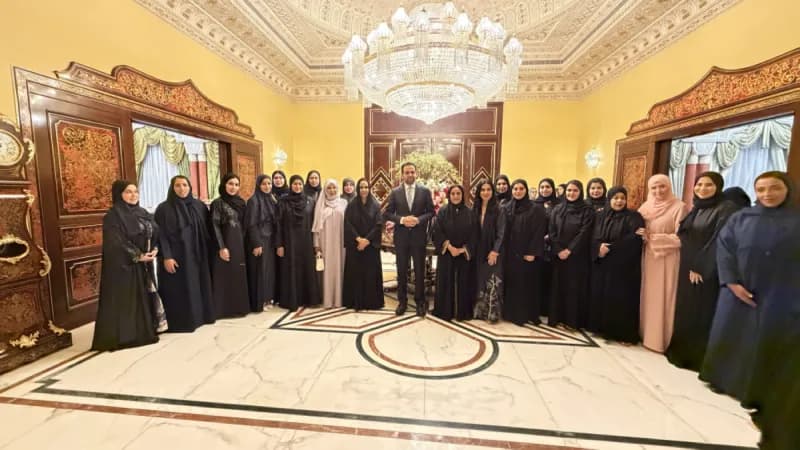
Abu Dhabi's 'Majlis Al Fikr' hosted a prominent cultural evening under the title 'The Journey of Human Fraternity from Abu Dhabi to the World: Towards a Shared Human Future', held in the presence of Shaikha Dr Shama bint Mohammed bin Khalid Al Nahyan, Chairwoman of the Sheikh Mohammed bin Khalid Al Nahyan Cultural and Educational Institutions, alongside a distinguished gathering of intellectuals and those interested in thought and humanitarian affairs.
The evening, moderated by media personality Hind Khalifat, was presented by Adviser Dr Mohammed Abdelsalam, Secretary-General of the Zayed Award for Human Fraternity, who shed light on the book The Imam, the Pope and the Difficult Road and the Document on Human Fraternity for World Peace and Living Together.
Abdelsalam reviewed the stages of preparation for the historic document, including the extensive consultations and dialogues that spanned years between religious and intellectual leaders, culminating in its announcement from the capital Abu Dhabi on 4 February 2019, after which it became a global reference for entrenching the values of coexistence, fraternity, and peace.
Adviser Dr Mohammed Abdelsalam affirmed that the exceptional success of the document represents the fruit of the United Arab Emirates' civilisational vision and its firm belief that tolerance, dialogue, and respect for diversity are the fundamental pillars for building a more stable future for humanity. He noted that the UAE's wise leadership embraced this vast humanitarian project and provided it with a supportive environment to launch from Abu Dhabi to the entire world, cementing the country's standing as a global capital of tolerance and coexistence and a unifying platform for peacemakers.
He stressed that the document goes beyond being a declaration of principles to constitute a comprehensive civilisational and humanitarian project aimed at safeguarding human dignity, rejecting fanaticism, extremism, and hatred, and promoting a culture of dialogue and joint action among different cultures and peoples.
He concluded by noting that investing in the human being is the true gateway to societal renaissance, explaining that awareness and confidence are the fundamental pillars for shaping the future, and that nurturing new generations' awareness of their identity and authentic values is an imperative necessity to empower them to engage positively with the world and contribute effectively to building their nations.