
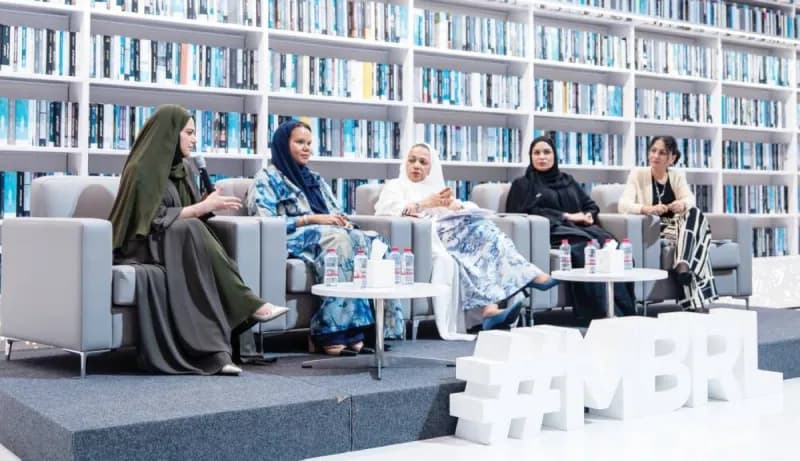
Mohammed bin Rashid Library, in cooperation with Salon Al Muntada, organised a dialogue session entitled "Emiratis in the Booker Prize" (International Prize for Arabic Fiction), featuring writer Aisha Sultan, writer Saleha Obaid, writer Nadia Al Najjar, Dr. Mariam Al Hashimi, and Zeina Al Shami.
The session discussed the notable presence of Emirati writers in the Arabic Booker Prize as an indicator of the maturity of the Emirati novel and its growing prominence on the Arab literary scene, while also spotlighting the artistic, linguistic, and thematic development achieved by the Emirati novel. Contributions addressed the ability of this narrative achievement to express the social and cultural transformations unfolding in Emirati society, while preserving its local character and drawing on its environment and identity — alongside an openness to universal questions that lend the Emirati text a global dimension and broaden its reach and influence.
On the significance of Emirati novels reaching the Booker Prize shortlists, the session examined the cultural implications of this achievement, viewing it not merely as an individual accomplishment but as an expression of the vitality of the literary movement in the country and its growing presence among prestigious Arab literary awards. The discussion also noted that this visibility is helping to reshape the image of the Emirati novel across the Arab world, opening wider horizons for its dissemination, critical reception, and translation.
Participants affirmed the importance of transforming these experiences into a knowledge and creative catalyst — by transferring expertise, broadening interaction between literary generations, creating greater space for mentorship and critical reading, and strengthening writing workshops and initiatives that nurture young narrative talents, thereby contributing to the continuity and renewal of the Emirati novel project.
The session concluded with an affirmation that the UAE's presence in the Booker Prize represents a landmark in the trajectory of the local novel, reflecting its transition to a more mature and effective space at the Arab level, and underscoring the need to continue supporting and reinforcing this path.