
The UAE's labour market continues to consolidate its standing as one of the most competitive and attractive in the world, underpinned by a sophisticated legislative framework and flexible policies that have enhanced the country's ability to attract talent and investment. In recent years, the UAE has achieved qualitative leaps in global competitiveness indices related to the labour market, leading many international rankings in employment, labour market efficiency, skills attraction, and legislative flexibility. This progress is not solely the product of economic factors; it is the result of a long-term government vision that has transformed the labour market into a central pillar supporting the national economy and reinforcing its sustainability and global competitiveness.
The country has not rested on those achievements. Instead, it has adopted a continuous approach to modernising its legislative and regulatory framework by launching successive packages of laws and initiatives that proactively keep pace with global economic shifts and the rapidly changing nature of jobs and work patterns. This approach has enabled the UAE to maintain its leading position year after year and register new advances in global competitiveness indices at a time when many other markets are wrestling with unemployment, skills shortages, or legislative rigidity.
The UAE maintains its appeal to job-seekers and global talent alike thanks to a flexible business environment, fast regulatory procedures, and advanced digital infrastructure that supports productivity and employment stability. Health insurance stands out as one of the most important pillars of stability in the UAE labour market. Healthcare coverage is no longer an additional benefit; it has become an integral part of the social and economic protection system for workers. In recent years, the state has ensured that health insurance covers all private-sector employees and domestic workers, guaranteeing access to necessary healthcare without heavy financial burdens.
This measure directly raises workers' quality of life and strengthens their sense of job and social security, which in turn raises productivity levels and promotes stability in the workplace. A well-organised healthcare system also reduces operational risks for employers and enhances companies' ability to attract global talent that seeks a stable, advanced living and healthcare environment.
On the protection of financial rights, the continuous modernisation of the Wages Protection System and its governing regulations represents one of the most prominent regulatory transformations in the UAE labour market — one in which the country holds a regional lead in terms of longevity of implementation compared with other nations. The state has built an integrated electronic system that ensures wages are transferred through approved financial channels according to defined timetables. This has helped reduce salary delays and labour disputes, enhanced levels of transparency and financial discipline within the private sector, and given regulatory authorities greater capacity to monitor wage compliance and take swift action against non-compliant establishments.
The significance of the system lies in the fact that it reflects a shift in the employer–employee relationship from a traditional arrangement to an institutional one based on governance, transparency, and digital oversight — reinforcing confidence in the UAE labour market among both foreign workers and investors alike.
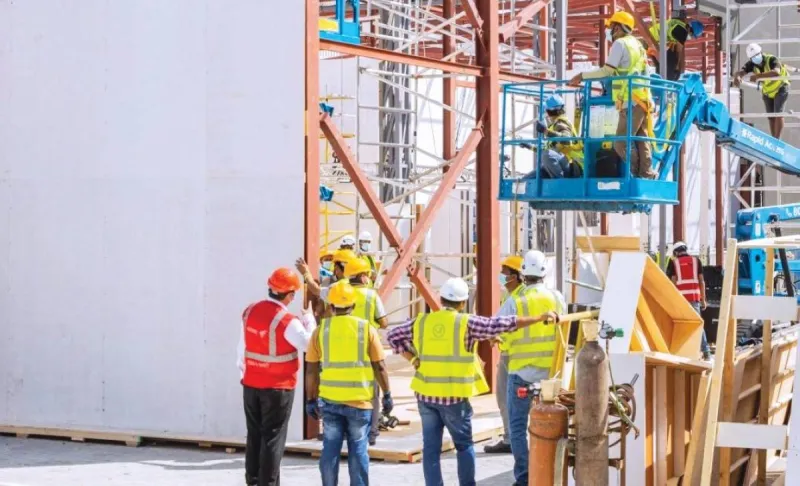
The midday work ban policy, which is set to come into effect from mid-next month, embodies the humanitarian and developmental dimension of UAE legislation. The state treats worker safety as a priority no less important than economic productivity. The policy is introduced in light of the extreme heat during summer, aiming to reduce the risks of heat stress, sunstroke, and injuries associated with working outdoors.
The importance of this decision extends beyond the health dimension, because it projects the image of the UAE as a country that applies advanced standards in occupational safety and human rights, thereby enhancing its international reputation in indices measuring the quality of the work environment. These measures have also prompted companies to develop their safety standards and provide safer environments for workers, with positive consequences for performance, productivity, and operational sustainability.
In the area of labour disputes, the country has developed an advanced model built on speed and efficiency in litigation and dispute resolution, through the provision of electronic channels for filing complaints and mechanisms for amicable settlement before resorting to the courts. This has helped reduce the duration of disputes and ensured that workers receive their rights within short timeframes compared with many other markets. The importance of this system lies in reinforcing legal confidence within the business environment: workers feel that effective legal protection exists, while investors are reassured by the existence of a fast and clear judicial and regulatory system. The numbers speak for themselves — more than 81% of labour disputes have been resolved amicably.
Among the most notable recent transformations in the UAE labour market is the launch of the optional alternative end-of-service benefits system alongside the unemployment insurance scheme. This is a step that reflects a qualitative shift in the concept of financial protection and stability for workers. Rather than being limited to the traditional end-of-service gratuity model, the new system allows workers' entitlements to be invested in approved financial funds that generate sustainable investment returns, enhancing workers' ability to build long-term savings and providing greater financial security after the end of service.
This is complemented by the unemployment insurance system, which provides a temporary financial safety net for workers in the event of job loss, ensuring income continuity during transitional periods between jobs and mitigating the economic and social effects of unemployment. The linkage between the two systems reflects an advanced economic and legislative vision that develops the relationship between worker and labour market beyond a simple monthly wage arrangement into a comprehensive framework encompassing saving, investment, insurance protection, and long-term financial stability. These policies also reinforce workers' confidence in the UAE work environment, raise the market's attractiveness to global talent, and reduce risks associated with the failure of certain establishments or economic fluctuations.
On the quality-of-life front, the UAE has paid significant attention to workers' accommodation by establishing clear standards relating to space, ventilation, air conditioning, hygiene, and basic services. The state does not regard workers' housing merely as a place of residence but as part of a broader framework for the worker's social, health, and psychological stability. These standards carry economic dimensions as well, because providing a good living environment is reflected in performance and productivity and reduces health and social problems. In line with this, the Ministry of Human Resources and Emiratisation recently issued the Workers' Accommodation Guidance Manual, which contains requirements and details reflecting the state's commitment to the safety of those residing in such accommodation — including, among other things, the provision of a medical clinic in large workers' housing complexes and numerous strict standards that such accommodation must meet.
On the level of economic flexibility, the UAE has adopted diverse work patterns including part-time, flexible, temporary, and remote work, as well as job-sharing — models that align with global shifts in the digital economy and the modern jobs market. These patterns have given companies greater capacity to expand and attract talent, while offering workers a wider variety of career options suited to their needs and circumstances. The importance of this flexibility lies in making the UAE labour market more capable of adapting to economic and technological changes and supporting business sustainability amid rapid global transformation.
These policies are complemented by occupational health and safety standards that require establishments to provide safe working environments encompassing prevention, awareness, training, and the application of safety requirements at work sites. These standards reflect a comprehensive vision that places the human being at the centre of economic development and affirms that labour market competitiveness is measured not only by the volume of investments or employment rates, but also by the quality of life, stability, and security that the state provides to those working within it. The UAE's leadership of global labour market indices is therefore not a transient achievement; it reflects an integrated developmental model that has succeeded in combining economic flexibility, social protection, and legislative sustainability.