
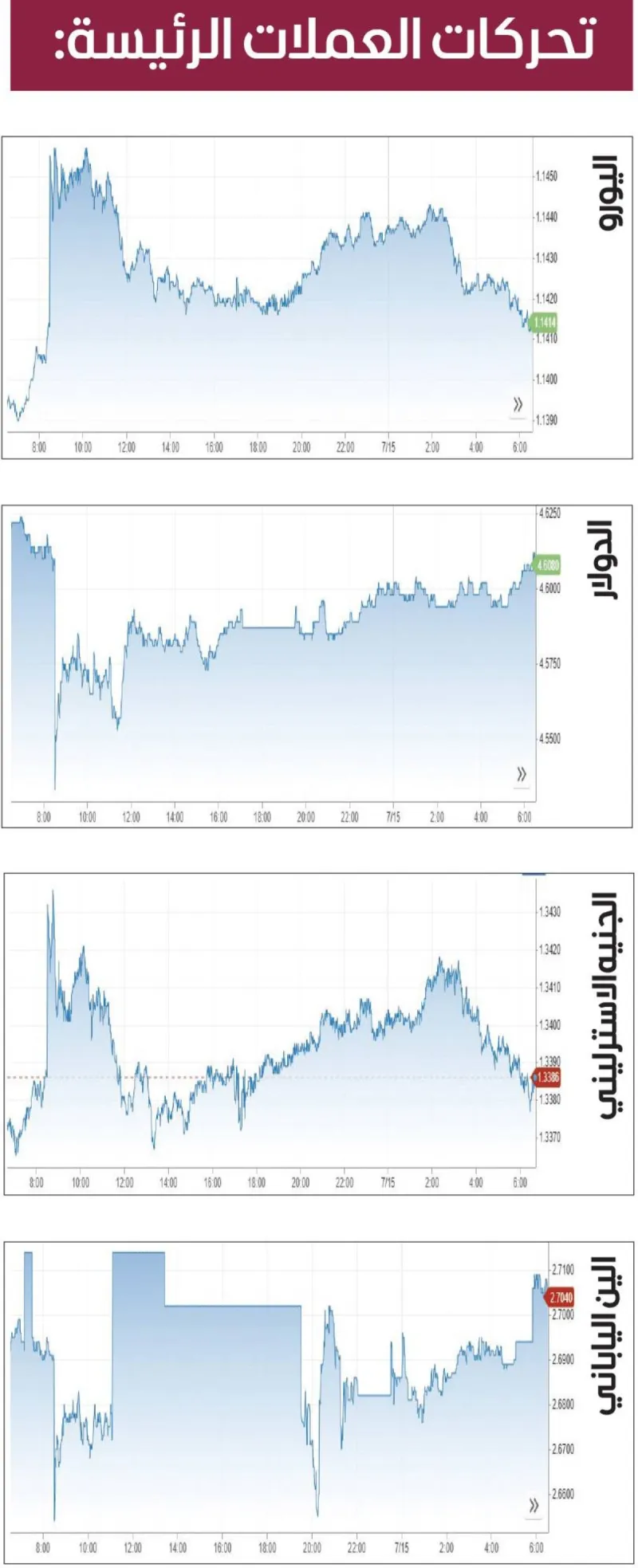
The dollar stabilised on Tuesday following losses in the previous session, as weaker-than-expected US inflation data reinforced expectations that the Federal Reserve will keep interest rates unchanged in the near term, despite lingering concerns that rising oil prices could intensify price pressures.
The dollar stood at 162.24 yen, while the euro rose around 0.1% to $1.1428 and the pound sterling gained by the same margin to $1.3406.
The dollar index, which measures the performance of the US currency against a basket of major currencies, steadied at 100.9 after falling 0.4% in the previous session — its steepest loss in nearly two weeks — pulling the index below its highest level since 2 July.
Data released on Tuesday showed that the US consumer price inflation rate slowed more than expected to 3.5% year-on-year in June.
The core consumer price index fell 0.4% during the month, its first decline since April 2020, as energy prices dropped.
US Treasury yields retreated after the weak data trimmed market expectations for near-term interest rate hikes, with 2-year bond yields falling 9 basis points from their 16-month high.
Federal Reserve Chairman Kevin Warsh, testifying before the House Financial Services Committee on Tuesday, said the central bank would not tolerate persistently rising inflation, and pledged to fulfil its duty if challenged by US President Donald Trump.
The New Zealand dollar climbed to $0.5815, near a one-month high, while the Australian dollar also edged higher to $0.6985.
China's economic growth slowed sharply in the second quarter to 4.3%, its lowest level in more than three years.
The yuan briefly stabilised near a one-month high of 6.77 against the dollar, as the data reinforced expectations for additional measures to support the world's second-largest economy.