
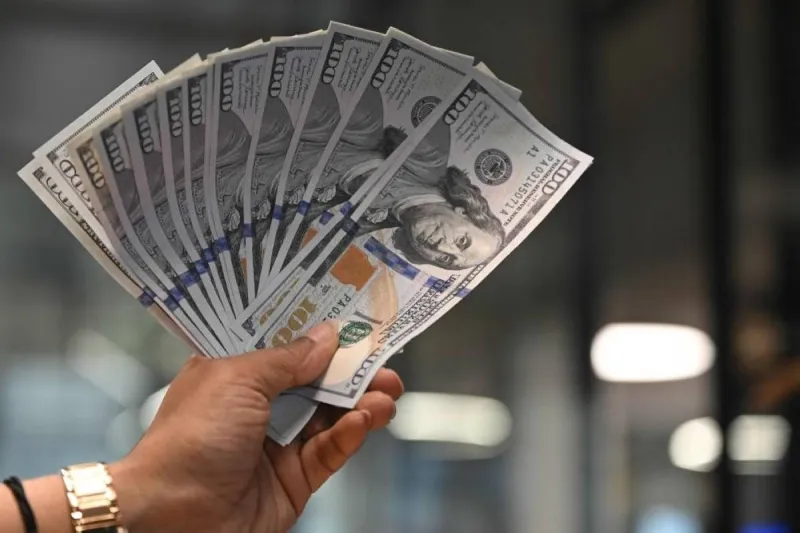
The dollar fell on Tuesday after US inflation in June came in weaker than expected, reducing expectations that the Federal Reserve will tighten its monetary policy path. Nonetheless, analysts believe the decline may be temporary, as the US-Iran conflict pushes energy prices higher and keeps the possibility of interest rate hikes alive later this year.
The dollar index fell 0.6% to 100.68 points, as Federal Reserve Chair Kevin Warsh began his first semi-annual testimony before Congress. Otto Shinohara, senior investment strategist at Mesirow Currency Management, said: "The larger-than-expected drop in the consumer price index has pulled back the latest hawkish Federal Reserve signals, which in turn drove the dollar lower as markets scaled back their central bank expectations."
He added: "The inflation data relates to a period that preceded the latest geopolitical tensions, the rise in oil prices, energy supply risks, and President Donald Trump's threat to impose 20% tariffs on goods passing through the Strait of Hormuz, meaning these developments have not yet been reflected in the declining inflation figures."
US and Iranian forces exchanged strikes in the Gulf, where maritime traffic through the Strait of Hormuz nearly ground to a halt, pushing Brent crude prices toward $90 per barrel. As a result, investors now expect a higher probability of interest rate hikes across the globe this year. With uncertainty growing over how long the latest attacks will last and what consequences they will have for the flow of oil to global markets, investors are focusing on expectations of price pressures.
CME's FedWatch tool indicates that the probability of a rate hike in July fell from 42% to 12% on Monday, while the odds of a rate hike during the current year remained stronger, declining from 89% to 80% on Monday.
Federal Reserve Governor Christopher Waller said on Monday that interest rates may need to rise "in the near term" if data shows that inflation remains well above the central bank's 2% target. The euro rose 0.66% against the US currency to 1.1455, and sterling gained 0.53% to $1.3417. The Japanese yen strengthened 0.34% to 161.89 per dollar on Tuesday, approaching its lowest level in 40 years, keeping traders on alert for any signs of intervention by Tokyo in currency markets.
The Japanese currency posted a modest gain following remarks by Finance Minister Satsuki Katayama that Tokyo may consider adjusting the asset allocation of the government pension fund if sharp changes occur in asset management.