
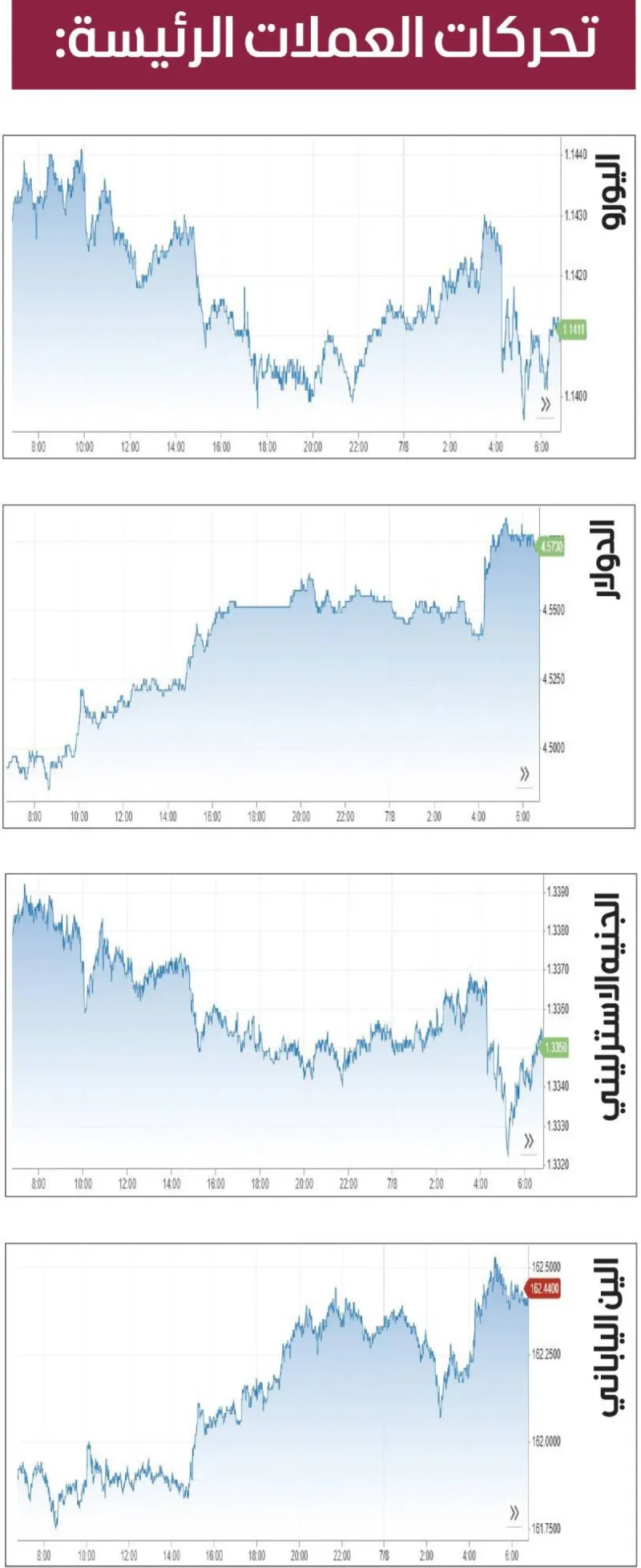
The dollar fell slightly yesterday as currency markets largely shrugged off a fresh exchange of strikes between the United States and Iran, while the New Zealand dollar rose after the country's central bank raised interest rates.
The dollar index, which measures the performance of the US currency against a basket of six currencies, fell 0.2% to 100.97, after earlier touching its highest level since 2 July.
The dollar, widely regarded as a global safe haven, gave back some of its earlier gains as the trading session continued.
Jane Foley, head of foreign exchange strategy at Rabobank, said: "We haven't seen a big reaction in the foreign exchange market, and I think that makes sense because the market, for most of this war, has been dealing with the situation with optimism."
Meanwhile, the New Zealand dollar rose 0.7% to $0.5719 after the Reserve Bank of New Zealand raised interest rates by 25 basis points to 2.5% to rein in inflationary pressures, as most economists had forecast.
Traders are awaiting the minutes of the Federal Reserve's June meeting.
That was the first meeting under new chairman Kevin Warsh, and the dollar edged up against the Japanese yen to 162.18 yen, posting gains for the fourth consecutive day, as traders watched for a possible intervention by Japanese authorities.
The euro gained 0.15% to $1.1427, while sterling rose 0.1% to $1.3366.
Despite the dollar's modest decline, markets continue to monitor the trajectory of US monetary policy in the second half of the year, as inflation data, labour market figures and the Federal Reserve meeting minutes will provide important signals regarding the timing and scale of any potential interest rate cut. Rate expectations typically exert a direct influence on major currency movements, with persistently high rates supporting the dollar, while growing prospects of monetary easing tend to boost other currencies, with investors remaining cautious amid ongoing global geopolitical tensions.