
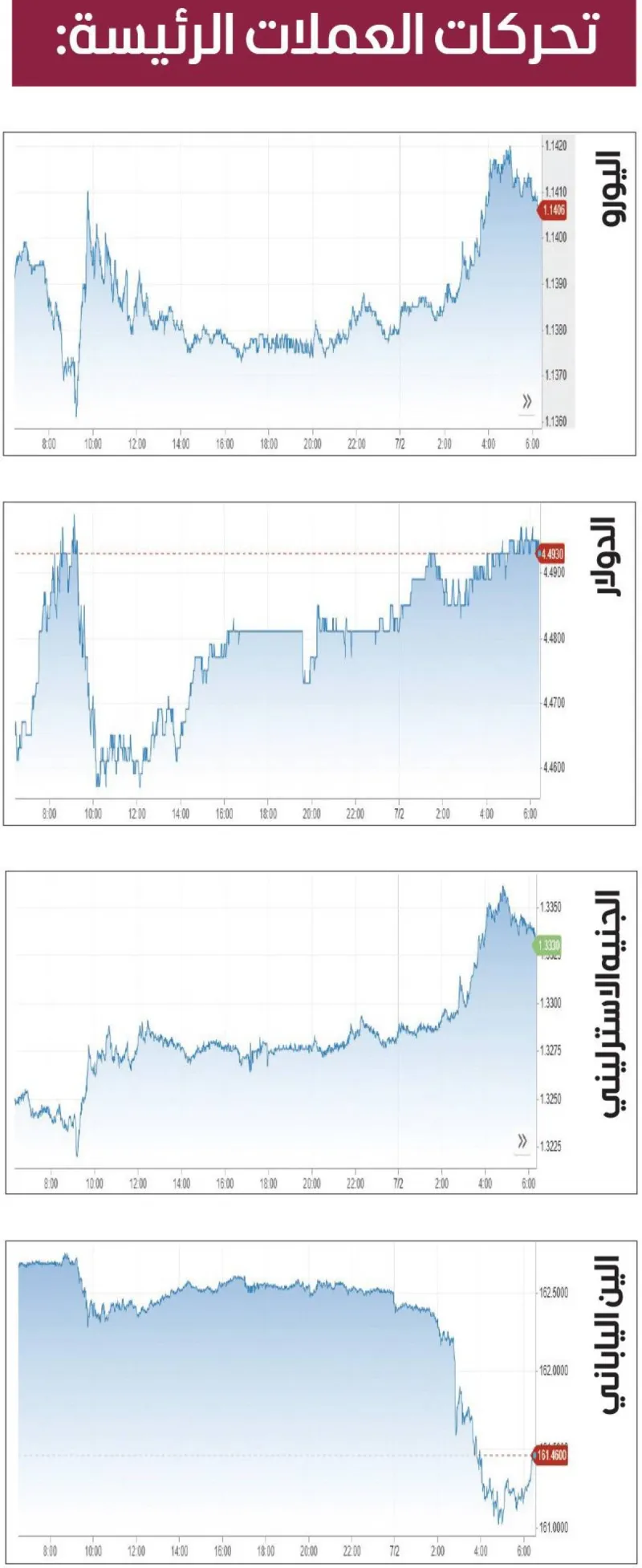
The yen surged sharply against the dollar on Thursday as traders watched for a possible intervention by Japanese authorities, who have signalled a new approach to supporting the chronically weak currency.
The yen's rise contributed to a broader decline in the dollar against other major currencies.
The dollar fell by as much as 0.9% against the Japanese currency, touching 161.115 yen, and was last trading at 161.28 yen, down 0.8%.
Views among traders and analysts were divided, with some suggesting that authorities had reviewed market interest rates, triggering fluctuations in the currency's value. The yen is trading at its lowest level in 40 years, with the dollar drawing support from US interest rates that are far higher than their Japanese counterparts and from booming artificial intelligence stocks.
Abbas Kishavani, Asian macro strategist at RBC Capital Markets in Singapore, said: "We will have to wait for the data to confirm whether this was an intervention, but the timing of the move suggests it was."
The dollar index, which measures the performance of the US currency against a basket of major currencies including the yen and the euro, fell 0.4% to 100.98 points.
The index had reached a year-high of 101.8 last week, as strong economic and inflation data led traders to increase their bets on US interest rate rises.
Sterling rose 0.6% against the dollar to a two-week high of $1.335, while the euro gained 0.35% to $1.114. Economists expected data to show that US employers added 110,000 jobs in June, with the unemployment rate holding steady at 4.3%.
Federal Reserve Chair Kevin Warsh said that inflation expectations and price risks had eased in recent weeks.