
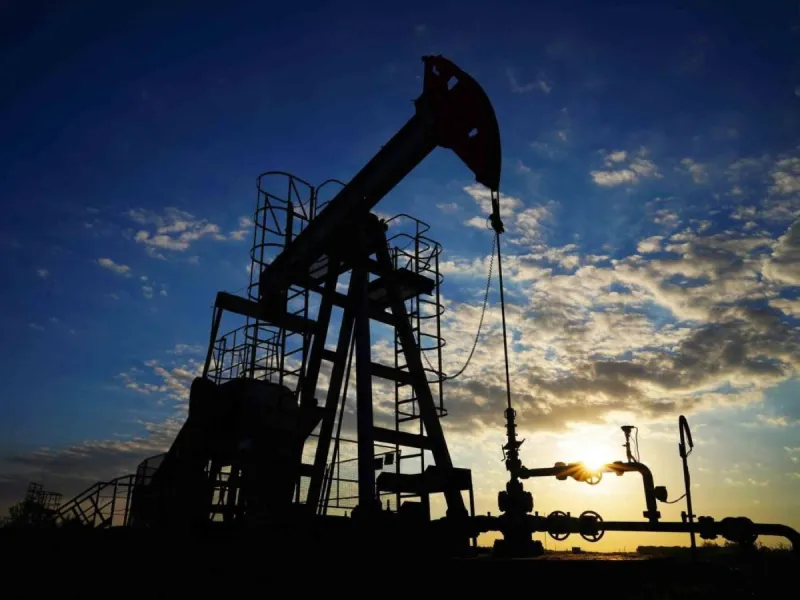
The United States has released more than 89 million barrels of oil from its strategic reserve, according to official data published on Wednesday, representing half of its commitment to mitigating the effects of the conflict in the Middle East.
As of June 26, the country's strategic petroleum reserve stood at 326 million barrels, according to the US Energy Information Administration — well below pre-war levels and at its lowest point since 1983.
As part of a coordinated effort with other countries to cushion the impact of the war in the Middle East, Washington pledged to gradually release 172 million barrels to address the absence of some fuel exports from the Gulf.
Separately, the Energy Information Administration's weekly report indicated a further decline in commercial oil inventories last week, down 3.8 million barrels, bringing them to a level not seen since 2018.
Exports fell to just 4 million barrels per day, as did imports, which stood at around 5.3 million barrels.
Domestic production remained stable at more than 13 million barrels per day, while refineries maintained a high utilisation rate of 96.6 per cent.
As an implied indicator of demand, the volume of products delivered to the domestic market rose again, approaching 21 million barrels per day.
Nevertheless, the release of the Energy Information Administration's report did not alter the direction of oil prices. At around 15:10 GMT, the benchmark global North Sea Brent crude price fell 2.22 per cent to $71.33 a barrel.
West Texas Intermediate (WTI) crude dropped 1.80 per cent to $68.25 a barrel.