
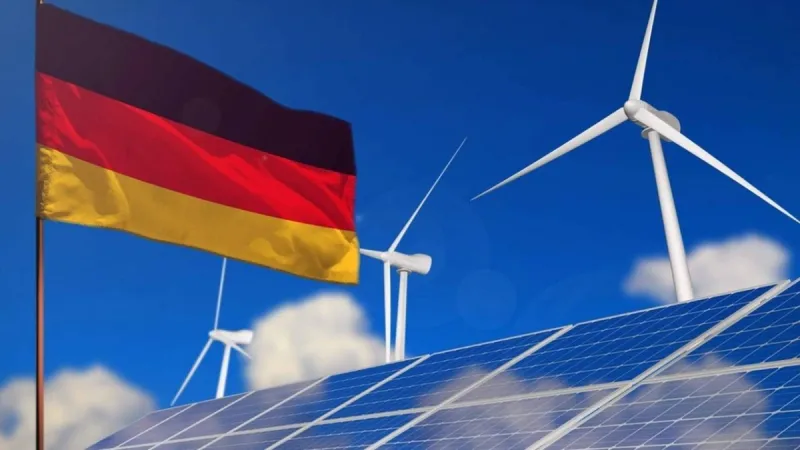
On the occasion of the opening of the "Intersolar" trade fair, the German Solar Energy Association (BSW Solar) announced in Munich, southern Germany, on Tuesday that new solar power plants connected to the electricity grid in Germany last year reached a capacity of 17.6 gigawatts, according to preliminary figures.
As in previous years, China occupied first place by an insurmountable margin, with new solar installations of approximately 382 gigawatts during 2025 — a figure that exceeds the combined total of new installed capacity in the nine countries that follow it among the world's top ten solar nations.
India came in second place with 45.7 gigawatts, followed by the United States in third with 43.2 gigawatts. Germany also ranked fourth in terms of total installed solar capacity, which reached 118 gigawatts. At the European level, Germany leads the list, ahead of countries with greater sunshine hours such as Spain, France, and Italy.
However, association data indicate that nearly half of the increase recorded last year came from large-scale plants installed in open areas. In contrast, the uptake among private homeowners installing new solar systems fell by 24% compared with the previous year, while new orders from businesses declined by 11%.
German Solar Energy Association president Carsten Körnig said that the war on Iran and plans by German Economy Minister Katherina Reiche to cut solar subsidies had given the sector an exceptional boost this year. According to the association, the expansion of solar system installations in May rose by 16% compared with the same period last year.
The association now expects the scale of expansion in 2026 to be close to last year's level, meaning that the decline originally anticipated will not materialise.
Körnig called on the German government to abandon its plans to eliminate subsidies for new rooftop solar systems. He explained that approximately one third of the electricity generated by residential solar systems is fed into the public electricity grid, adding: "It is only this one third that receives the subsidy, which amounts to around seven cents per kilowatt-hour."
According to the association's calculations, eliminating this subsidy would extend the payback period for an average residential rooftop solar system to 20 years — something the association believes would act as a deterrent for many prospective buyers.
He noted that homeowners typically expect a payback period of between 10 and 12 years, adding: "If the period stretches to around 20 years or more, it is easy to imagine that only a very small proportion of households would be willing to invest in a solar energy system."