
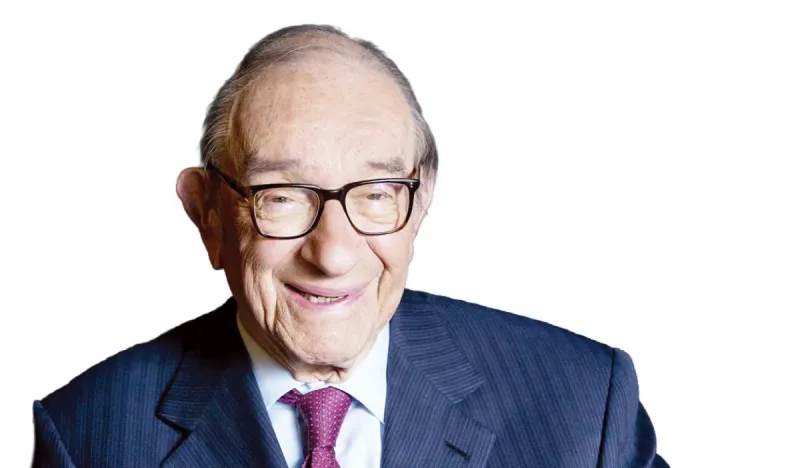
Alan Greenspan, who served as chairman of the US Federal Reserve for nearly two decades, died on Monday.
His wife, veteran NBC News correspondent Andrea Mitchell, said in a statement published by the network: "Alan passed away Monday morning at our home at the age of 100 from complications of Parkinson's disease." She added: "He was a giant who helped shape the American economy for decades under presidents of both parties, but he was always honest in acknowledging his mistakes."
The Federal Reserve expressed "deep sorrow" over Greenspan's death in a statement, praising his contributions to "monetary policy and economic thought." It added: "Under his leadership, the Federal Reserve achieved a sustained era of price stability that supported economic growth and helped cement public confidence in the institution."
Greenspan was born on March 6, 1926, in New York City, where he later earned a doctorate in economics from New York University. He was appointed chairman of the Federal Reserve in 1987 under Republican President Ronald Reagan and remained in the post until January 2006, serving under four presidents from both the Republican and Democratic parties. He led the central bank through a succession of crises, including the market collapse on Black Monday in 1987, the financial crises in Mexico, Asia, and Russia, the dot-com bubble, and the September 11, 2001 attacks.